When Monsters Got Funny
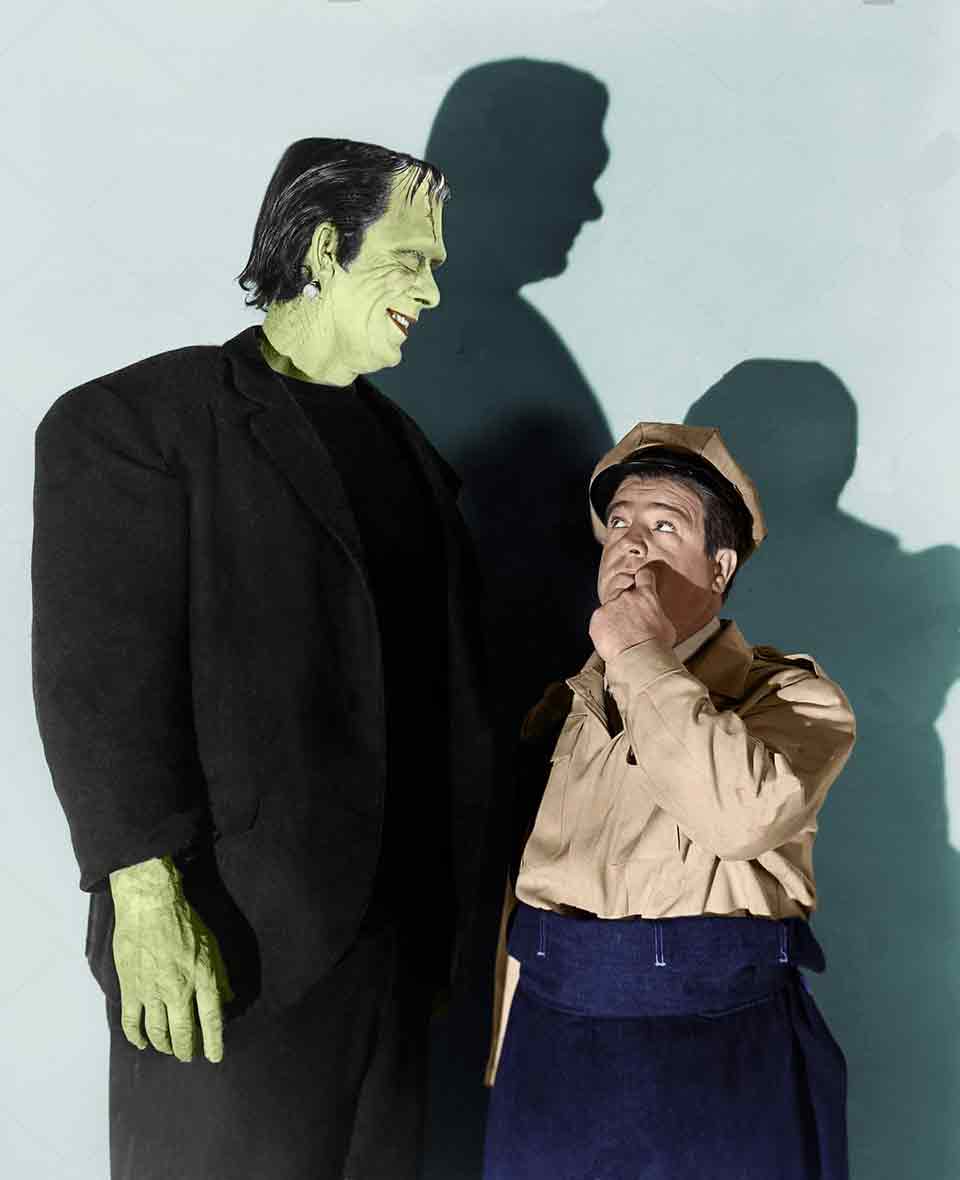
Comedy did not kill the monsters. It preserved them. Once audiences knew Dracula, Frankenstein's Monster, the Wolf Man, and the Mummy by sight, those icons could survive being teased. The joke worked because the monsters were already serious enough to bend.
Abbott and Costello's monster run is the perfect bridge: a comedy team wanders into a horror universe, but the creatures still look like themselves. The laughs come from panic, timing, disbelief, and the shock of seeing fear treated like a very elaborate misunderstanding.
That same pattern keeps returning. Young Frankenstein, Ghostbusters, Beetlejuice, Little Shop of Horrors, and Mars Attacks! all know that monsters are funniest when they are still allowed to be monsters.
The Universal-era run began with Hold That Ghost (1941), peaked with Abbott and Costello Meet Frankenstein (1948) and kept going through Abbott and Costello Meet the Invisible Man and Abbott and Costello Meet the Mummy. The recipe never left: Gremlins, An American Werewolf in London, Dracula: Dead and Loving It and Buffy the Vampire Slayer all mix scares with laughs. In the arcade, Ghouls N Ghosts plays its zombies half for laughs, and slapstick's other great Columbia-era act, the Three Stooges, never needed a monster to cause panic.
The Straight Monster, The Scared Comic

Lou's panic works because Glenn Strange plays the Monster as a real threat, not a punchline.
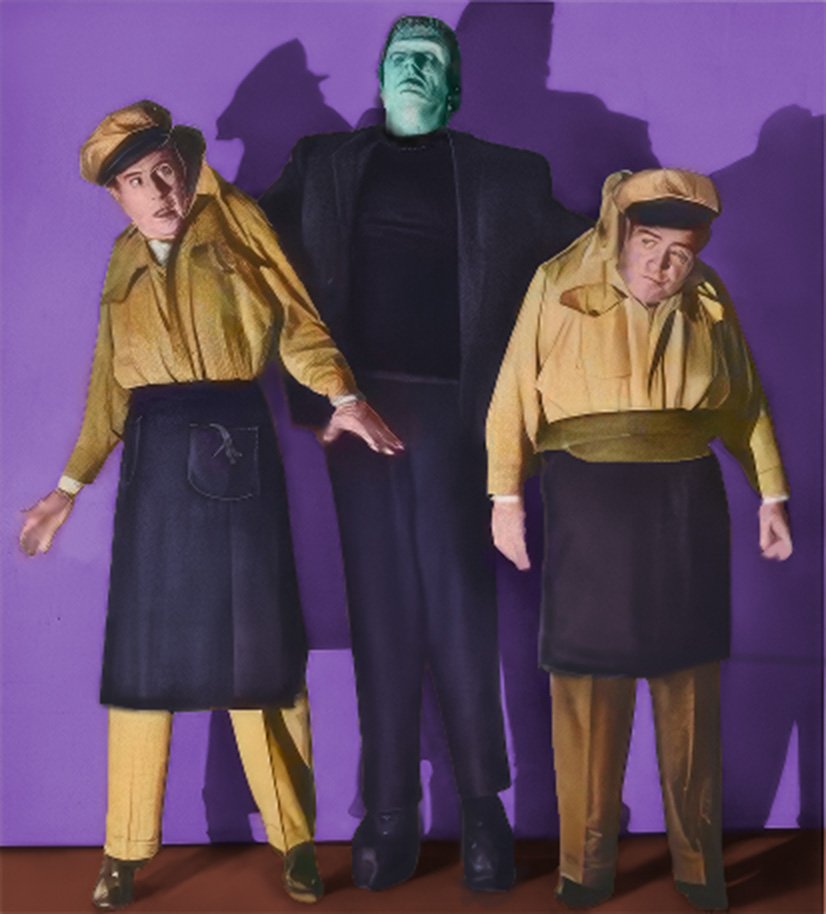
The best horror-comedy frames fear as choreography: reach, recoil, shout, repeat.
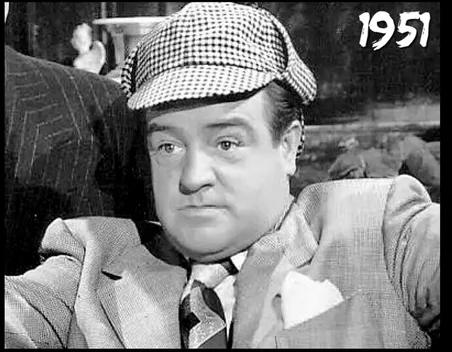
The monster run continues when invisibility becomes both a special effect and a gag machine.