Stooges Forever
Why a short-subject comedy team keeps refusing to become old news.
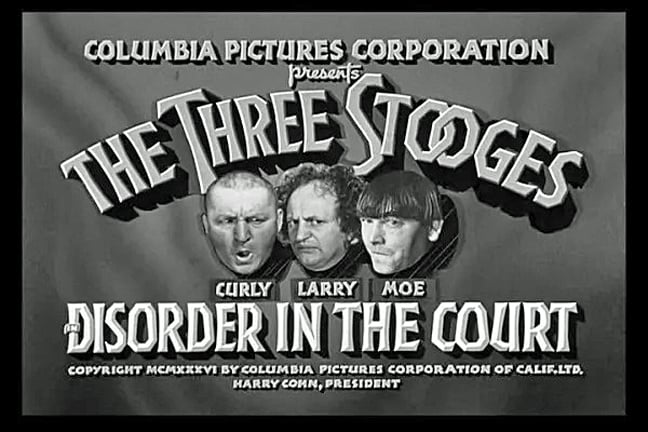
The television afterlife: old Columbia shorts becoming new childhood discoveries.
The Stooges were built for disposability. Their Columbia shorts were program fillers, fast little comic machines meant to run before features and then make way for the next bill. That is part of the joke now. The supposedly disposable thing survived.
Their endurance has less to do with plot than with rhythm. A Stooge short can be entered almost anywhere: a door opens, Moe barks, Larry hesitates, Curly or Shemp detonates, and the room begins to lose its structural integrity. The viewer does not need lore. The body understands the grammar immediately.
The lineup changes should have weakened the act, but they also made the Stooges oddly renewable. Curly's wildness, Shemp's nervous angles, Joe Besser's fussier resistance, and Curly Joe DeRita's later feature-era presence all prove that the act was both specific and modular. Moe and Larry held the center while the third chair changed the voltage.
Television completed the transformation. The shorts left their original theatrical context and became ritual objects: afternoon reruns, local hosts, syndicated packages, kids discovering old violence as if it were weather. That is why the Stooges never quite leave. They keep reappearing wherever slapstick can still make a room feel dangerous.
That second kingdom arrived in 1958 when Television Syndication Begins put the shorts into every afternoon, in the same living-room glow as The Ed Sullivan Show and the first color television sets. By the time of The New 3 Stooges Cartoon the trio had been redrawn for Saturday mornings, and a generation later the slapstick turned up on arcade screens in The Three Stooges in Brides Is Brides -- a long way from the Three Stooges Columbia Peak.