The Iconic Bond Statues of Times Square
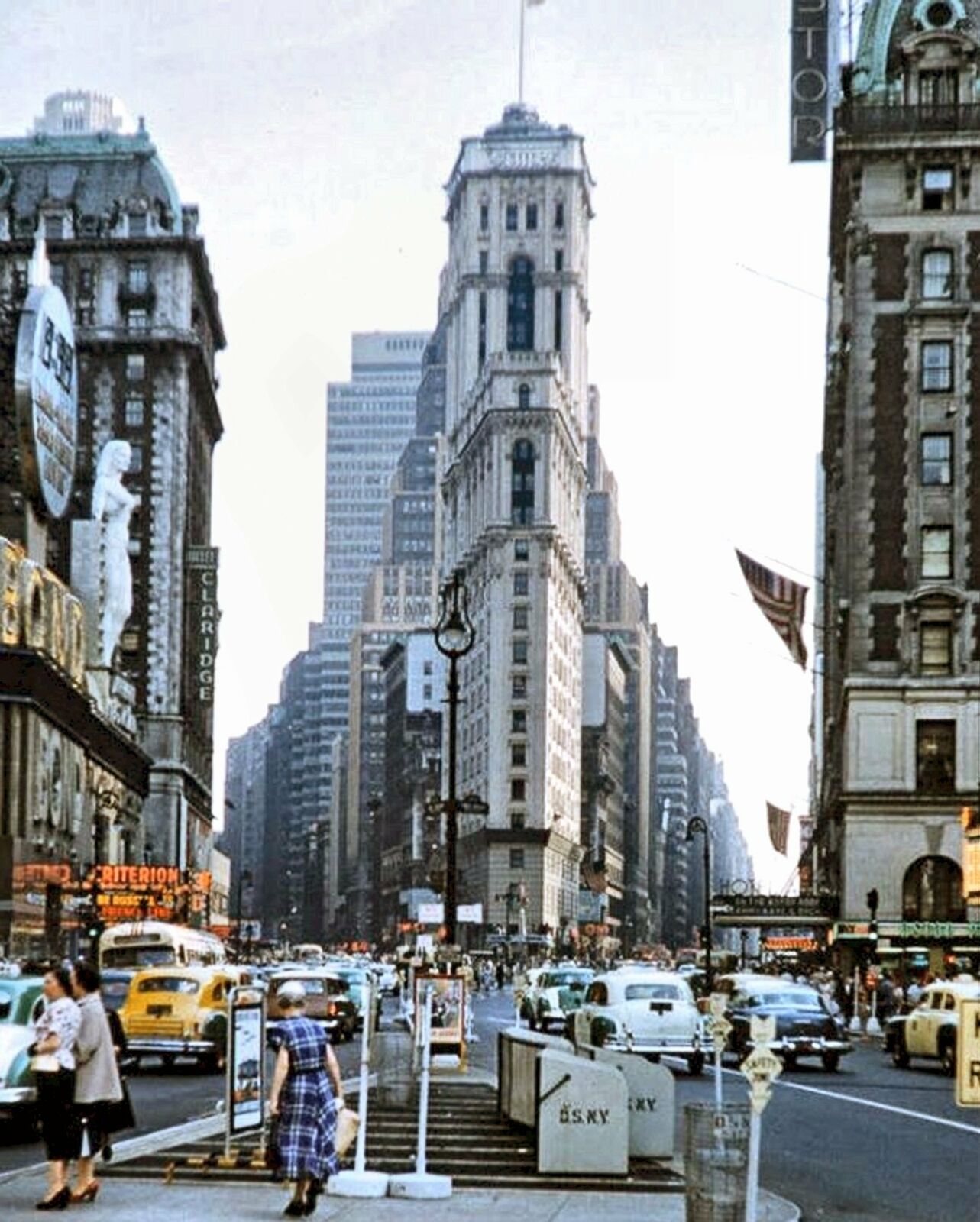
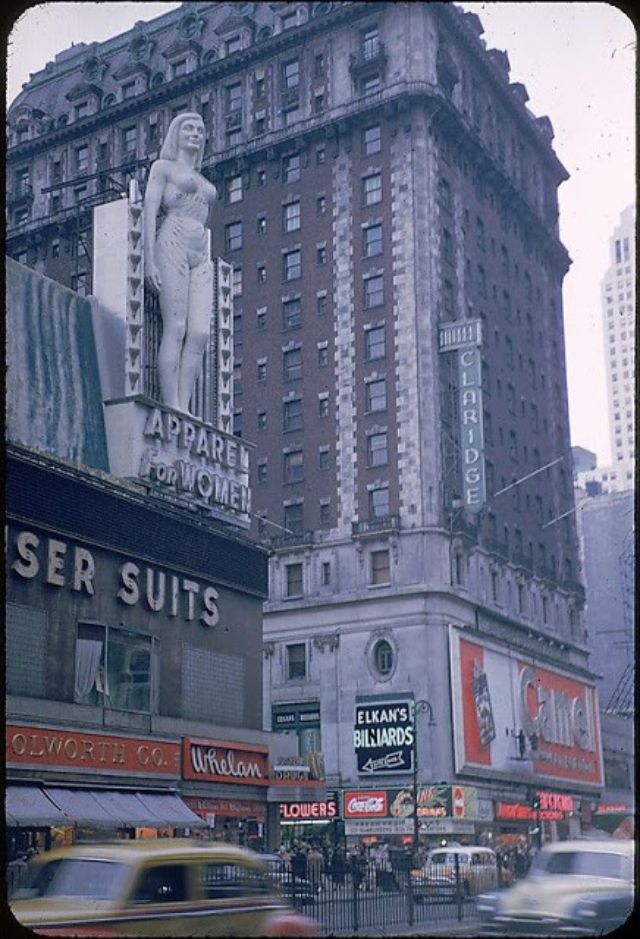
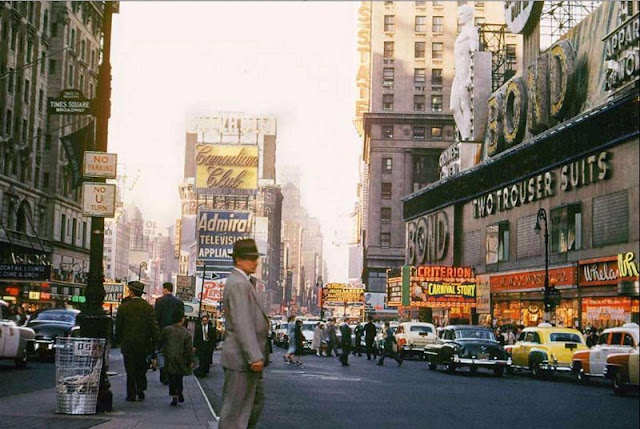
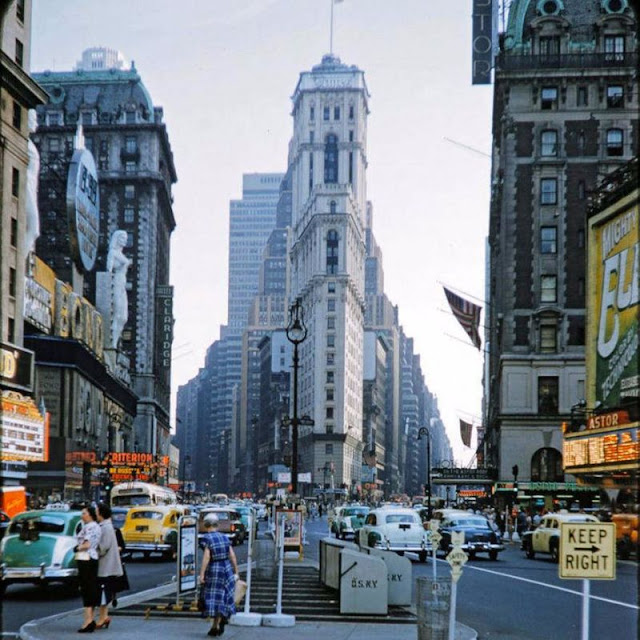
In the neon canyon of mid-century Times Square, few sights were more spellbinding than the twin statues looming above the Bond Clothing Store. Nude by day and clothed in radiant neon by night, these seven-story figures didn't just sell suits—they sold dreams.
Giants of Commerce and Art
Behind this audacious art-meets-advertising display lies the story of a building with a past as layered and luminous as Times Square itself. The colossal pair of statues became more than just advertising — they became symbols of mid-century American optimism and the power of spectacle to capture the public imagination.
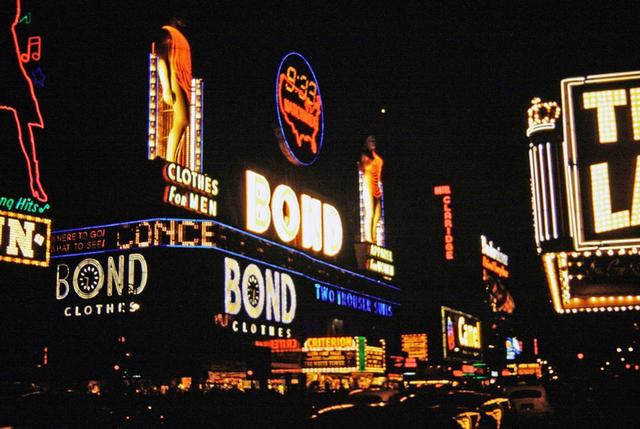
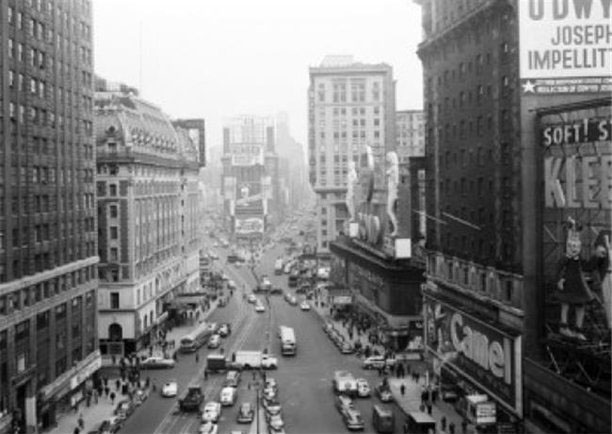
Located at 1514 Broadway, between 44th and 45th Streets, this city block would witness the rise and fall of entertainment empires, the birth of modern advertising spectacle, and the constant reinvention that defines Times Square. From Oscar Hammerstein's grand Olympia complex to today's modern retail flagships, this is a story of American commerce, creativity, and the endless pursuit of the next big thing. The massive advertizement that adorned the building's rooftop are of particular interest --the colorful Wrigley's Gum "Aquarium" sign, went through several modifications, pushing the limits of pre-war technology. It was replaced by the most extravagant an iconic: the colossal nude figures of the Bond Clothing advertisment. Afterwhich an equally strange sight of giant Pepsi-Cola bottles standing right where "Adam and Eve" had stood in their birthday suits. And, did we mention the massive waterfall flowing amidst it all?
The Building's Foundations
🏛️ From Olympia to Modernity
This prime Times Square parcel was originally part of Oscar Hammerstein I's ambitious 1895 Olympia complex—a massive entertainment center that was ahead of its time but ultimately too grand for its era. By the 1930s, those ornate Victorian structures were razed to make way for something thoroughly modern.
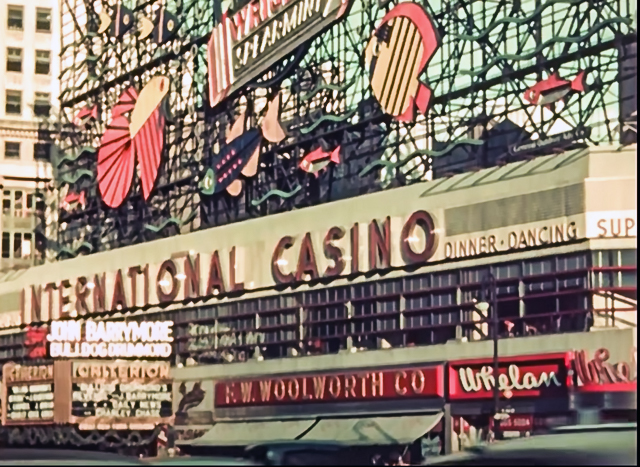
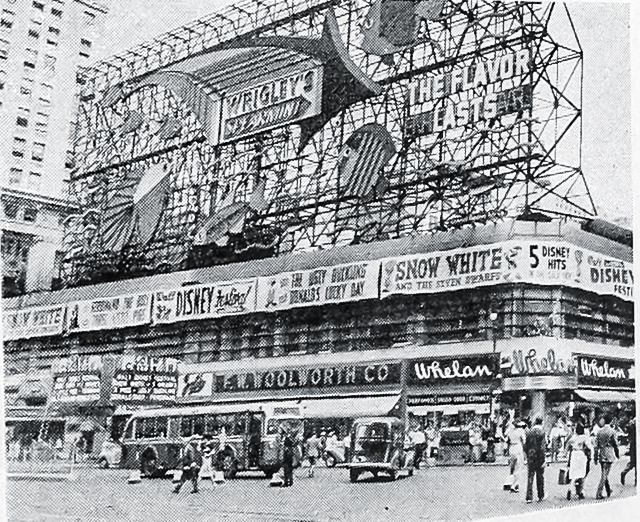
Designed by Thomas W. Lamb and Eugene De Rosa, the new building housed not one, but three major tenants: a cinema (Criterion Theatre), a nightclub (International Casino), and future retail space. It was state-of-the-art for 1936—flashy, flexible, and ready for whatever the future might bring. The architects understood that Times Square demanded buildings that could adapt, evolve, and reinvent themselves as quickly as the neighborhood around them.
This multi-use approach would prove prophetic. Over the decades, the building would seamlessly transition from theater to nightclub to retail flagship, each incarnation more spectacular than the last. The foundation was built not just to support a structure, but to support dreams.
The International Casino Era (1937–1940)
🎭 Supper Club Sophistication
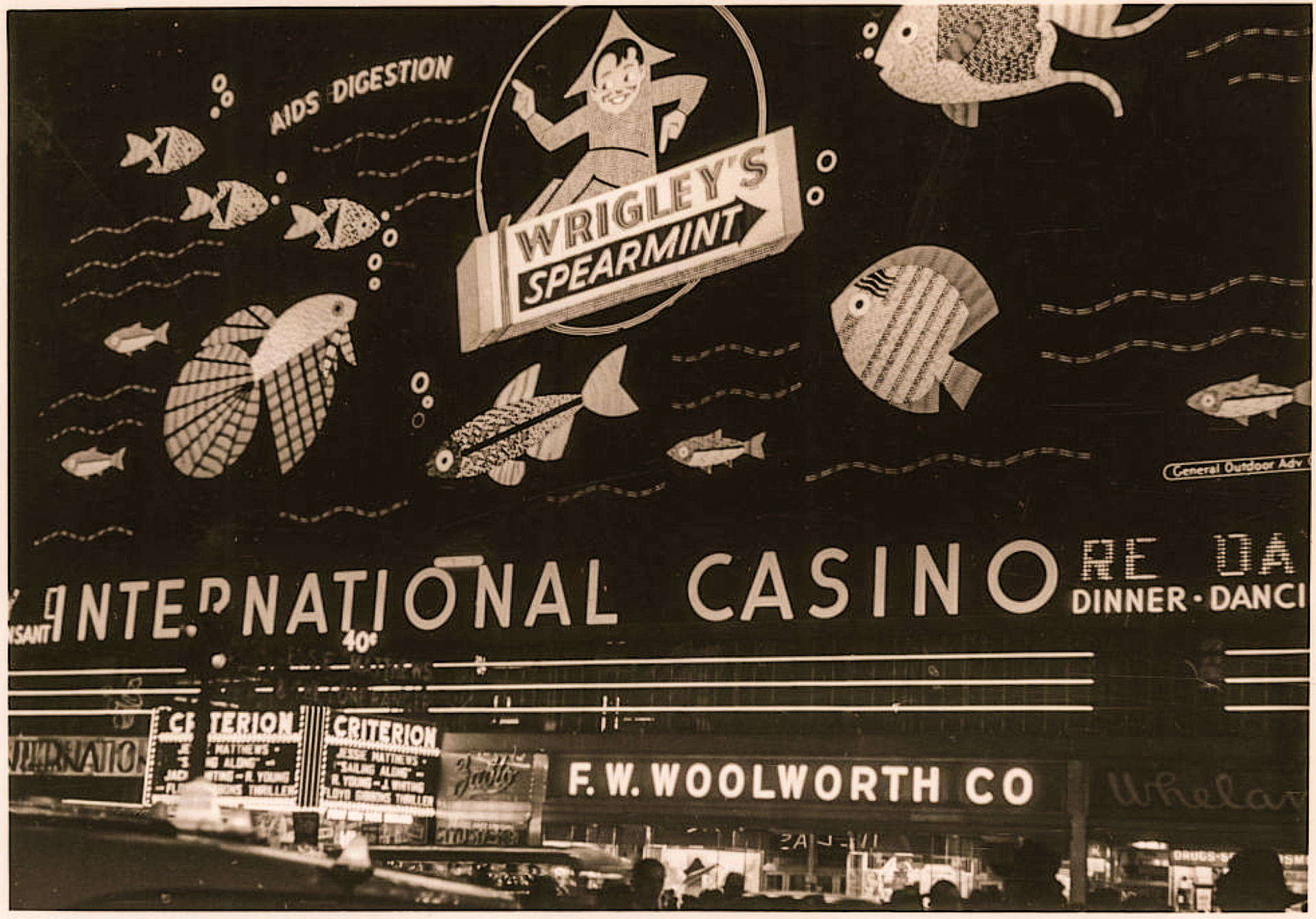
Despite the name, the International Casino wasn't a gambling den—it was a lavish supper club that epitomized 1930s glamour. Opened in 1937, the venue dazzled with three floors of modern design, an illuminated waterfall, and the first nightclub escalator in New York City.
✨ Donald Deskey's Vision
Interior designer Donald Deskey, fresh from his triumph at Radio City Music Hall, added his signature touch with a futuristic spiral bar and sleek Art Moderne details. The rooftop featured a massive Wrigley's Spearmint Gum sign, and—in a stroke of pure showmanship—water actually flowed across the marquee.

The Casino represented the height of pre-war optimism and technological marvel. Patrons could dine, dance, and marvel at innovations that seemed straight out of a science fiction film. The illuminated waterfall wasn't just decoration—it was a statement that in Times Square, even nature could be improved upon.
But despite its glamour and innovation, the International Casino couldn't survive the changing times. Economic pressures and shifting tastes led to its closure by 1940, making way for the next chapter in the building's colorful history.
The Criterion Theatre (1936–1990s)
🎬 Cinema Palace
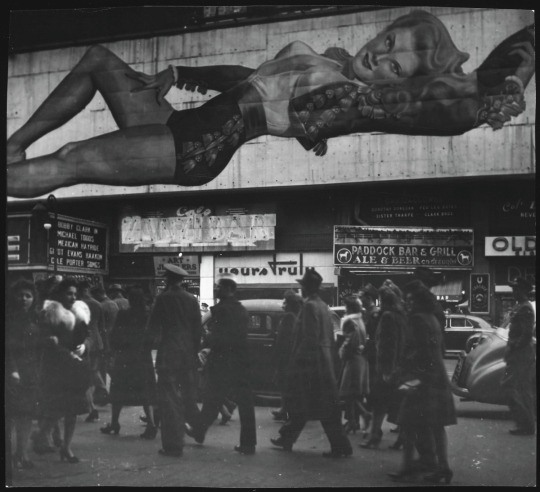
Alongside the Casino, the Criterion Theatre opened with the film Give Me Your Heart starring Kay Francis. Designed in the Art Moderne style, it seated 1,700 and quickly became a premier movie house in the heart of Broadway's theater district.

🎞️ Innovation and Prestige
Loew's took over operations in 1938, premiering prestige titles like Spring Madness. In 1953, the theater made history by claiming to be the first to screen a 3D Technicolor film (Fort Ti) with stereophonic sound—a technological marvel that drew crowds eager to experience the future of cinema.
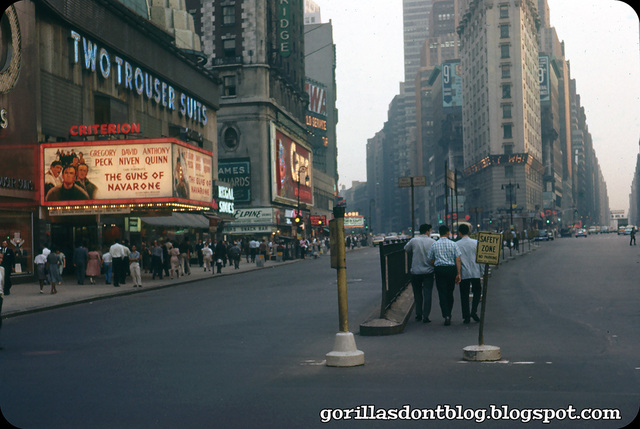
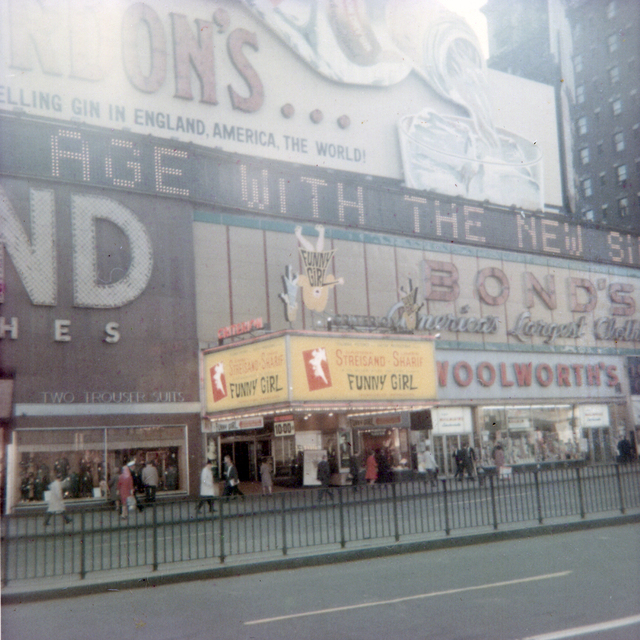
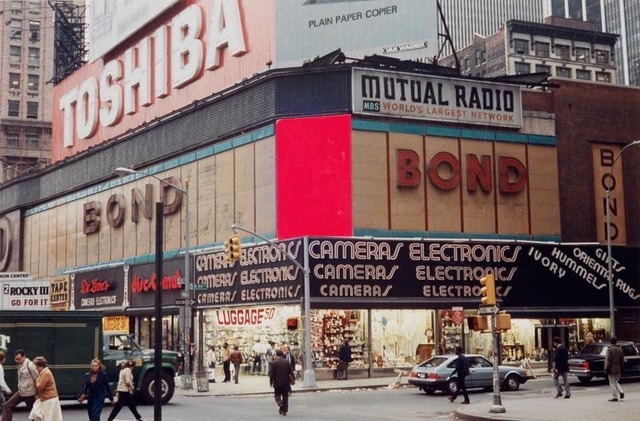
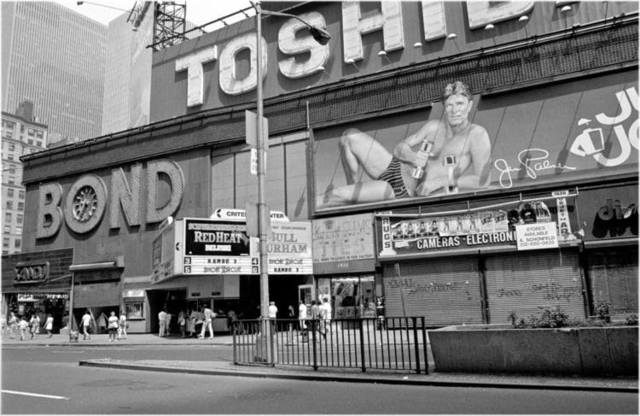
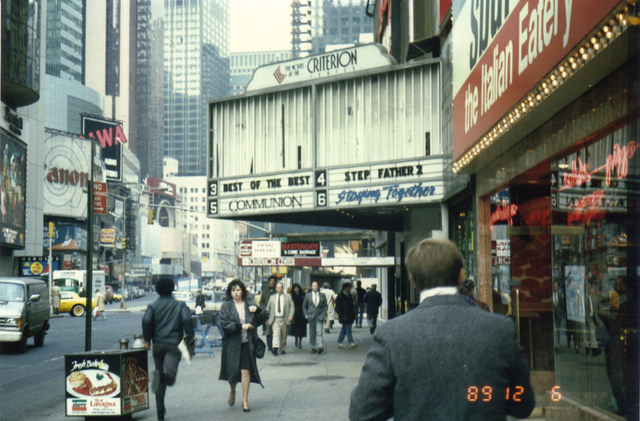
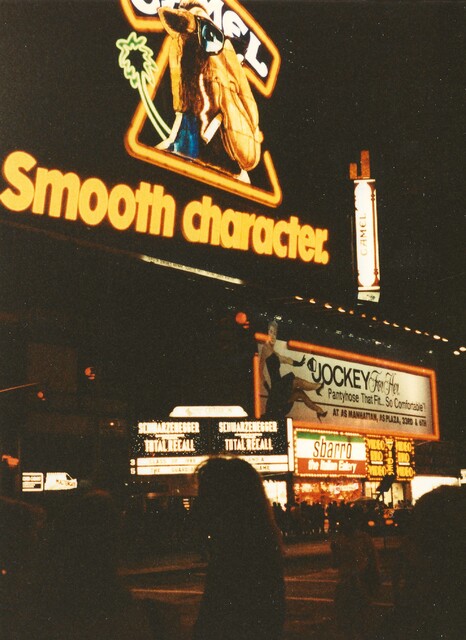
The Criterion evolved with the times, eventually becoming a multiplex and later transitioning into a legitimate stage for Roundabout Theatre Company productions. This adaptability—the ability to reinvent itself for new audiences and new technologies—would become the defining characteristic of the entire building.
Bond Clothing Store Moves In (1940–1977)
👔 The Cathedral of Clothing
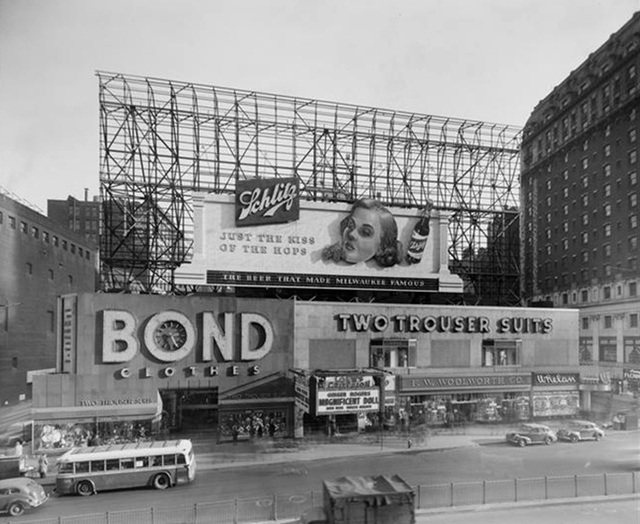
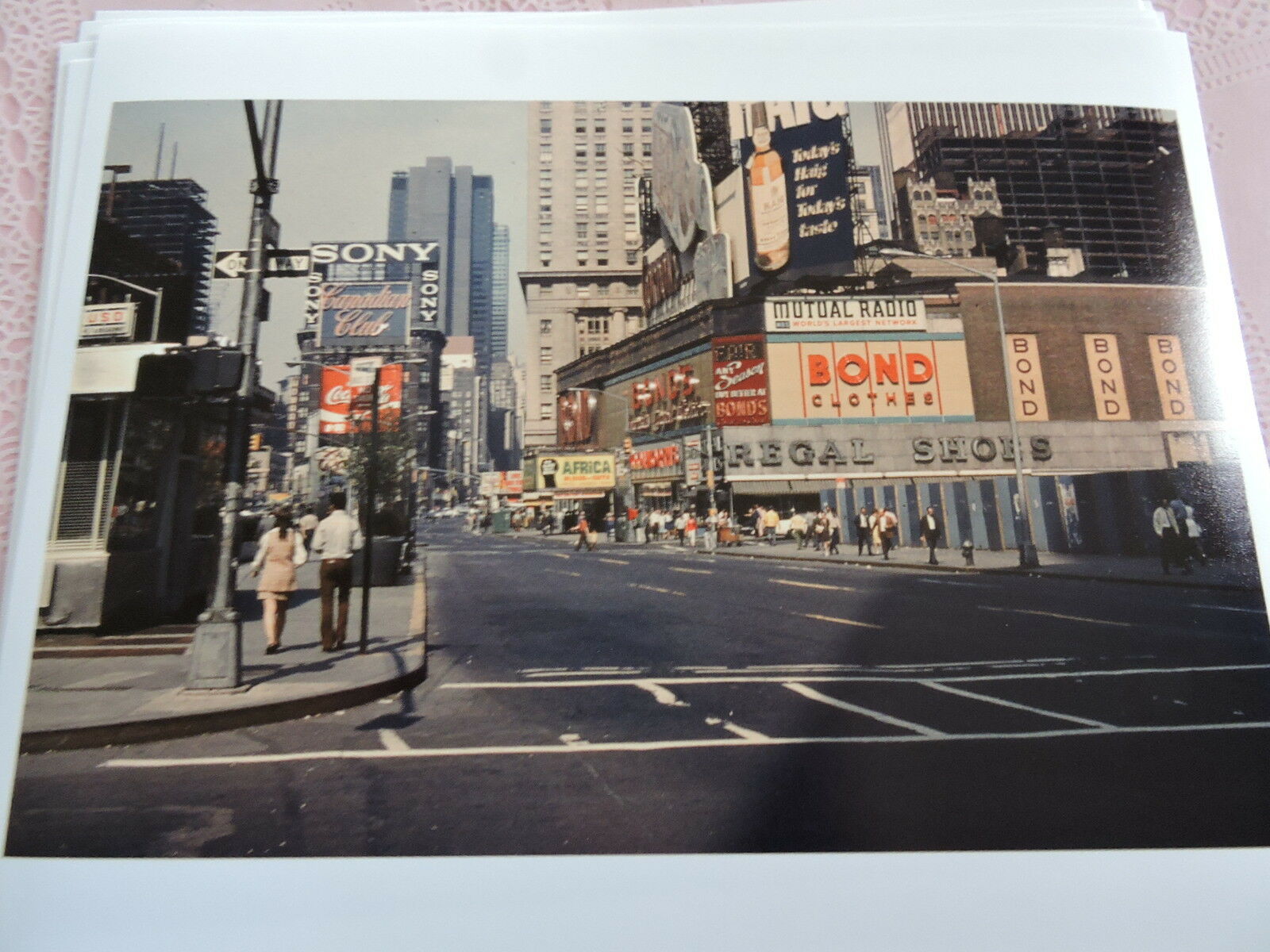
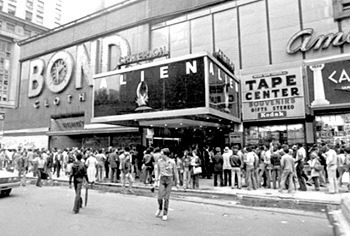
When the International Casino closed, Bond Clothing—then America's largest men's retailer—seized the opportunity. The space was completely gutted and reborn as Bond's flagship store, a temple to masculine style and affordable fashion.
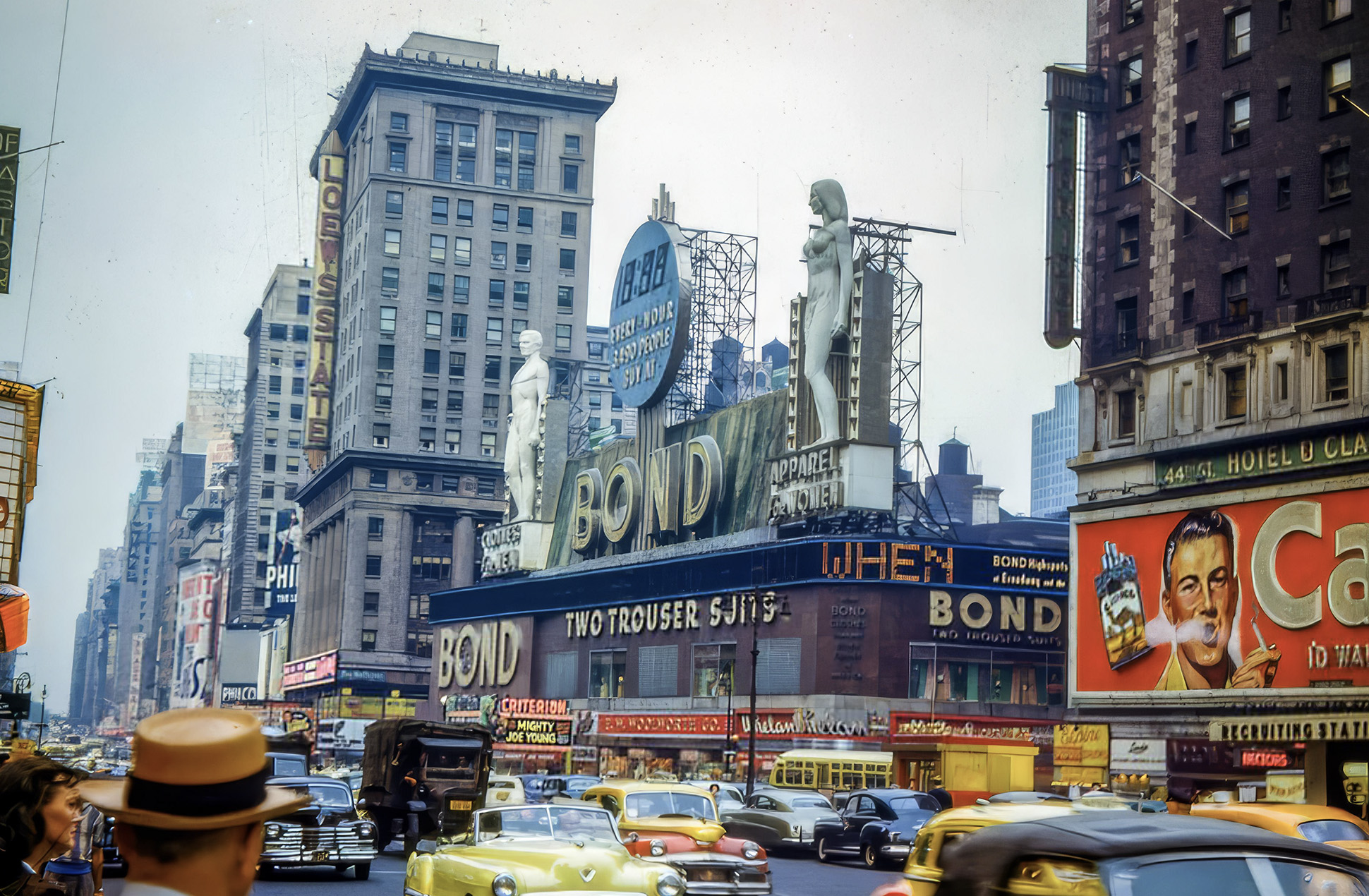
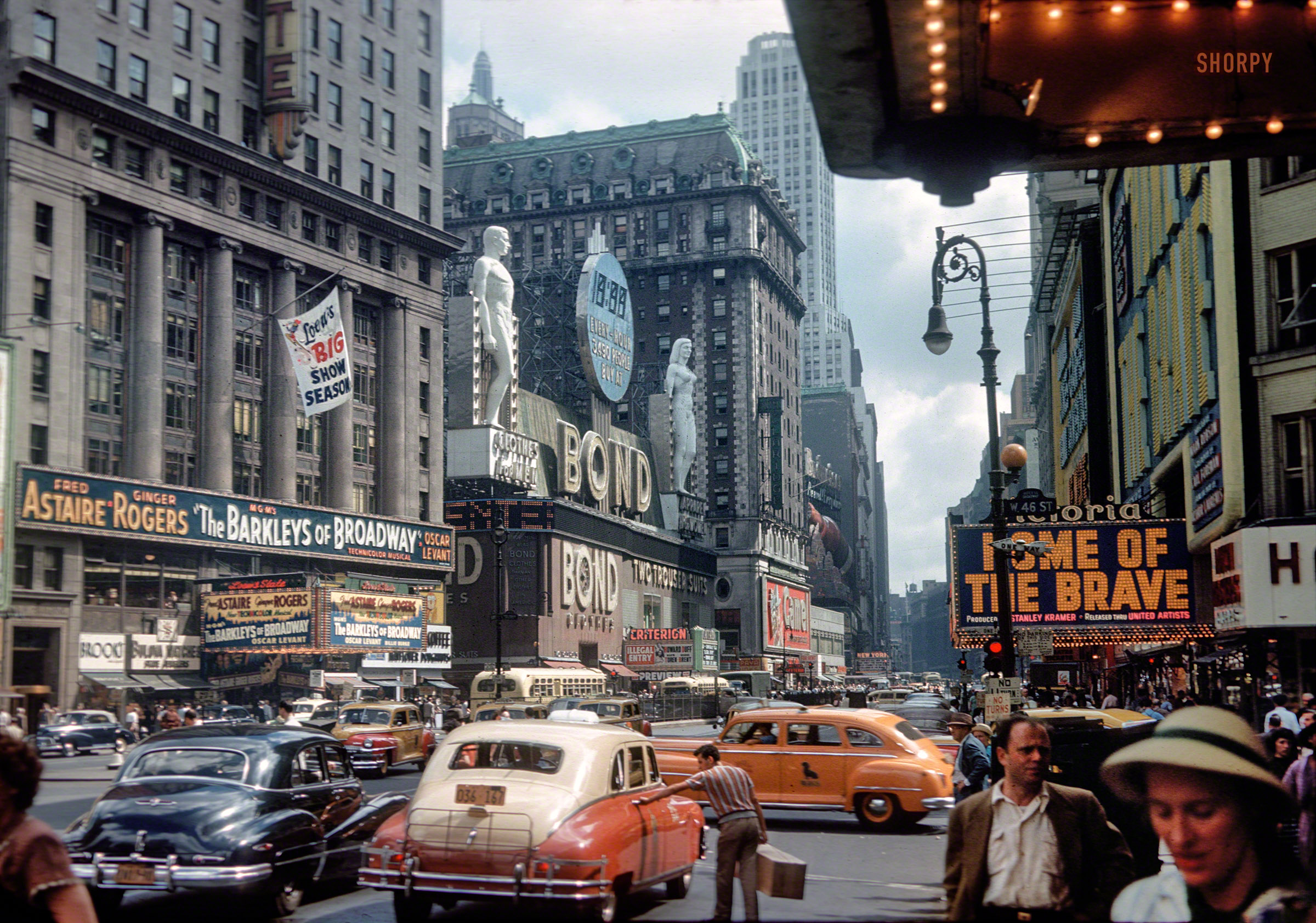
Stylish suits and famous "two-pant deals" found a home in what would be dubbed "the cathedral of clothing." But Bond's ambitions went far beyond retail. They understood that in Times Square, the building itself had to be part of the show. The store would become the canvas for an advertising revolution that would change Times Square forever.
Bond's timing was perfect. Post-war America was booming, men needed clothes for new jobs and new lives, and Times Square was the center of it all. The stage was set for something unprecedented.
Douglas Leigh's Masterpiece (1948–1954)
💡 The Wizard of Light
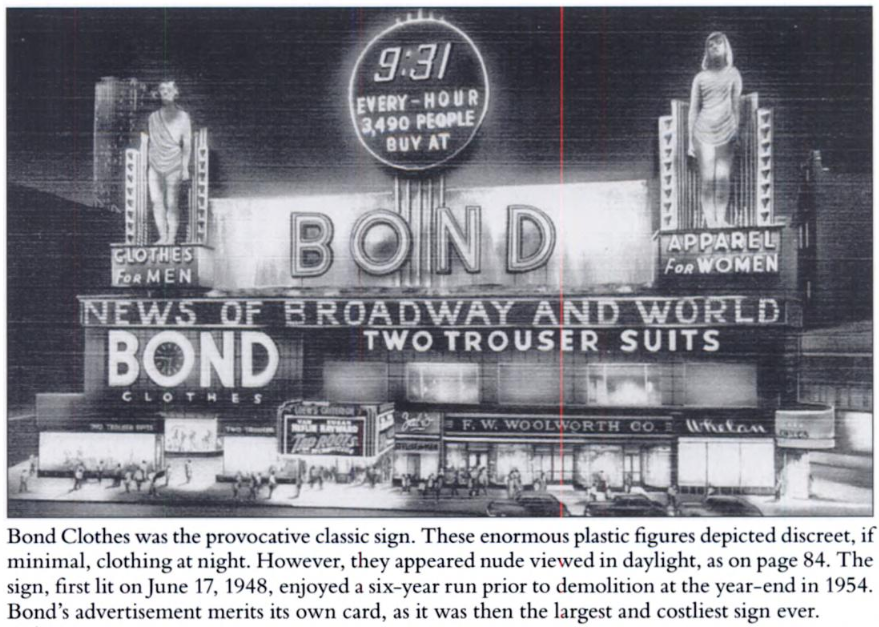
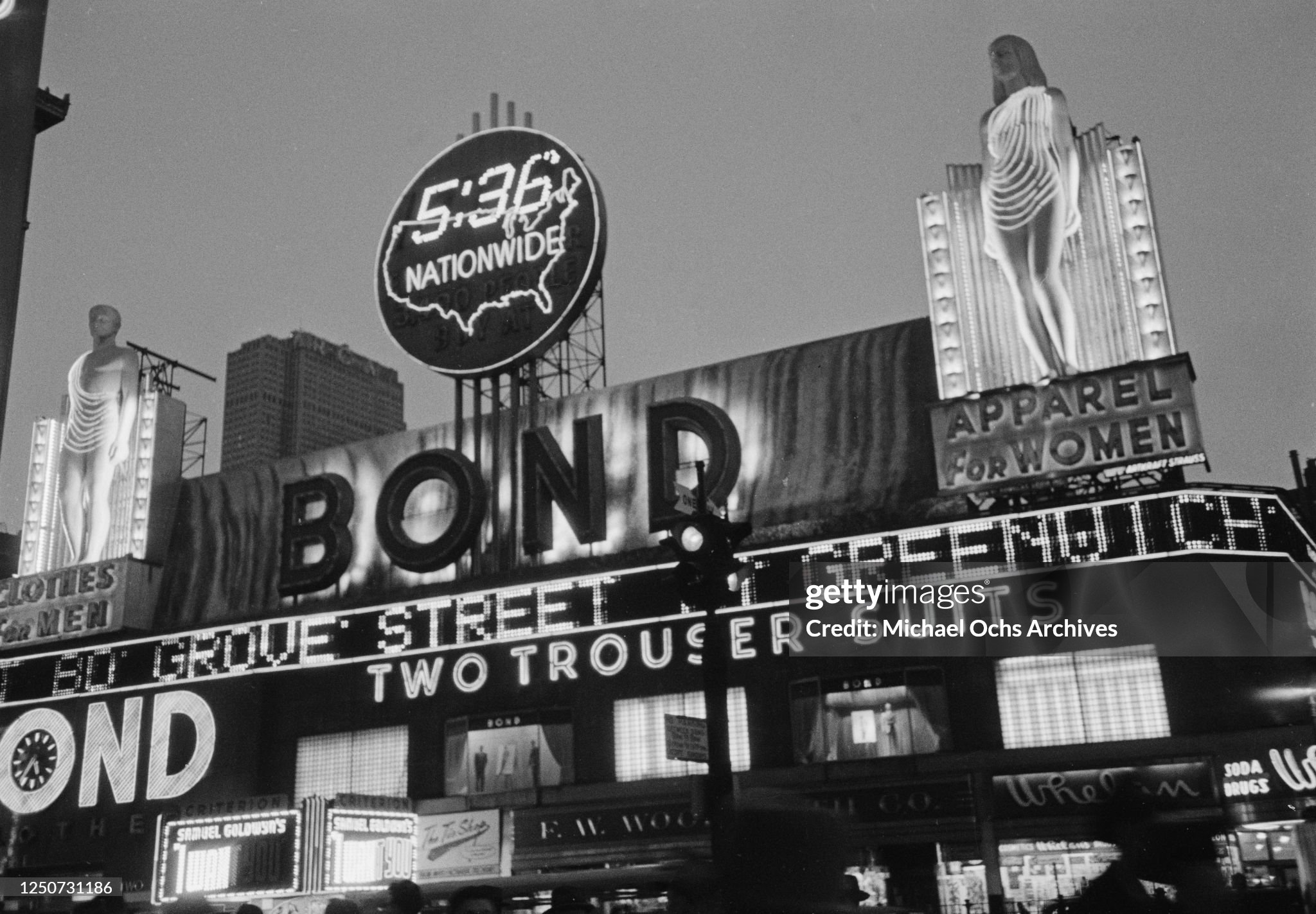
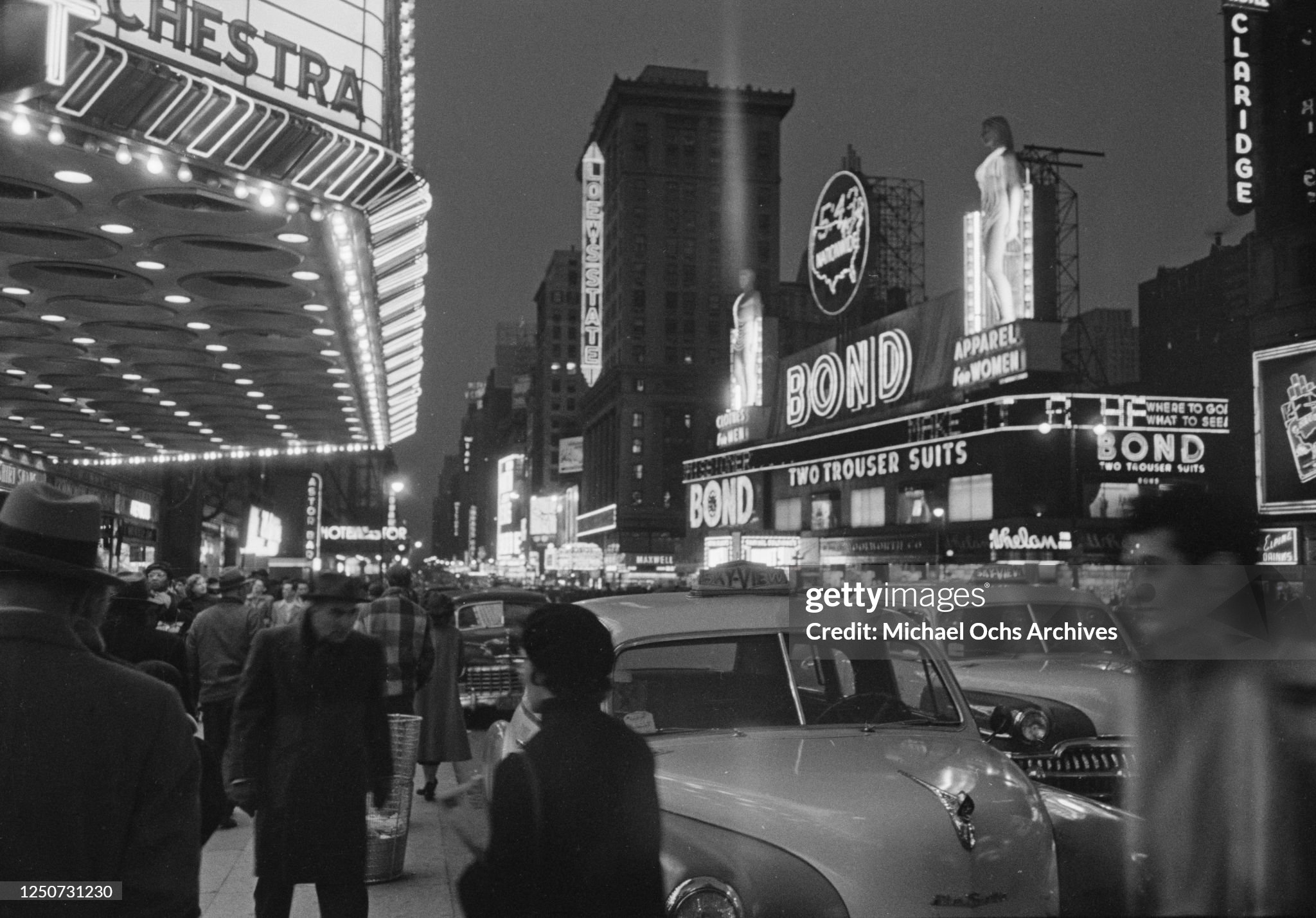
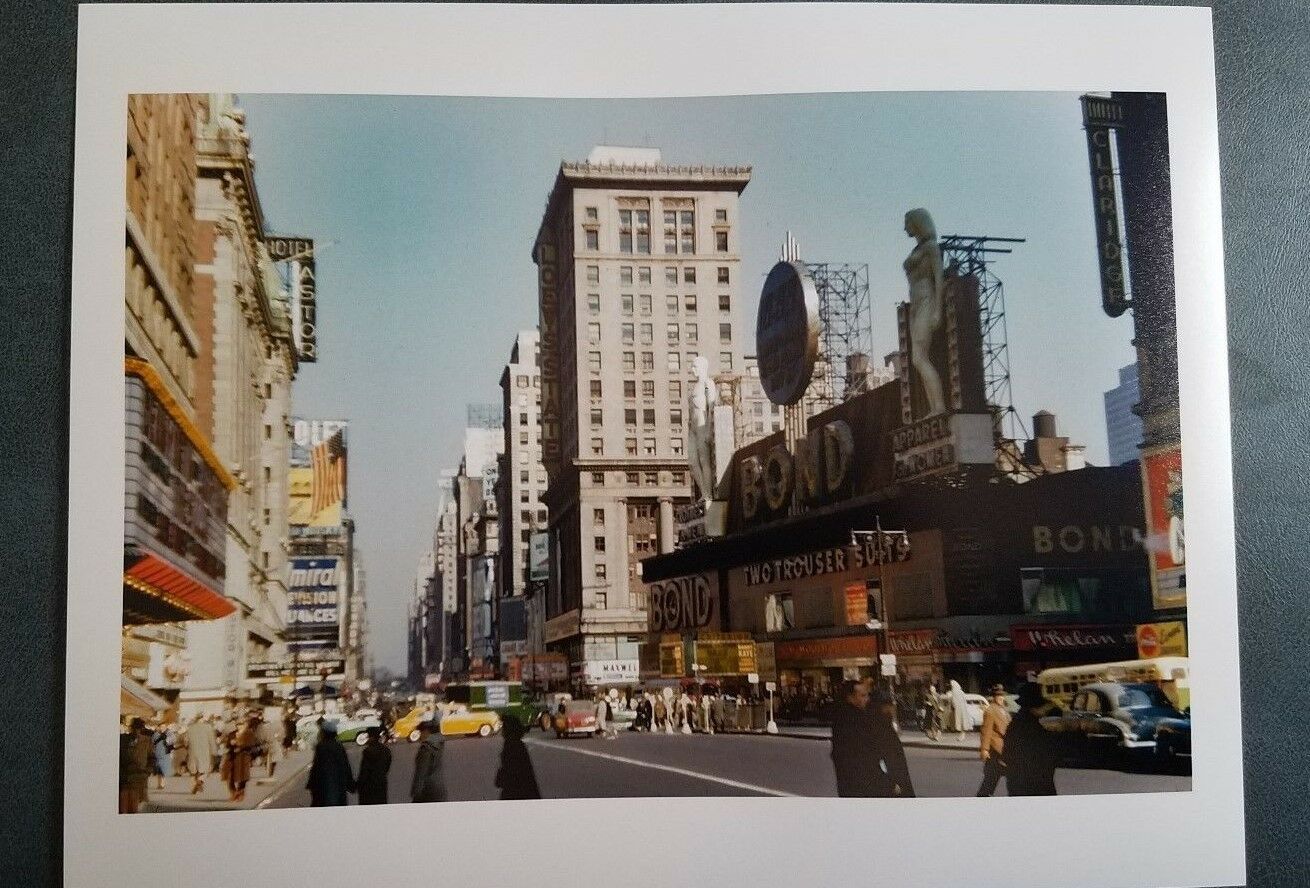
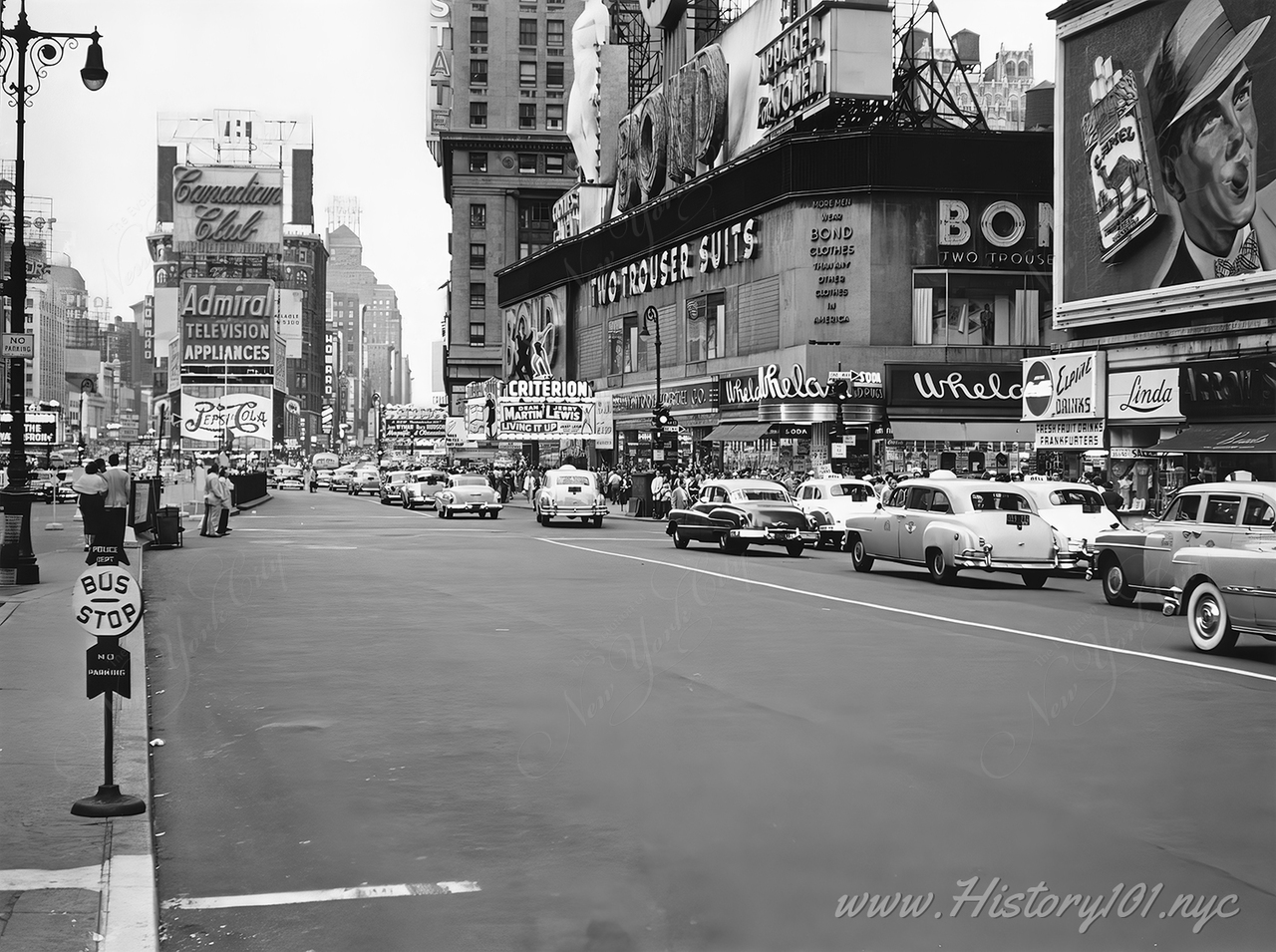
Advertising wizard Douglas Leigh outdid himself with the Bond sign. Two seven-story nude statues flanked a waterfall, while a 278-foot-long zipper scrolled messages above 50,000 gallons of cascading water. At night, neon tubes traced glowing garments onto the nude figures, transforming them from classical sculptures into living advertisements.
⚡ Technical Marvel
The engineering behind the display was as impressive as its visual impact. The clock above proclaimed "Every hour, 3,490 people buy at Bond"—a bold claim backed by the store's genuine success. This wasn't just advertising; it was performance art, theater, and commerce rolled into one spectacular package.
Leigh understood that Times Square demanded more than mere billboards. The Bond statues combined classical beauty with modern technology, artistic ambition with commercial purpose. They were theatrical, futuristic, and uniquely New York—commercialism as showbiz, and Leigh had choreographed a masterpiece.
The Cultural Impact
📸 More Than Advertising
People didn't just pass by the Bond sign—they paused, stared, and remembered. Tourists snapped photos that would become family treasures. Locals admired (or debated) its daring blend of art and commerce. Honeymooners with hotel views called it their urban Niagara Falls.
🎨 Art Meets Commerce
The classical styling made the nudity feel artful rather than scandalous. The statues drew inspiration from Greek and Roman sculpture, elevating commercial advertising to the level of public art. This wasn't crude sensationalism—it was sophisticated spectacle that respected both artistic tradition and modern innovation.
👥 Stopping Traffic
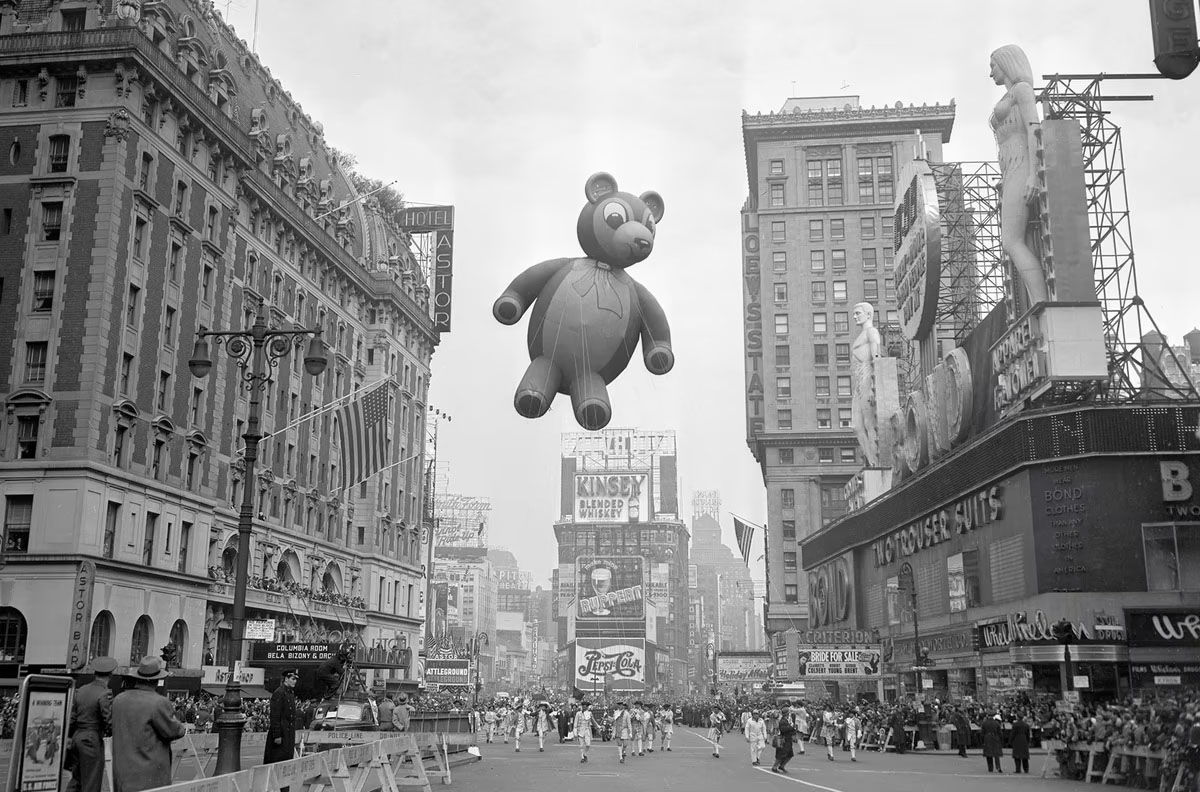
The Bond statues became a genuine tourist destination. Visitors would plan their Times Square walks to coincide with the nightly "clothing" of the figures. The display generated countless newspaper articles, postcards, and souvenir photographs. It was provocative but never crude, daring but never offensive.
Local reactions ranged from admiration for its artistic ambition to appreciation for its sheer audacity. The statues became a symbol of New York's willingness to push boundaries and try something completely new.
📰 National Sensation
The Bond statues attracted media attention from across the country. Magazine articles, newsreels, and television coverage made the display famous far beyond New York. The statues appeared in Hollywood films and became shorthand for Times Square glamour and innovation.
The display proved that advertising could be art, commerce could be culture, and Times Square could lead the world in both spectacle and sophistication.

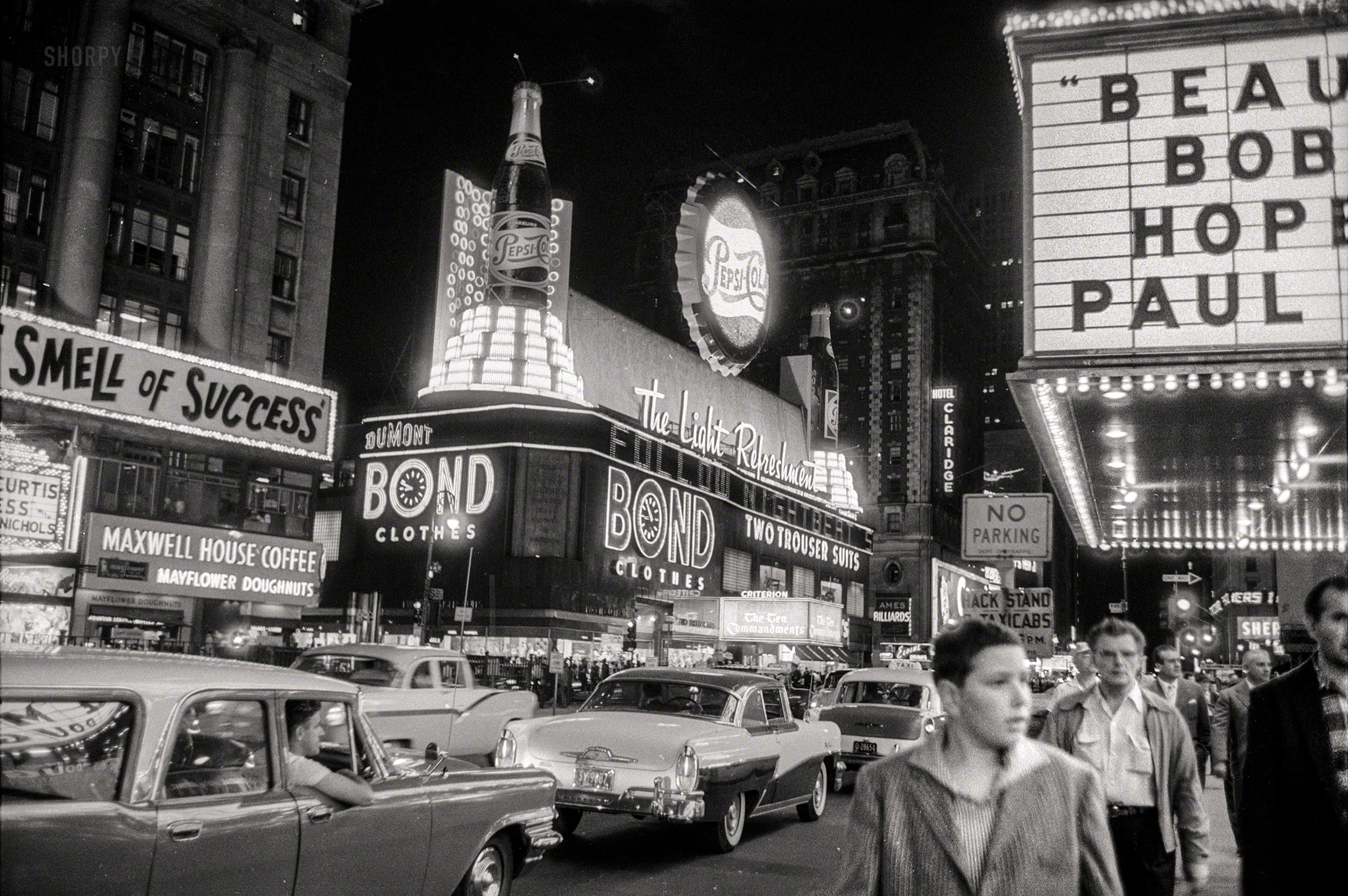
The statues defined the glowing spirit of Times Square's golden era—a time when anything seemed possible and every corner promised a new wonder. They proved that in the right hands, advertising could transcend commerce and become genuine public art.
The End of an Era
🥤 The Pepsi Takeover (1954)
In 1954, Bond handed over its skyspace to Pepsi-Cola. Douglas Leigh redesigned the display, replacing the classical statues with towering Pepsi bottles and turning the iconic clock into a giant bottle cap. The engineering remained impressive, but the magic had shifted—from myth to pure marketing.

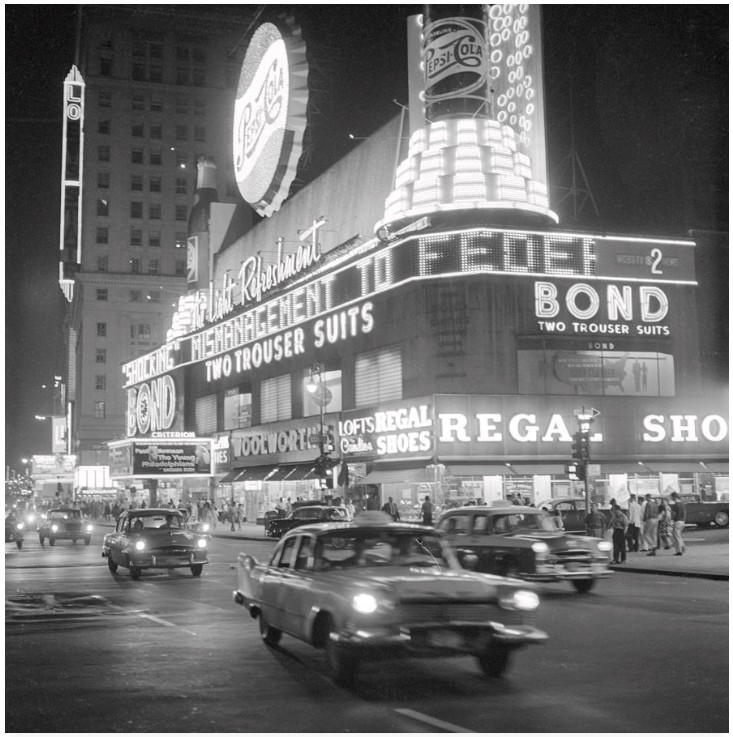
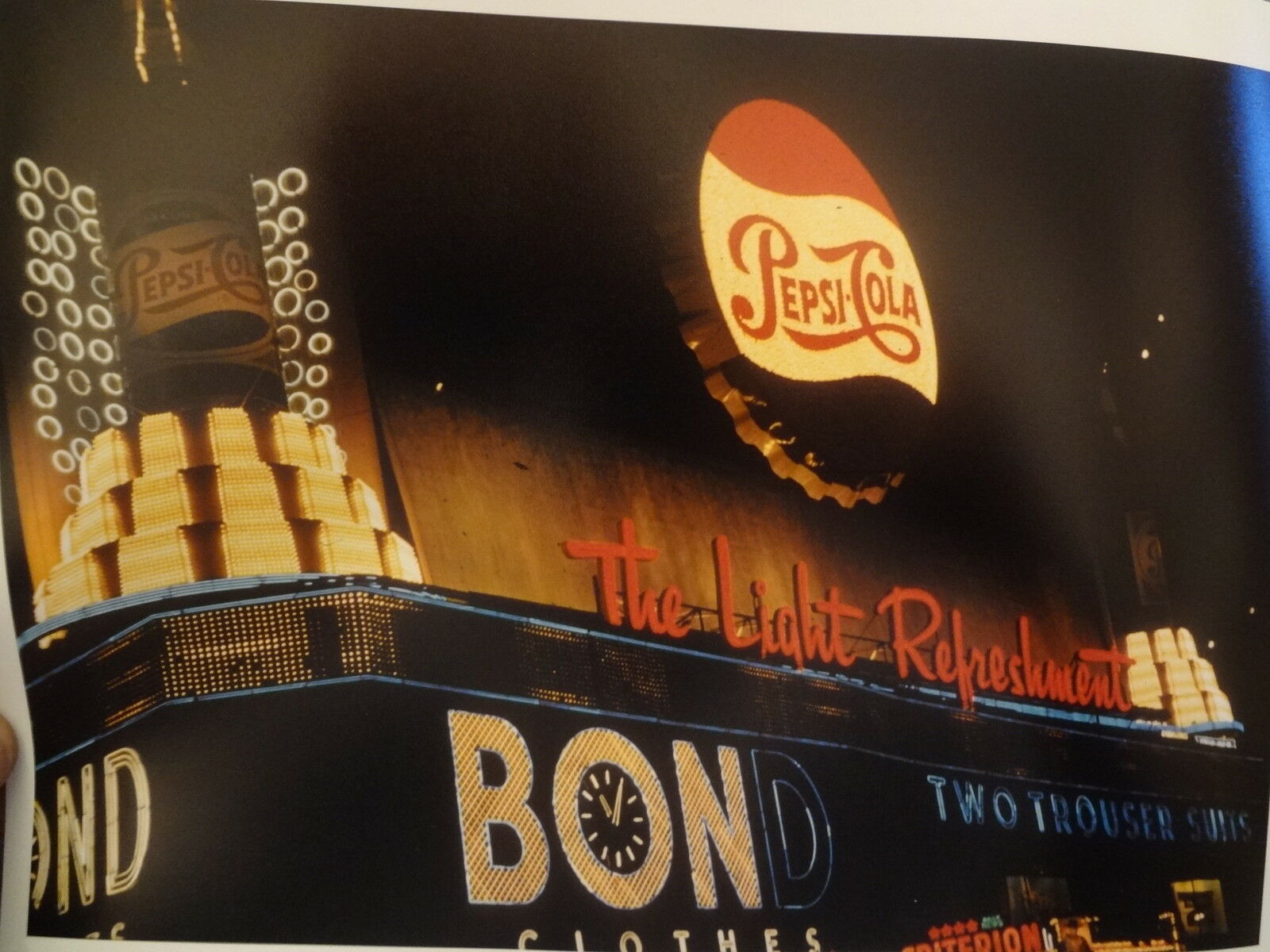
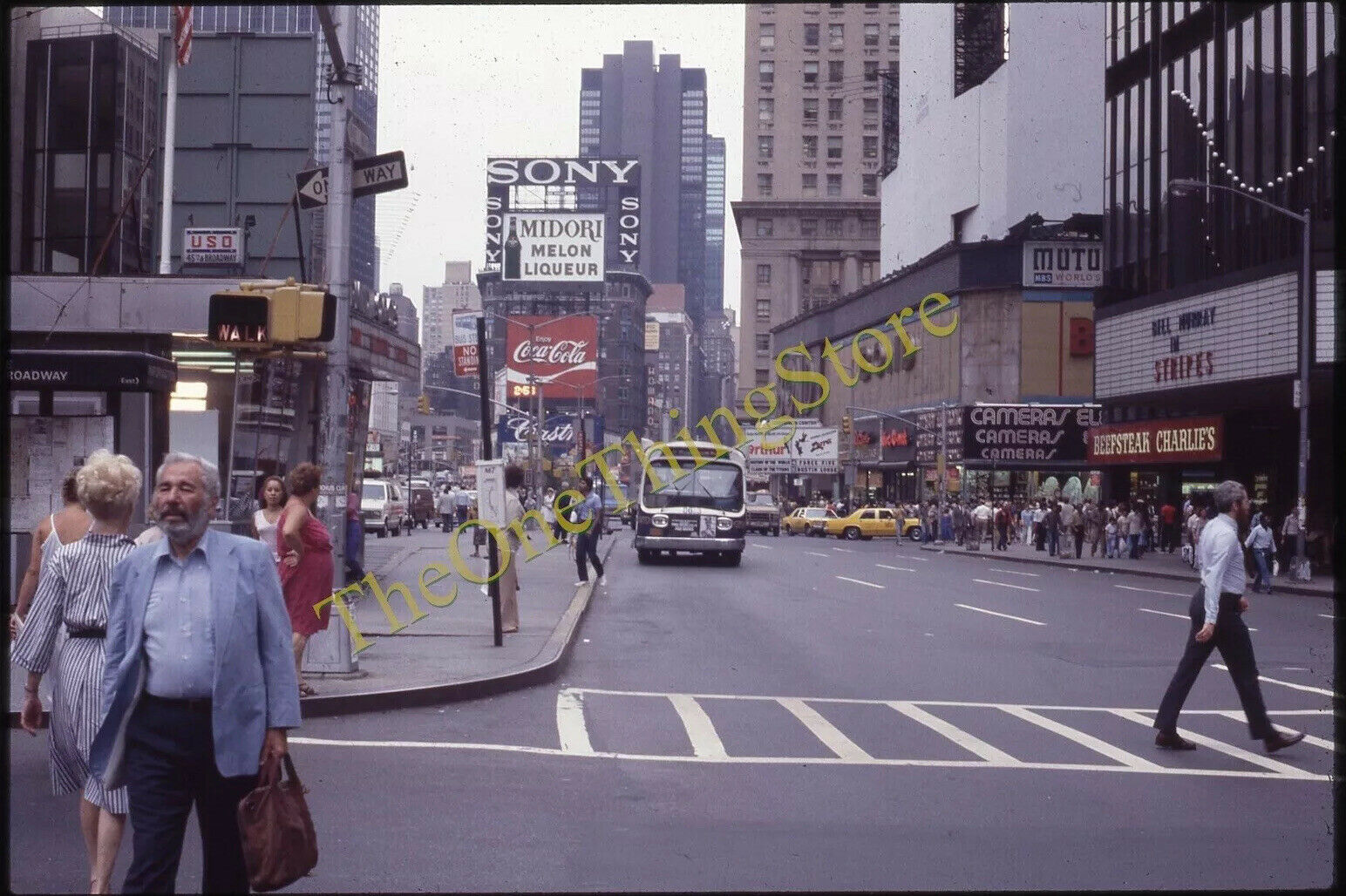
It still shimmered and caught the eye, but something ineffable was lost. The Bond store remained open beneath until 1977, but the statues were gone, and with them, a uniquely artistic era of Times Square advertising. The Pepsi sign was successful and well-engineered, but it never captured the public imagination the way the nude statues had.
The transition marked a broader shift in Times Square advertising—from artistic spectacle to straightforward brand promotion. While the new displays were often technically superior, they rarely achieved the cultural impact of Leigh's original vision.
Modern Transformations
🎭 Roundabout's Broadway Home (1991–1999)
After years of decline, the building found new life when Roundabout Theatre Company leased the former Criterion spaces. The company staged major Broadway revivals including Anna Christie (with Liam Neeson and Natasha Richardson), Company, and 1776. But as Times Square rents soared, Roundabout's run ended in 1999, and the theater officially closed in 2000.

🎠 Toys "R" Us Flagship (2001–2015)
In 2001, the building became a retail wonderland again, this time for kids. The Toys "R" Us flagship spanned 110,000 square feet and boasted a four-story indoor Ferris wheel—a new kind of spectacle for a new generation. It was Times Square's newest tourist magnet, drawing families from around the world.
The store proved that the building's DNA for spectacle remained strong. While the scale was different, the principle was the same: give people something they couldn't see anywhere else, something that would make them stop, stare, and remember.
Unfortunately, soaring Times Square rents eventually forced even this successful attraction to close in 2015, proving that not even the most popular destinations are immune to the economic pressures of prime Manhattan real estate.
🛍️ Gap and Old Navy: Present Day (2017–Today)
Gap Inc. took over the building in 2017, dividing the space for its Gap and Old Navy flagship stores. During renovations, workers made a remarkable discovery—they uncovered the old orchestra pit from the original Olympia Theatre, literally digging up the past beneath layers of Times Square history.
The spirit of spectacle lingers in the building's bones, but the showbiz sheen has dimmed. Modern retail demands efficiency over artistry, brand recognition over innovation. Still, 1514 Broadway remains a cornerstone of Times Square's ever-shifting identity, proof that some locations are simply destined for greatness, whatever form it might take.
Legacy of Light and Commerce
From Oscar Hammerstein's grand vision to Douglas Leigh's neon masterpieces to today's digital displays, 1514 Broadway has consistently pushed the boundaries of what commercial space can be. The Bond statues may be gone, but their influence lives on in every spectacular billboard, every architectural light show, and every attempt to make commerce into art.
The building stands as a testament to Times Square's greatest truth: that in the right place, at the right time, with the right vision, even selling suits can become sublime. The Bond statues proved that advertising could be art, that commerce could inspire wonder, and that sometimes the most beautiful things are the ones that glow brightest against the night sky.