The Empire Theatre Rolls Again
When Times Square's past met the hydraulic future (with help from Abbott & Costello)
Rolling Down the Deuce
A 3,700-ton theater building, a pair of giant balloons, and a move that would change Times Square forever.
"Hey, Abbott!" If you were strolling through Times Square on March 1, 1998, you might have done a double-take. There, in broad daylight, were comedy legends Bud Abbott and Lou Costello—or rather, enormous balloon versions of them—seemingly tugging a seven-story theater building down 42nd Street with yellow ropes. It wasn't a dream, a movie stunt, or the world's strangest parade float. It was engineering as theater, preservation as spectacle, and a perfect New York moment.
On that day, the Empire Theatre, a 3,700-ton landmark with a century of theatrical history, was being relocated 168 feet west along 42nd Street. The move was part of a larger redevelopment plan for Times Square, but it also became a celebration of the building's storied past—one that included hosting Abbott and Costello during their early days as a comedy duo.
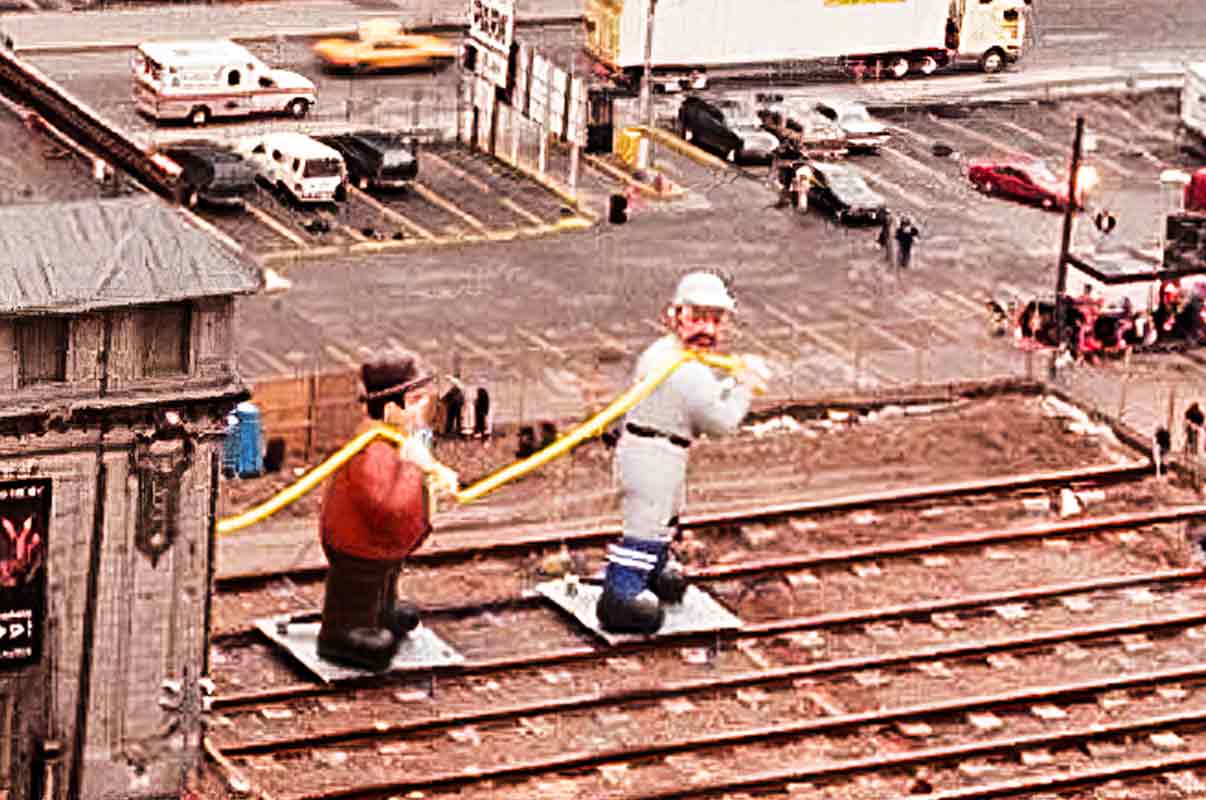
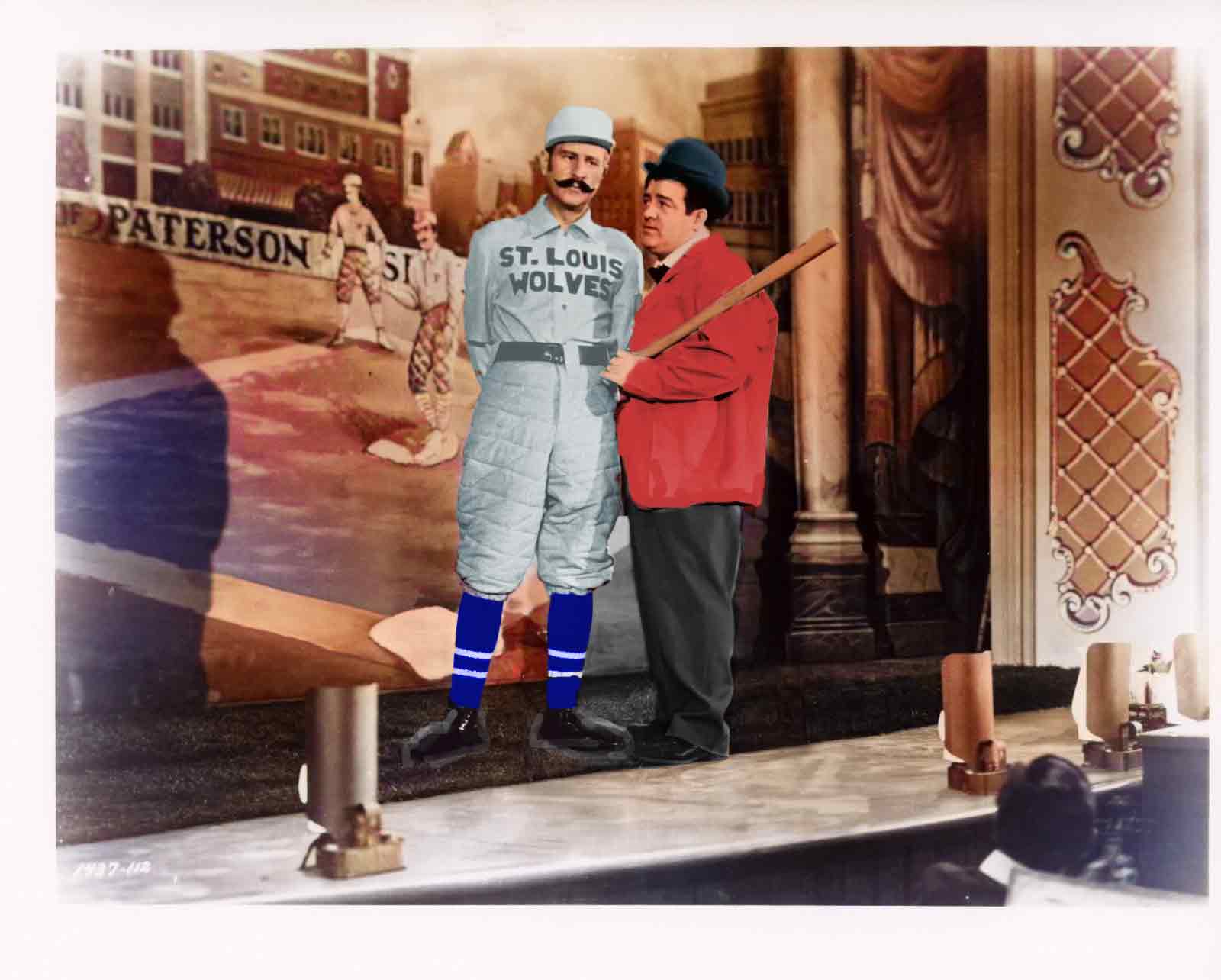
The 3,700-ton Empire Theatre—once home to vaudeville, burlesque, and second-run films—was being lifted, placed on steel rails, and rolled down the block to make way for Times Square redevelopment. And in a stroke of showmanship worthy of Broadway itself, the developers gave the comedic duo (who first performed together at this very theater in 1935) one final starring role: pulling their old stage home toward a new life as a multiplex entrance.
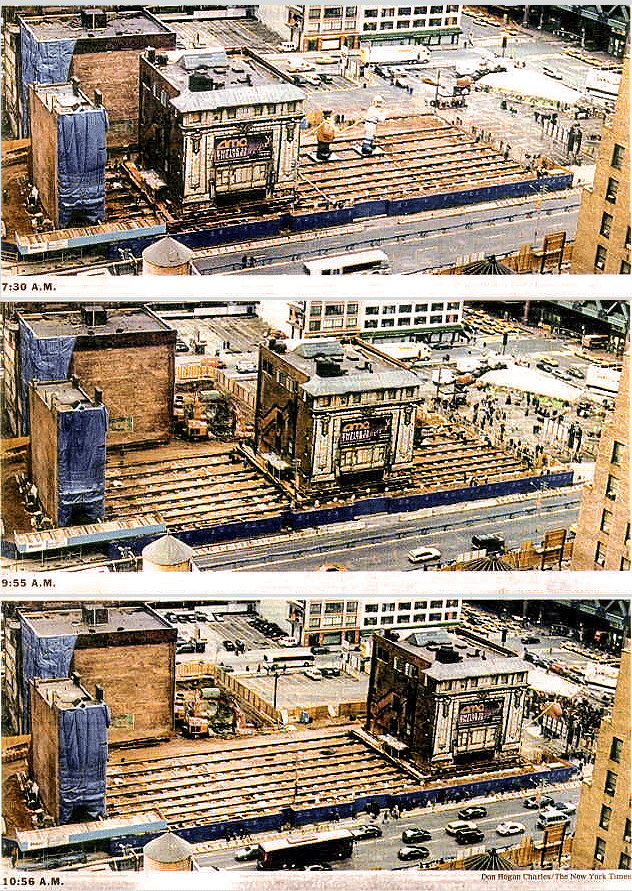
It was one of New York's greatest feats of preservation engineering—a 7.4 million-pound building moving at one foot per minute down one of the world's most famous streets. And as hundreds of spectators gathered along the sidewalks, the Empire Theatre's rolling renaissance became a perfect metaphor for Times Square itself: honoring the past while sliding steadily toward the future. But to get the full picture, we neeed to step back in time...
A Century of History
Opened in 1912 as the Eltinge Theatre, the building was named for famed female impersonator Julian Eltinge and designed by architect Thomas W. Lamb, who had already established himself as a respected theater architect. The theater was commissioned by producer and manager Al Woods as part of the booming development of 42nd Street as an entertainment hub.
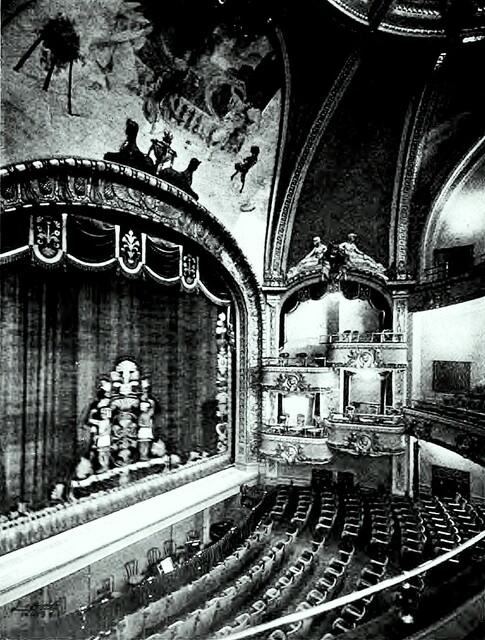
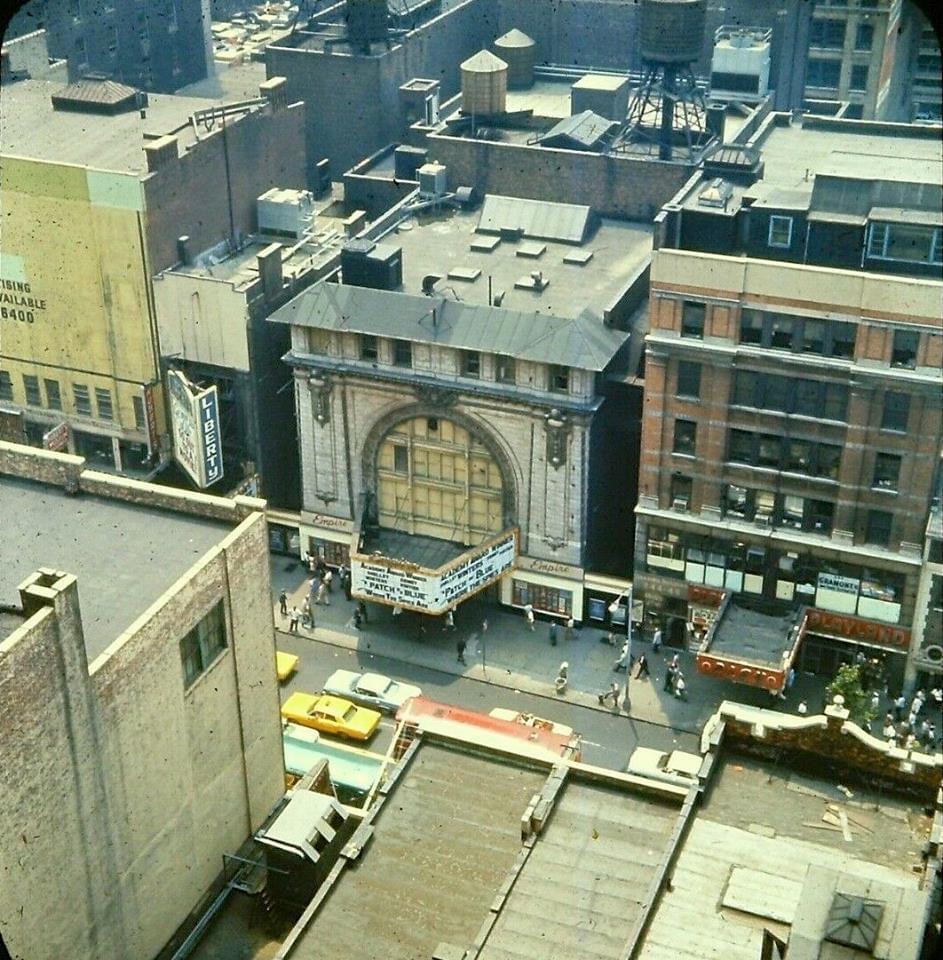
Lamb designed a restrained Beaux Arts façade in white terra cotta, dominated by an immense arched window that spanned several stories high. The auditorium was decorated in an Egyptian theme, which drew mixed reviews from the critics of the day. With approximately 900 seats spread across three levels, the Eltinge Theatre opened on September 11, 1912, with the melodrama "Within the Law," which ran for a successful 541 performances.
In its early years, the Eltinge was known as a "lucky house," hosting many long-running plays and attracting top theatrical talent. Notable productions included John Barrymore in "The Yellow Ticket," "The Song of Songs," "Fair and Warmer," "Up in Mabel's Room," and "Ladies Night." The theater thrived during the 1910s and early 1920s, embodying the vibrancy of Broadway's golden age.
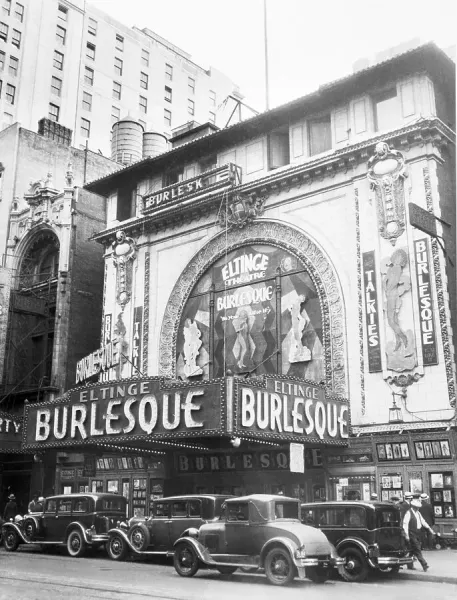
However, the theater's fortunes declined during the late 1920s, mirroring broader economic troubles. As the Great Depression took hold, legitimate productions became scarce, and the Eltinge was leased for burlesque by Max Rudnick in 1931. This transformation marked the beginning of the theater's shift away from traditional Broadway fare toward more risqué entertainment.
It was during this burlesque era, specifically in early 1935, that comedians Bud Abbott and Lou Costello first performed together at the Eltinge. Initially doing separate acts, they were encouraged to form a partnership by other performers, including Abbott's wife. This fortuitous meeting would lead to one of comedy's most successful partnerships and create a connection to the building that would be celebrated during its 1998 relocation.
The Downward Spiral of Decay
The burlesque era at the Eltinge was relatively short-lived. Mayor Fiorello LaGuardia, determined to clean up the city, closed the Eltinge along with fourteen other burlesque theaters in a single day in 1937. The theater remained boarded shut for five years, a victim of changing tastes and moral crusades.
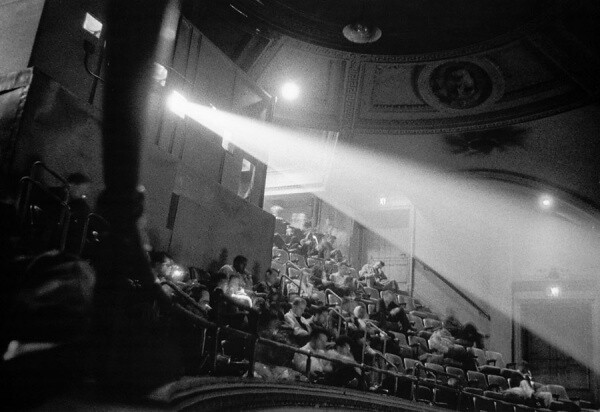
In 1942, the building was converted into a movie theater, opening as the "Laffmovie," a first-run house specializing in comedies. However, as the Times Square neighborhood continued to decline in the post-war years, so did the theater's prestige. By 1954, the venue had been renamed "The Empire," becoming what was described as a "second-run grind house" screening exploitation films, low-budget horror, and eventually pornography.
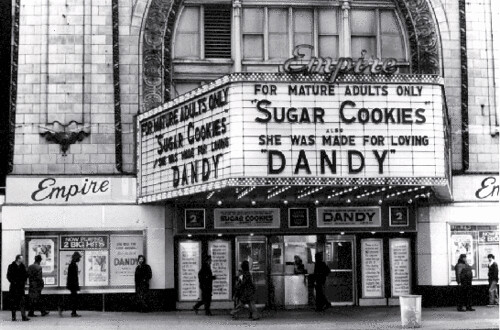
By the mid-1980s, the sleazy atmosphere of Times Square had reached its nadir, and the Empire closed its doors for good in 1986. The theater sat vacant, another casualty of urban decay in an area overrun with peep shows, adult bookstores, and drug dealing. However, thanks to its landmark status granted in a 1981 historic-preservation agreement between New York City and New York State, the building couldn't be demolished, unlike many of its contemporaries.
Times Square Redevelopment and the Empire's Fate
In 1992, the exterior of the vacant Empire was used in the filming of Columbia Pictures' "Last Action Hero" starring Arnold Schwarzenegger. The dilapidated theater served as a perfect backdrop for scenes in the action film, unwittingly preserving on celluloid the building's appearance before its eventual transformation.
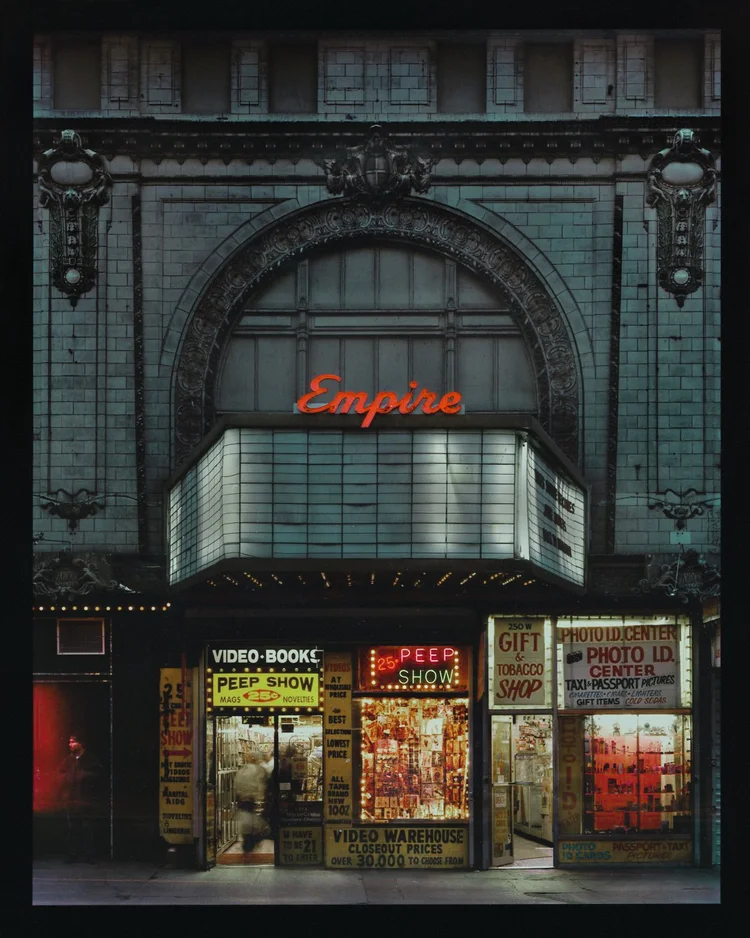
Later in the 1990s, the New 42nd Street, a non-profit organization, was formed to oversee the redevelopment of seven neglected historic theaters on 42nd Street between 7th and 8th Avenues, including the Empire. This initiative was part of a broader effort to revitalize Times Square and transform it once again into a desirable tourist destination.
In 1993, The theaters along 42nd Street briefly lit their marquees again. The local nyc artist Jenny Holzer’s installation installed her 'Truisms' on the light-up signs of several historic theaters. The installation was produced by Creative Time and harkened back to a decade before --when she commandeered the electric signs of Times Square for similar expression. In addition, in the months that led up to the full redevelopment of the area, many of the abandoned storefronts and ply-wood barriers that line the then-dilapidated 'Deuce' were painted in ironically cheery bright colors.
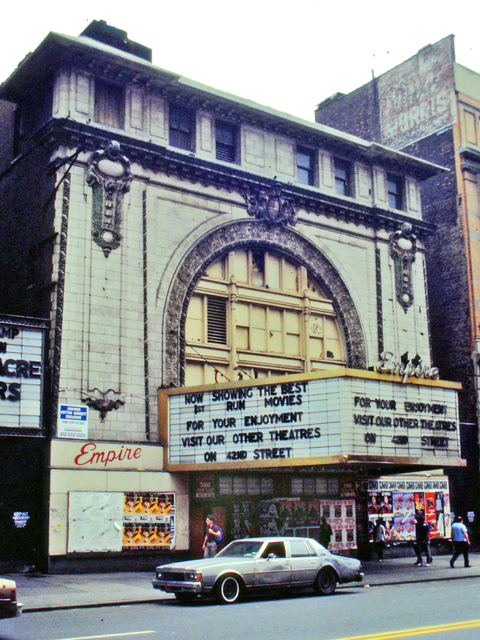
By the mid-1990s, the Times Square Redevelopment Plan was gaining momentum. The New Amsterdam Theatre was being restored by Disney, the Lyric and Apollo theaters were being combined into the Ford Center for the Performing Arts, and other historic venues were finding new lives and purposes.
Forest City Ratner Companies, under the leadership of Bruce Ratner, became a key developer in this transformation. When planning a large entertainment-retail-restaurant complex on West 42nd Street, Ratner faced a dilemma with the Empire Theatre: its position blocked street-level access to large blocks of space along 42nd Street that would become other commercial enterprises in the development.
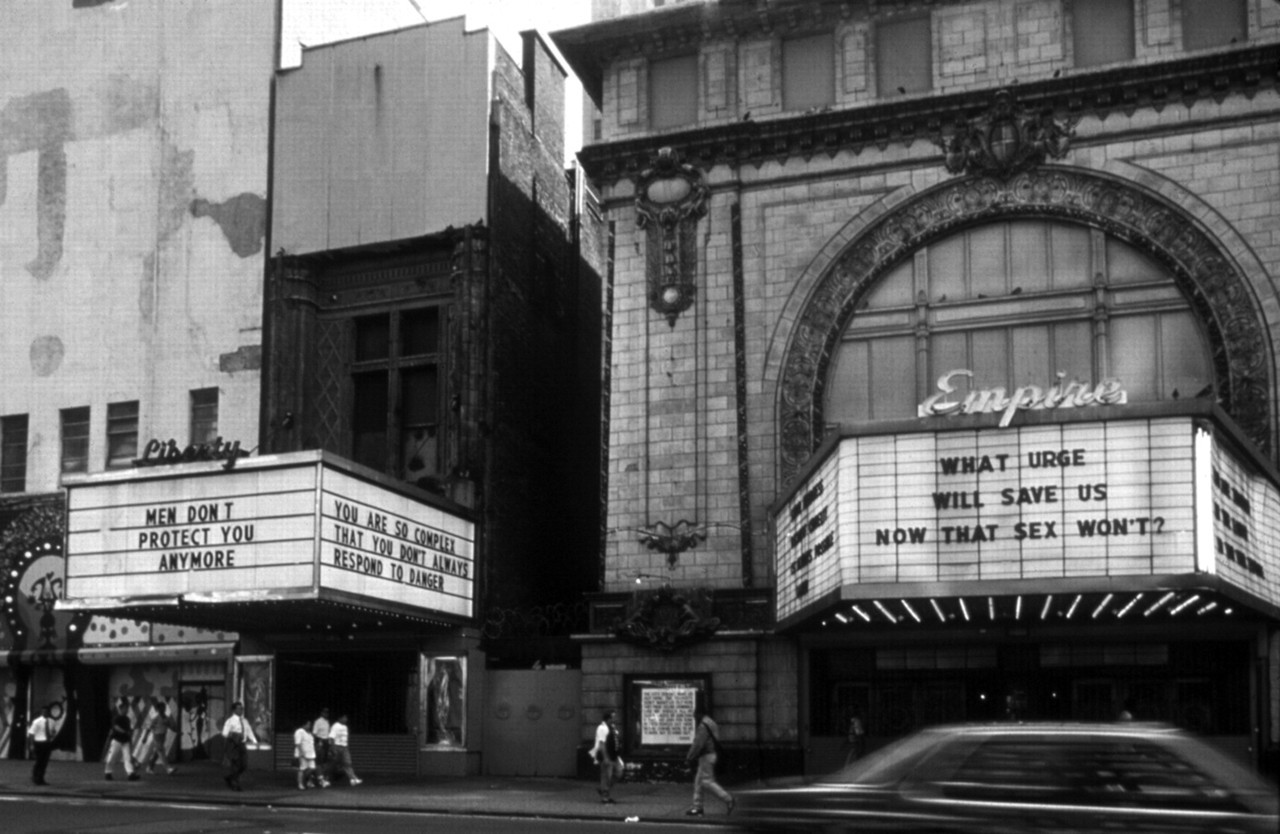
For the Empire, a more innovative solution emerged: instead of demolition, the entire structure would be physically relocated 168 feet west along 42nd Street. There, the historic façade and portions of the interior would be preserved and incorporated into a new state-of-the-art multiplex cinema. The architectural firm Beyer Blinder Belle, noted for its work in preservation and adaptive reuse, devised the plan.
The $1.2 million relocation project would be the first step toward creating what would eventually become the AMC Empire 25, a 25-screen movie complex scheduled to open in 1999.
How Do You Move a 3,700-Ton Landmark?
The answer: with surgical precision and innovative engineering. Moving the Empire Theatre required not just technical expertise but a complete rethinking of how historic structures could be preserved in the face of modern development pressures.
Engineers from Urban Foundation/Engineering of Brooklyn, working with architects from Beyer Blinder Belle, devised a system that was "elegantly simple" in concept but enormously complex in execution. Anthony J. Mazzo, a senior vice president of Urban Foundations, described it as "nothing more than a classical shoring job," adding, "It's like using a dolly to move a piece of furniture."
The technical specifications of the move:
- Eight parallel steel beam rails, each 250 feet long, running from inside the building to its new location
- 430 piles supporting the track system
- 70 concrete caps inside the theater building
- A steel platform constructed on top of the rails inside the theater and fastened to the building's walls by steel beams
- 32 Hilman Rollers with Accu-Roll Guidance, each with a 200-ton capacity, arranged in a pattern of four per track
- Horizontally-oriented hydraulic jacks attached to the rails to push the platform
Heymi Kuriel, vice president of Urban Foundation, emphasized the precision required: "Everything had to be perfect. Every bolt had to be tested." This level of attention to detail was essential when moving a structure weighing 7.4 million pounds through a densely built urban environment.
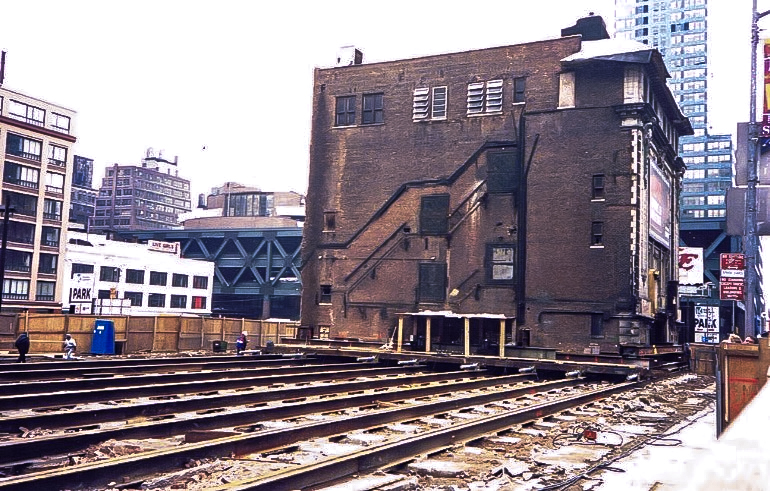
One of the most intriguing discoveries during the planning phase was that due to the very low coefficient of friction of the Hilman Rollers, only four hydraulic rams were needed to move the structure instead of all eight as initially anticipated. This gave engineers a unique advantage: while four rams were pushing, the other four could be retracted and repositioned to take over when the first set reached their maximum extension, allowing for an almost continuous movement.

Preparation: Setting the Stage for the Move
Preparations began in November 1997, four months before the actual move. Inside the theater, workers spent three months welding steel beams to supporting walls and columns, then constructing an interlocking platform below — securely fastened to the building's walls so the entire structure would move as one unit.
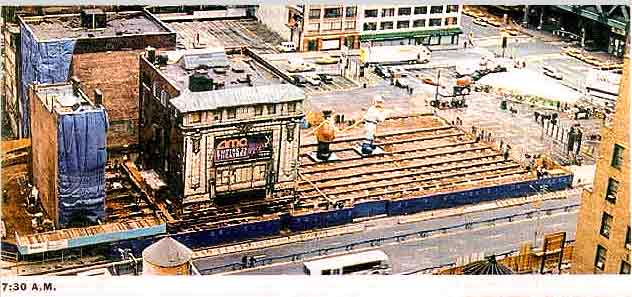
The walls were then cut at their base, separating the building from its original foundation. Vertical hydraulic jacks lifted the theater one-eighth of an inch — just enough to slide the Hilman Rollers into place. With the platform lowered onto the rollers and the jacks removed, the building was ready. A new foundation 168 feet west already awaited it. As a test run, the building was moved the first 30 feet on February 22; the full journey was set for the following weekend.
The Big Roll: March 1, 1998
On Sunday, March 1, 1998, with the south side of 42nd Street closed to traffic, the Empire Theatre began its historic journey. The move attracted hundreds of curious spectators who lined the sidewalks to witness this extraordinary feat of engineering and preservation.
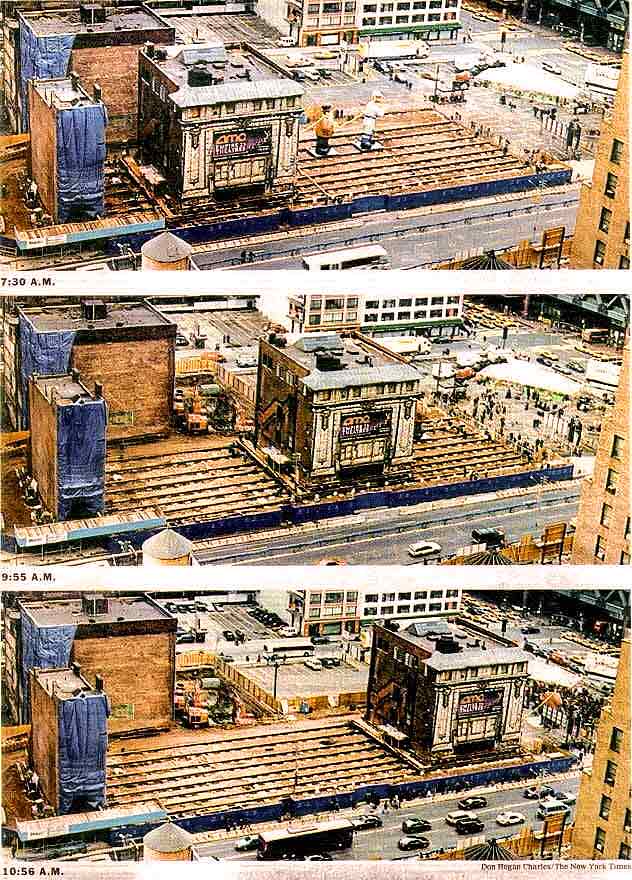
Pushed by the horizontally-oriented hydraulic jacks, the theater moved in five-minute bursts, advancing approximately five feet with each burst. This methodical approach allowed engineers to carefully monitor the building's progress and make adjustments as needed. Between movements, the jacks were repositioned to prepare for the next push.
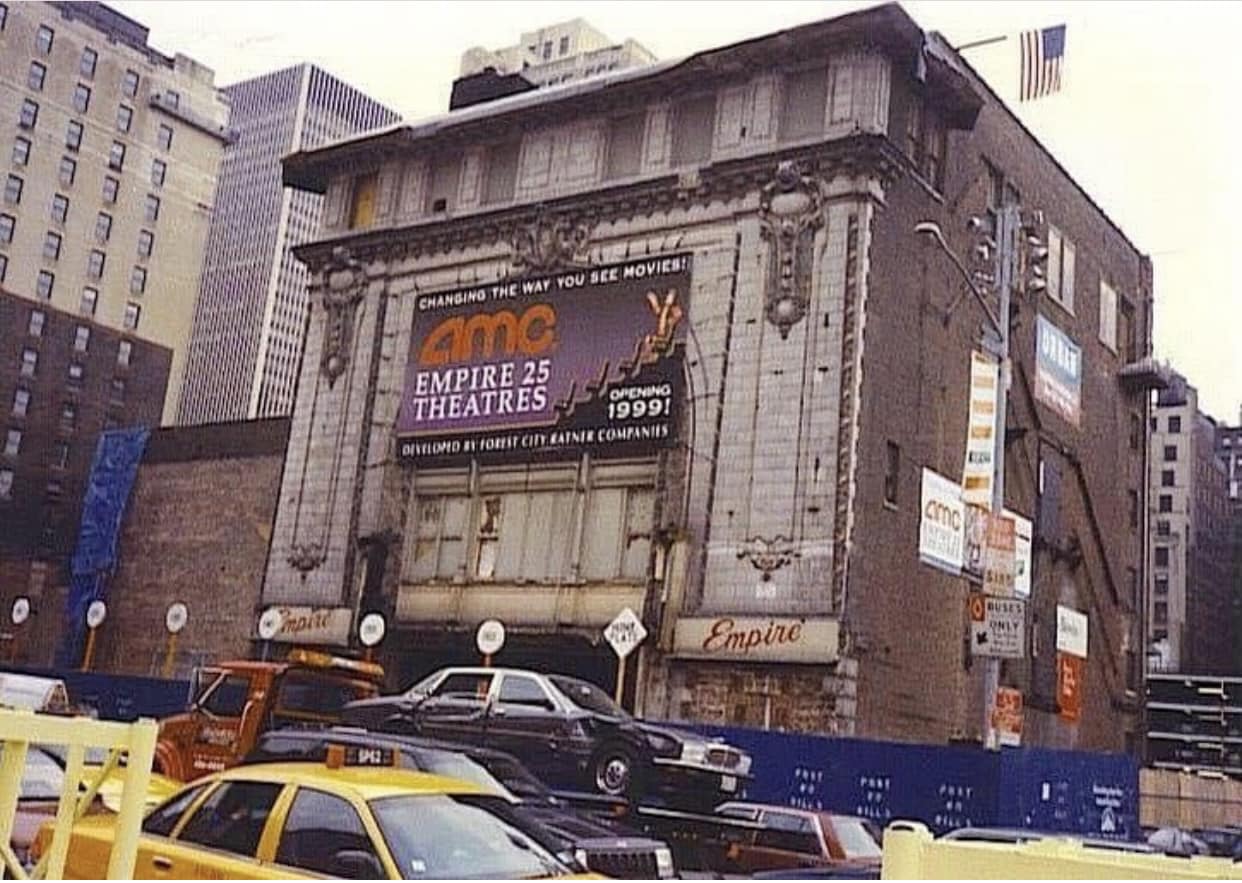
Overall, the theater traveled at a rate of approximately one foot per minute, completing the entire 168-foot journey in less than five hours. This was significantly faster than anticipated, thanks to the efficiency of the roller system and the careful preparation work.
The Daily News reported: "The historic Empire Theatre, all 7.4 million pounds of it, inched down W. 42nd St. at less than a foot per minute along eight rails stretching west to its new home 168 feet away, near Eighth Ave." For spectators, it was a surreal sight—a solid brick-and-mortar building seemingly floating down the street with surprising grace.
Once the theater reached its destination, it was carefully lowered onto its new foundation. New walls would later be built to fill in the portions that had been removed for the relocation, seamlessly integrating the historic structure into its new context.
Abbott & Costello: Comedic Legends Return
Among the most delightful aspects of the Empire Theatre's relocation was the inspired decision to use enormous inflatable balloons of Bud Abbott and Lou Costello to add theatrical flair to the engineering spectacle. These Thanksgiving Day Parade-style balloons were attached to the front of the moving building with yellow ropes, creating the charming illusion that the legendary comedy duo was pulling their former performance venue to its new home.
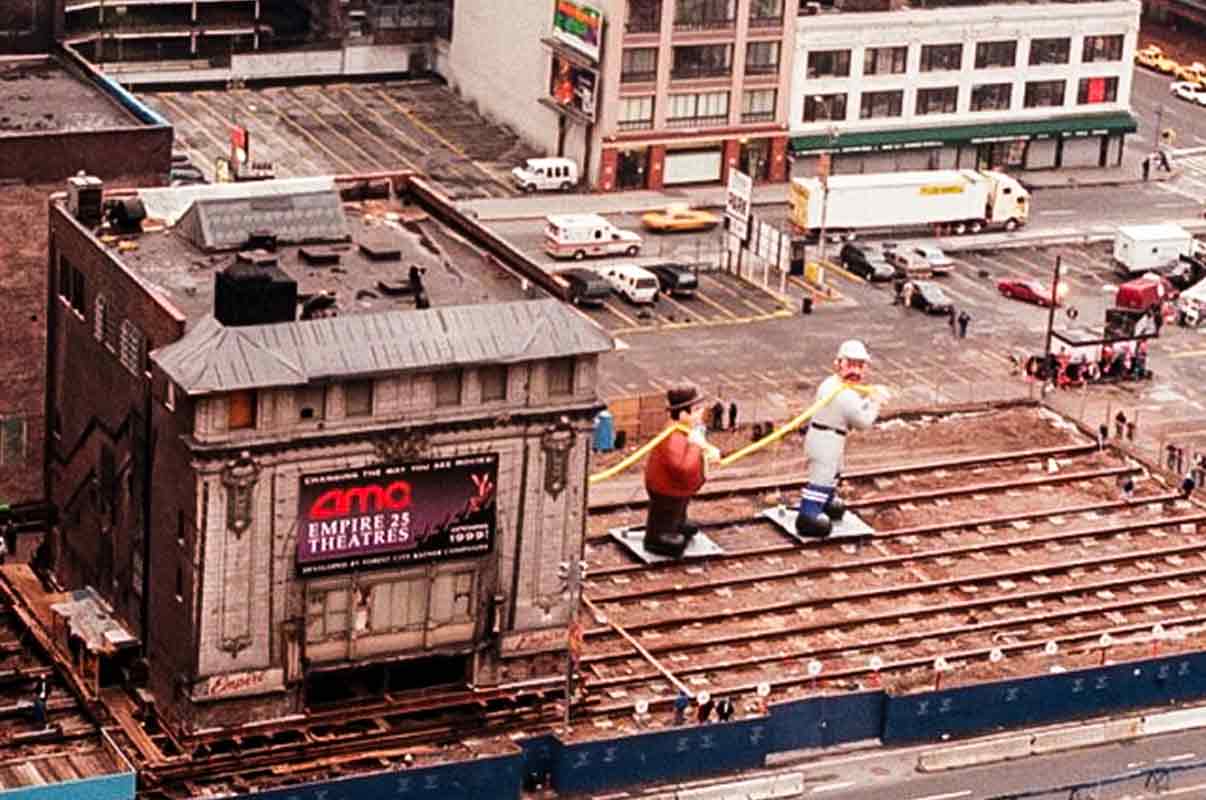
The choice to feature Abbott and Costello was particularly meaningful given their connection to the building. In early 1935, when the theater was operating as the Eltinge and featuring burlesque performances, the two comedians met while performing separate acts. Encouraged by other performers, including Abbott's wife, they formed a partnership that would go on to become one of the most successful comedy teams in entertainment history.
The Washington Post reported that "As the building moved, it appeared that two giant Thanksgiving Day Parade-style balloons of comedians Bud Abbott and Lou Costello were using yellow ropes to pull the building veeeeery sloooooowly to its new location."
Further celebrating this connection, construction markers referencing Abbott and Costello's famous "Who's on First?" routine were placed along the fence marking the move's progress. These playful touches transformed what could have been merely a technical achievement into a celebration of the building's rich theatrical heritage.
The AMC Empire 25: Escalators Through History
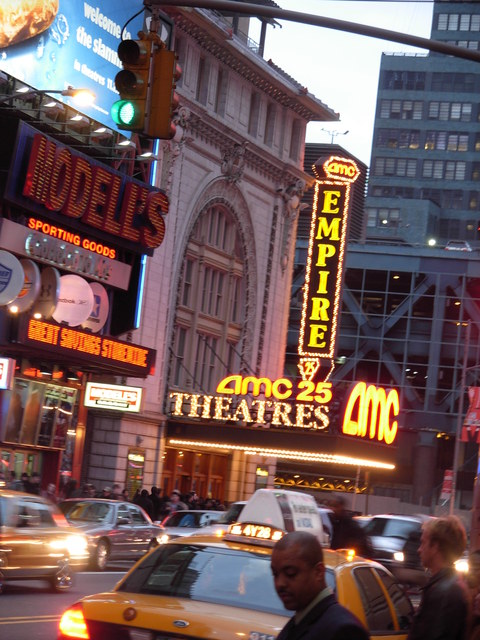
Once the building reached its destination at the west end of the block, a new chapter began. The historic Empire Theatre would become the grand entrance to the AMC Empire 25, a state-of-the-art multiplex that would open in April 2000 as part of Times Square's revitalization.
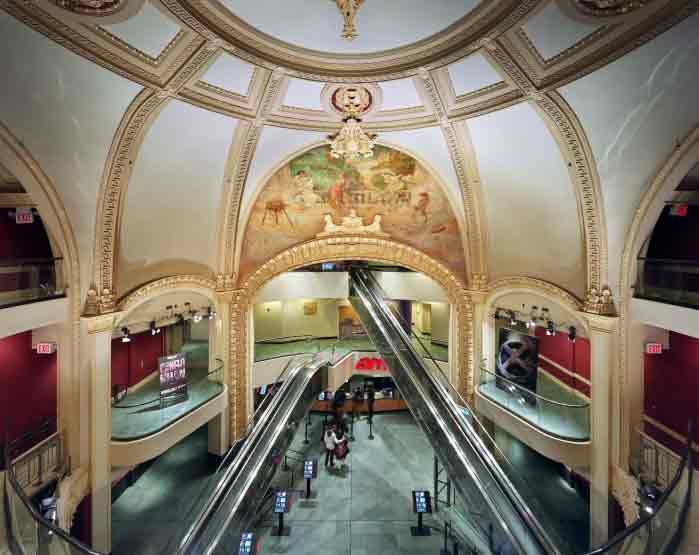
The most striking feature of the new design was how the former proscenium arch was repurposed—escalators now pass through it, carrying moviegoers to the newer screening rooms above. This innovative solution created a unique visual experience where patrons literally travel through a piece of theatrical history on their way to watch the latest films.
While the former steeply-raked balcony levels were replaced with mezzanines containing restaurants, many decorative details of the original theater remain intact within the multiplex's lobby. The former auditorium comprises the first two stories of the new complex, while the concession stand occupies the third story.
The AMC Empire 25 contains 4,916 seats spread across five stories, connected by 14 escalators. The multiplex contains an additional six mezzanines, connected by elevators. In September 2008, the theater added a digital IMAX screen, the first in New York City.
A portion of the AMC multiplex is located on a truss above the original Empire Theatre building, measuring 20 feet deep and placed 60 feet above ground level. This architectural solution allowed for the preservation of the historic structure while maximizing the commercial potential of the site.
Legacy: The Landmark That Wouldn't Budge (Until It Did)
The Empire's relocation stands as a model for creative preservation — proof that in a city prone to demolition, innovation can find another way.
The $1.2 million cost of moving the building—a significant sum but a small fraction of the overall development budget—has proven to be a worthwhile investment. The preserved Empire Theatre façade gives the AMC multiplex a distinctive identity and connection to the area's theatrical past that no new construction could have achieved.
Moving the Empire Theatre was not just an act of engineering—it was an act of cultural preservation. At a time when much of old Times Square was being demolished or sanitized, the Empire stood as proof that New York could move forward without erasing its past. The project showed that with creativity and commitment, even the most seemingly immovable aspects of urban heritage can find new relevance in a changing city.
And perhaps, the spirits of Bud & Lou are still laughing about the day they pulled off their greatest stunt—moving an entire theater down Broadway, one foot at a time.