Beast Paths · 1 of 4
Guardians at the Gate
Why people have always put monsters at the door.
Walk up to almost any old palace, temple or church and something is waiting for you. A lion with a human face. A bull with wings. A demon with its tongue out. They are not there to decorate the doorway. They are there to decide who gets through it. For about five thousand years, the first job people gave their monsters was standing guard.
The First Doormen
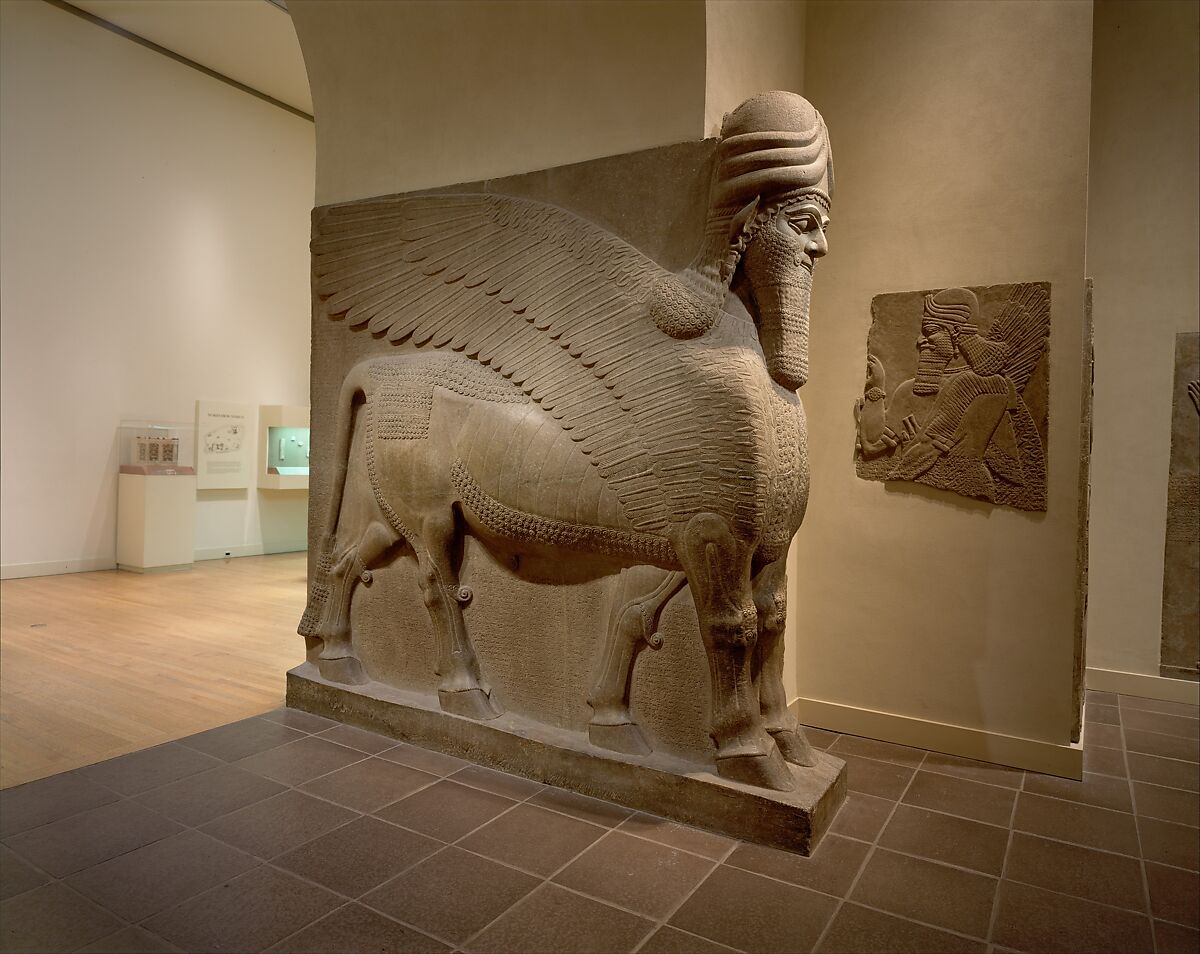
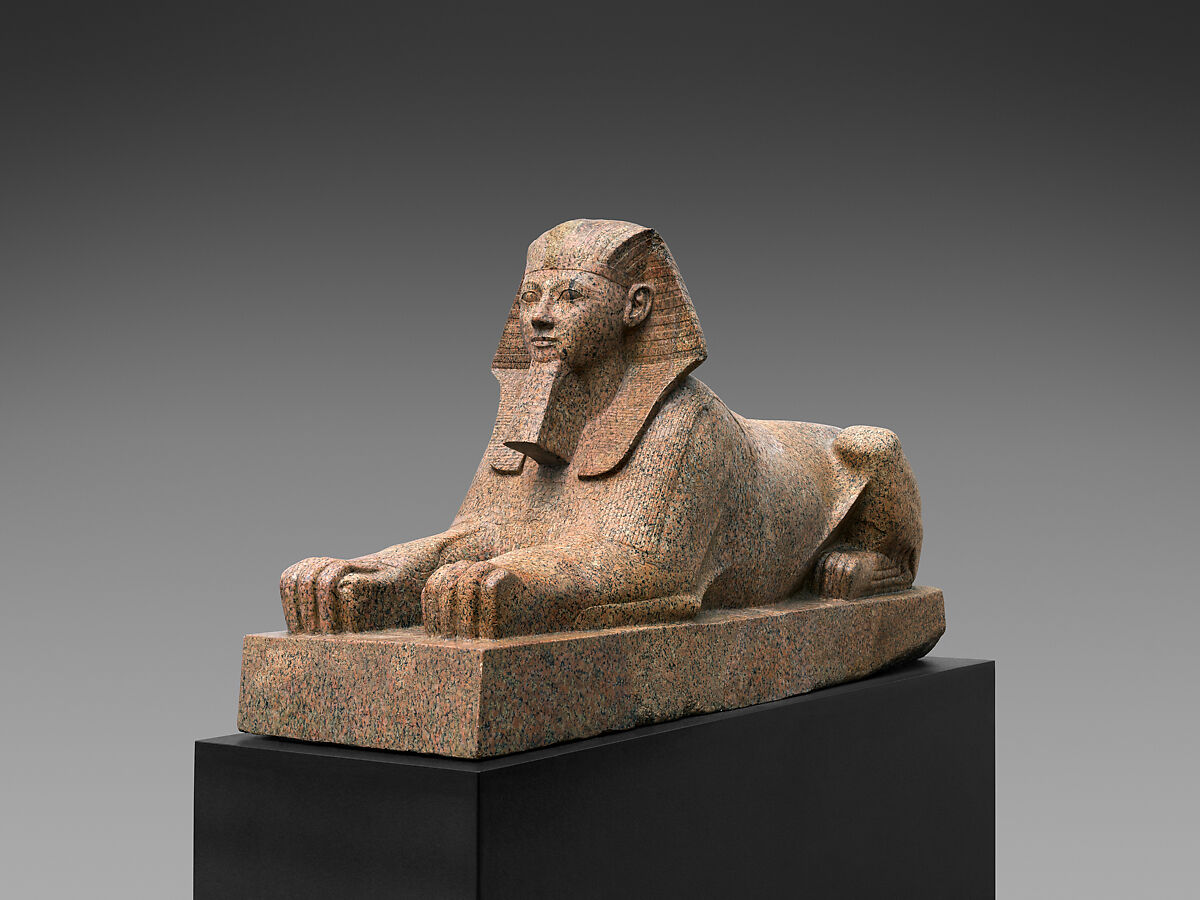
The oldest guardians are the hybrids. The sphinx of Egypt has a lion's body for strength and a king's head for wisdom. The Great Sphinx at Giza has been watching the road for about 4,500 years. In Assyria, around 880 BCE, King Ashurnasirpal II lined the gates of his palace at Nimrud with lamassu: winged bulls with bearded human heads, each about ten feet tall.
Look closely at a lamassu and you find a trick. It has five legs. From the front it stands still, both front legs planted. From the side it walks forward on four. Whichever way you come at the door, the guardian looks complete, and it is always looking at you.
Every museum hall with a lamassu feels like you walked in through the wrong door. You didn't come to see it. It was expecting you.DiLo
Good Beast, Bad Beast
In Bali the guardians come in pairs, and they never stop fighting. Barong is the good one, a shaggy lion-spirit who protects the village. Rangda is the demon queen, all fangs, claws and hanging tongue. In the Calonarang dance they battle each other while entranced dancers try to stab themselves with their own daggers, and Barong's magic turns the blades away. The fight never ends with a winner. Good and evil have to stay in balance, so both guardians keep their place at the temple gate.
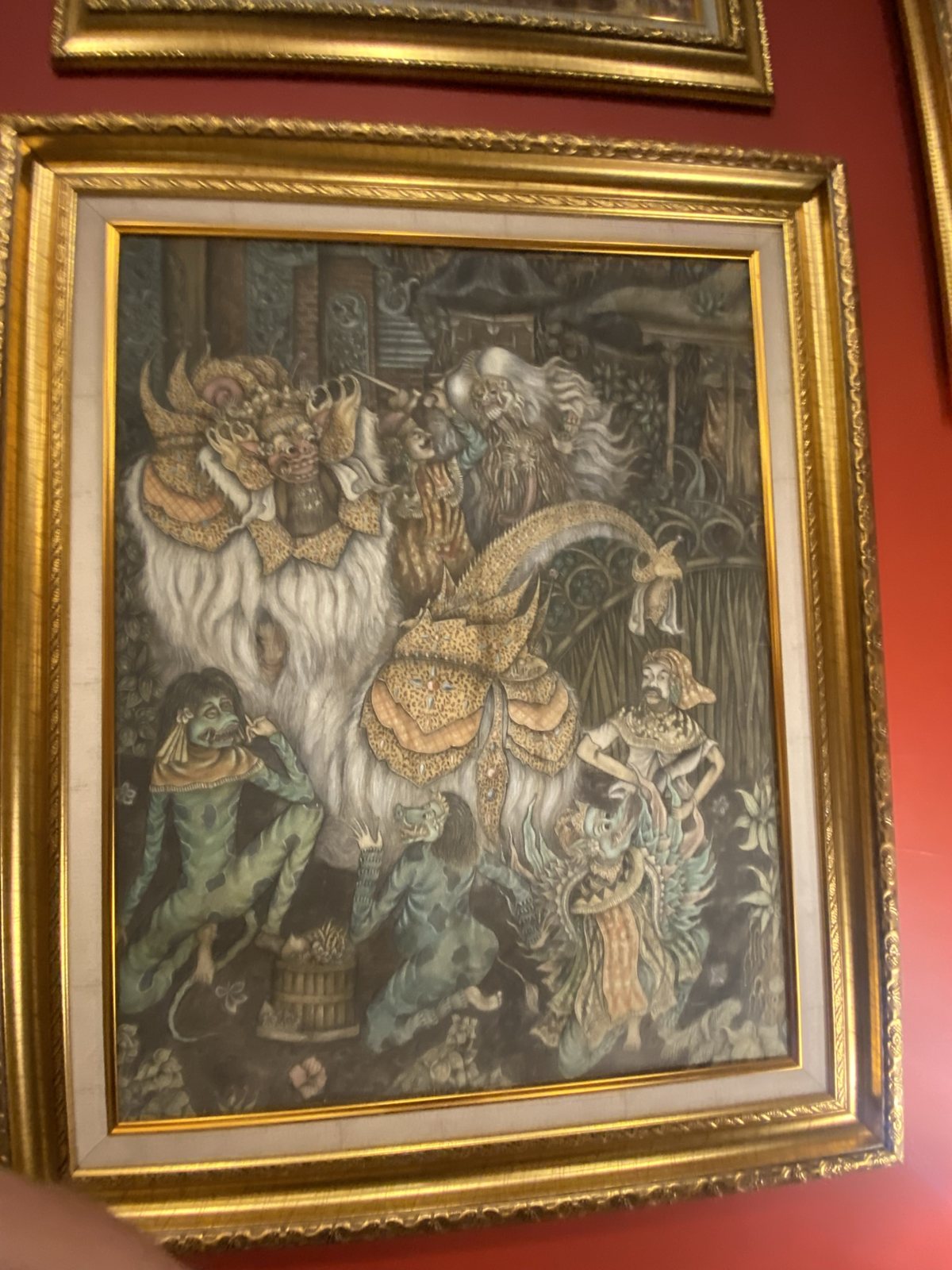
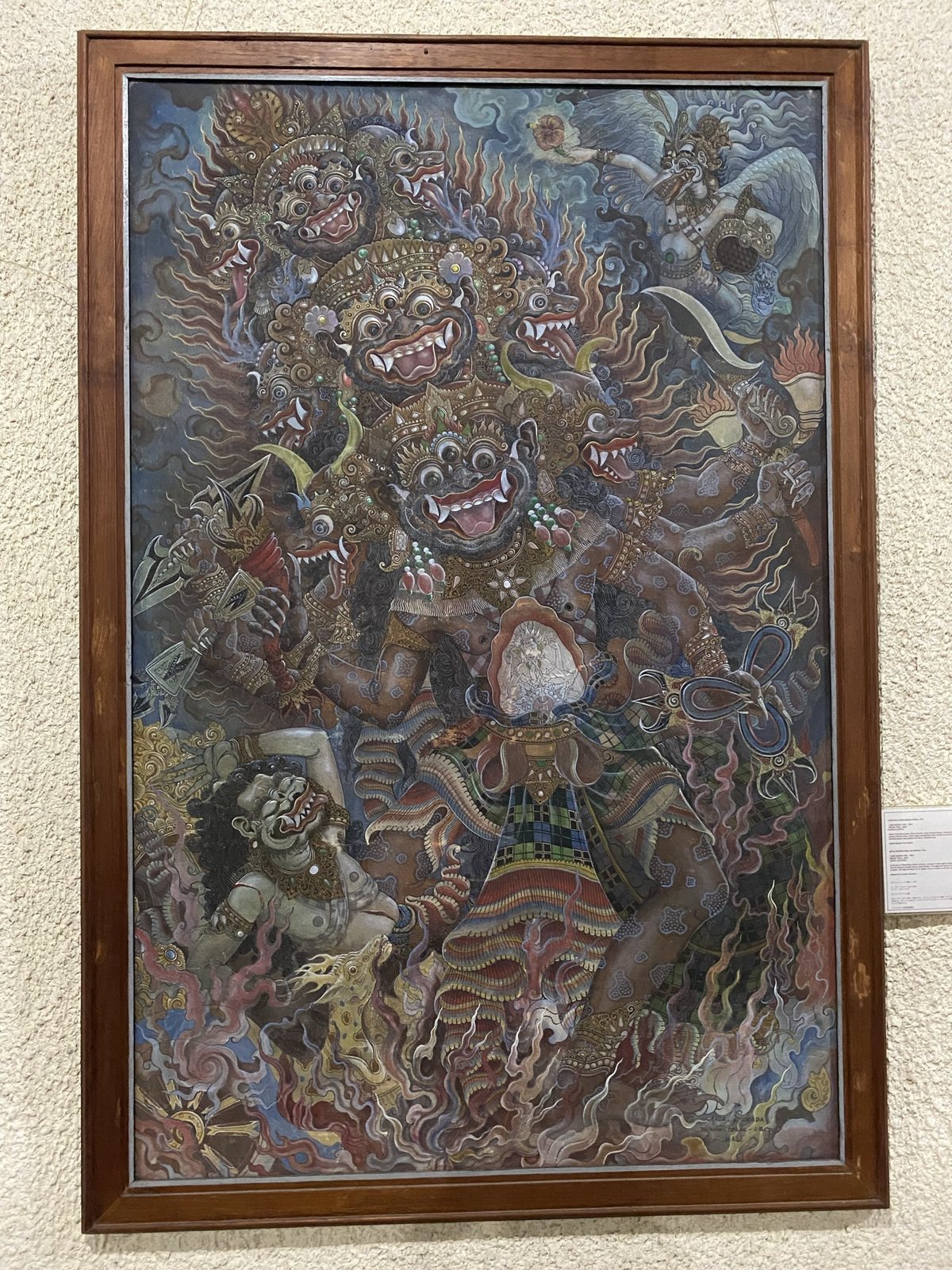
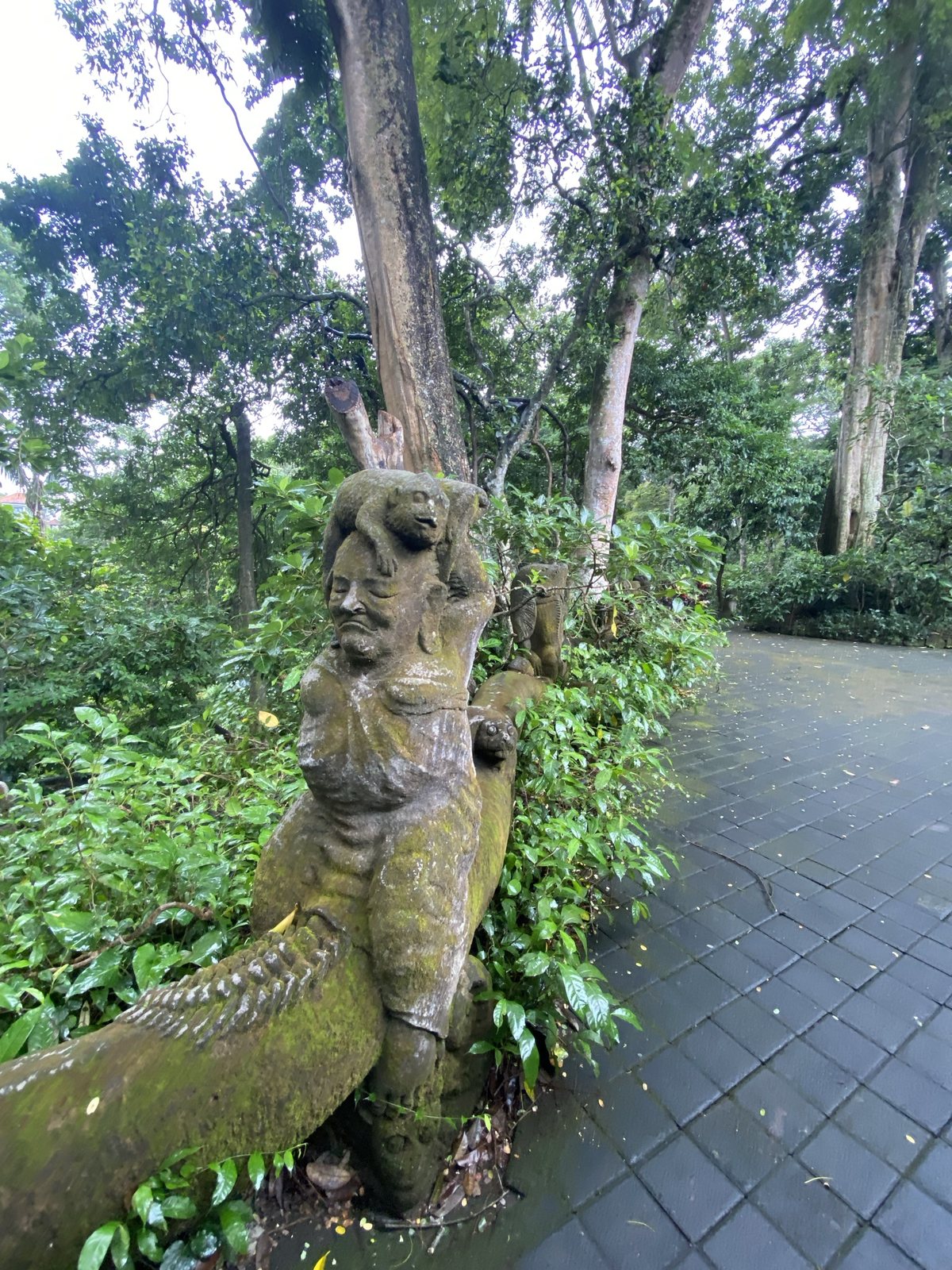
From the Temple Guardians page of the Field Journal (the 2022 Indonesia trip).
Lions Across Asia
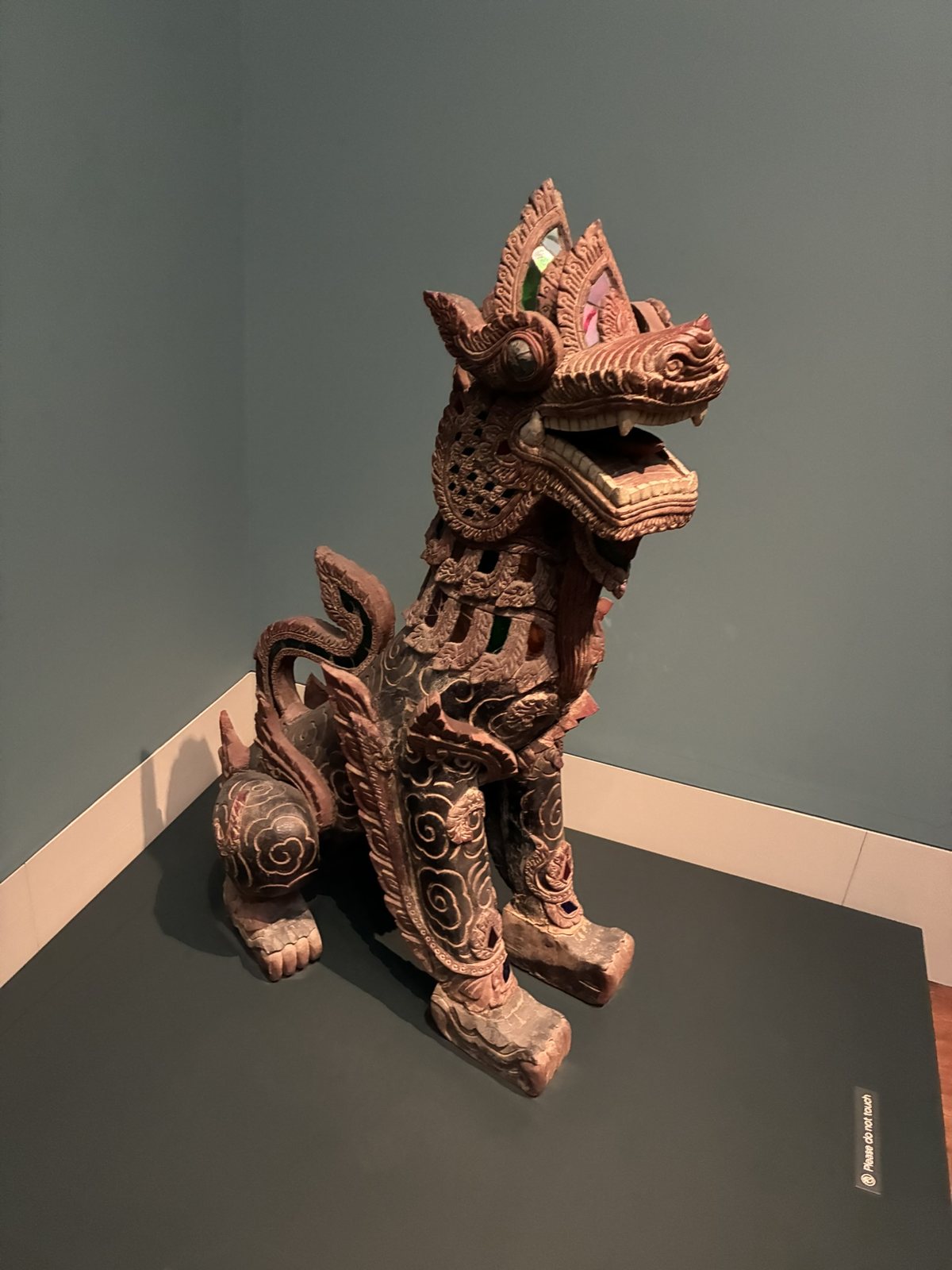
The lion travels farther than any other guardian. Lions were not native to China or Japan, so the carvers worked from stories, and the lion grew stranger with every mile: curled manes, bulging eyes, grinning teeth. In China guardian lions stand in pairs outside palaces and banks, the male with a ball under his paw, the female with a cub. In Japan the pair become komainu, lion-dogs at the shrine gate, one with its mouth open and one with its mouth shut.
The open-and-shut pair is a lovely idea. Between them, the two mouths say the first and last sounds of everything. Nothing gets past that.
Monsters on the Roof
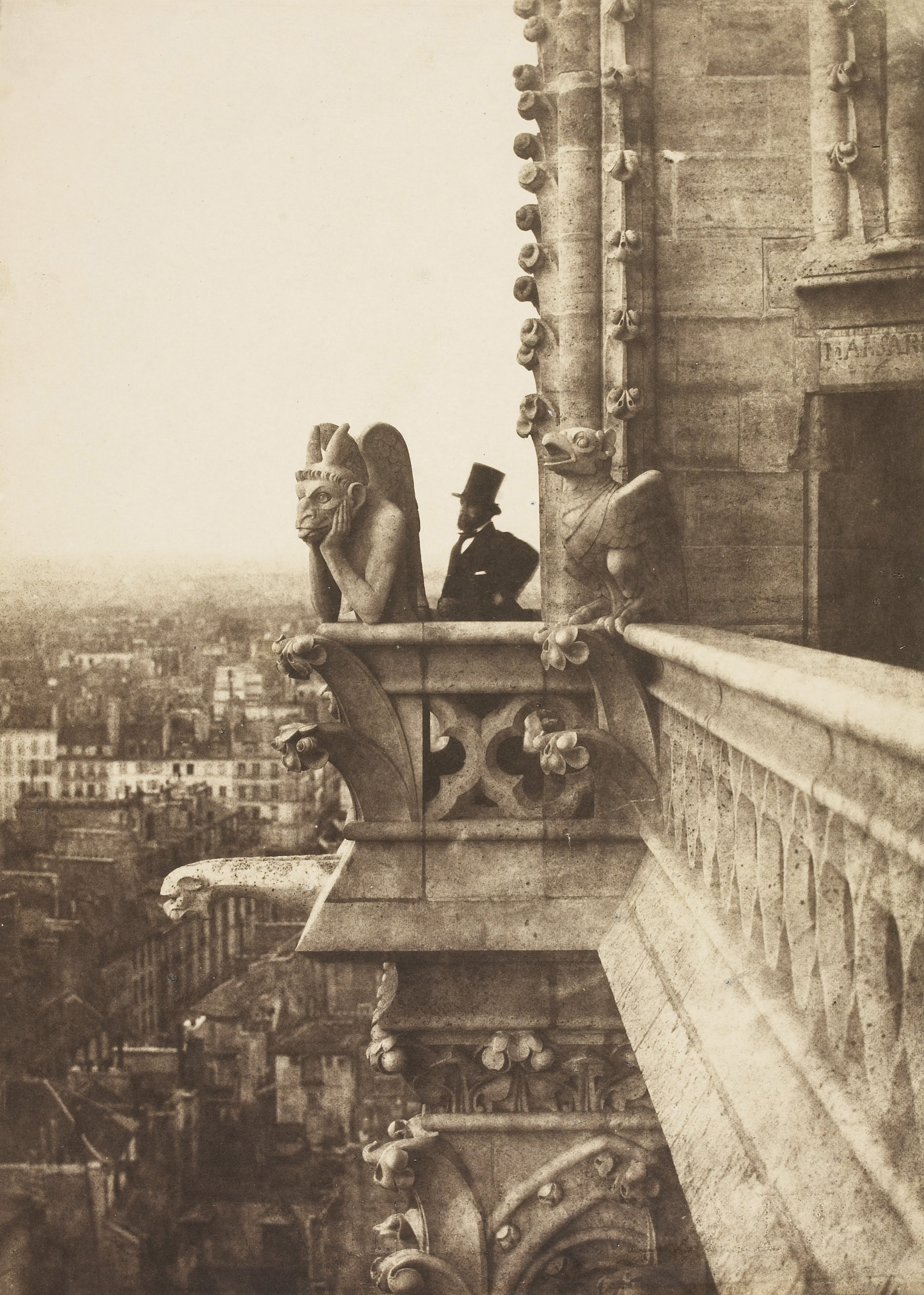
Europe moved its guardians upstairs. Medieval churches are covered in carved beasts, and two kinds get mixed up. A gargoyle is a drain: the word comes from the French for throat, and its job is to spit rainwater clear of the walls. A chimera or grotesque has no pipe. It just sits there and watches.
The most famous ones are younger than they look. When the architect Viollet-le-Duc restored Notre-Dame in the 1840s to 1860s, he added a gallery of chimeras along the towers. The best known, Le Stryge, leans on its elbows with its chin in its hands, staring down at the city. It became one of the most photographed monsters in the world, and it is a Victorian guardian dressed up as a medieval one.
Who Guards What
A pocket guide to doorway monsters around the world.
| Guardian | Where | Guards | Look for |
|---|---|---|---|
| Sphinx | Egypt | Tombs, temples, roads | Lion body, royal head |
| Lamassu | Assyria | Palace and city gates | Wings, beard, five legs |
| Barong & Rangda | Bali | Temples, villages | A shaggy lion vs. a long tongue |
| Guardian lions | China | Palaces, banks, homes | A ball under one paw, a cub under the other |
| Komainu | Japan | Shrine gates | One mouth open, one shut |
| Chimeras | Paris | Notre-Dame's towers | Chin in hands, no drainpipe |
Still on Duty
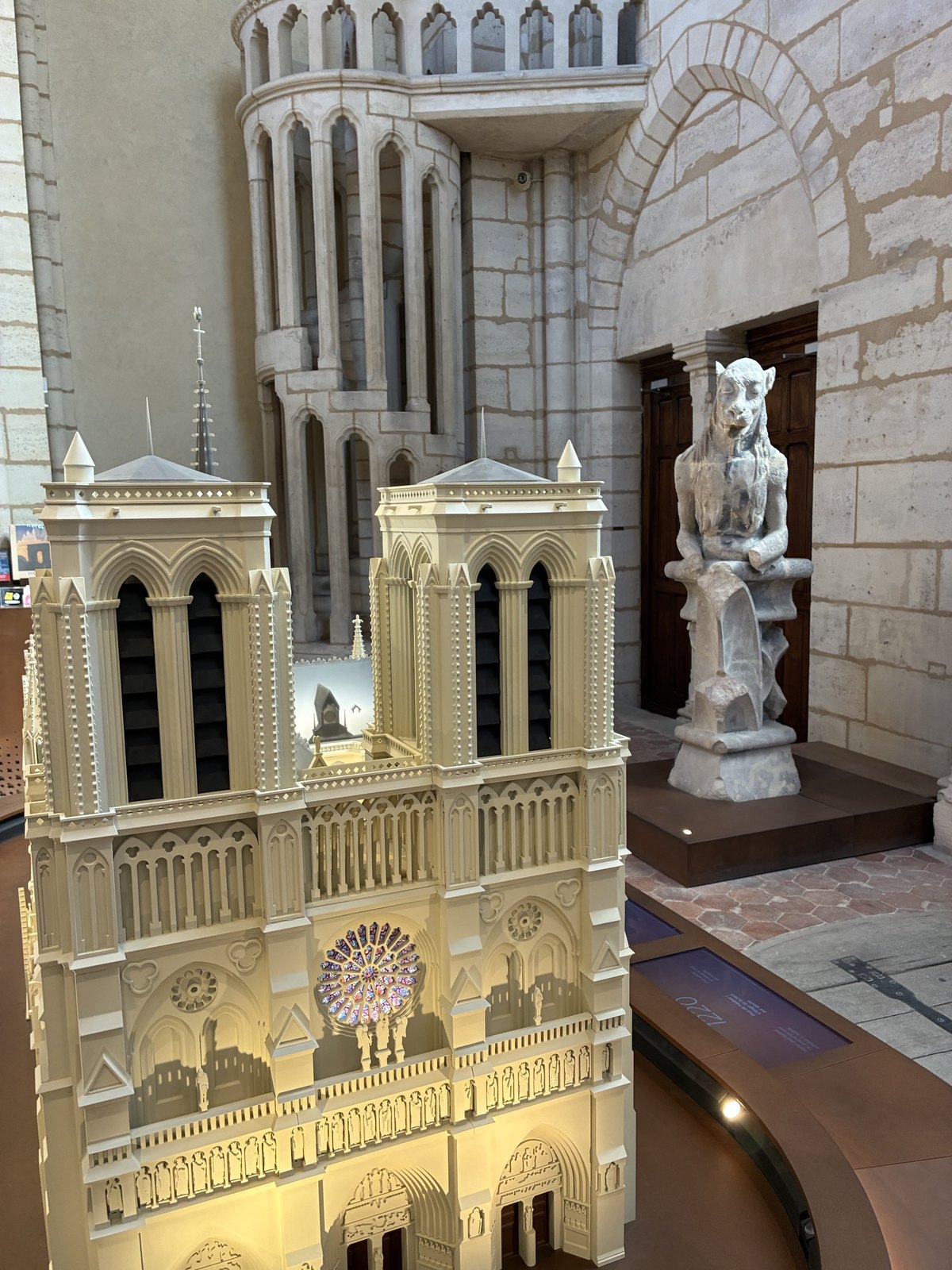
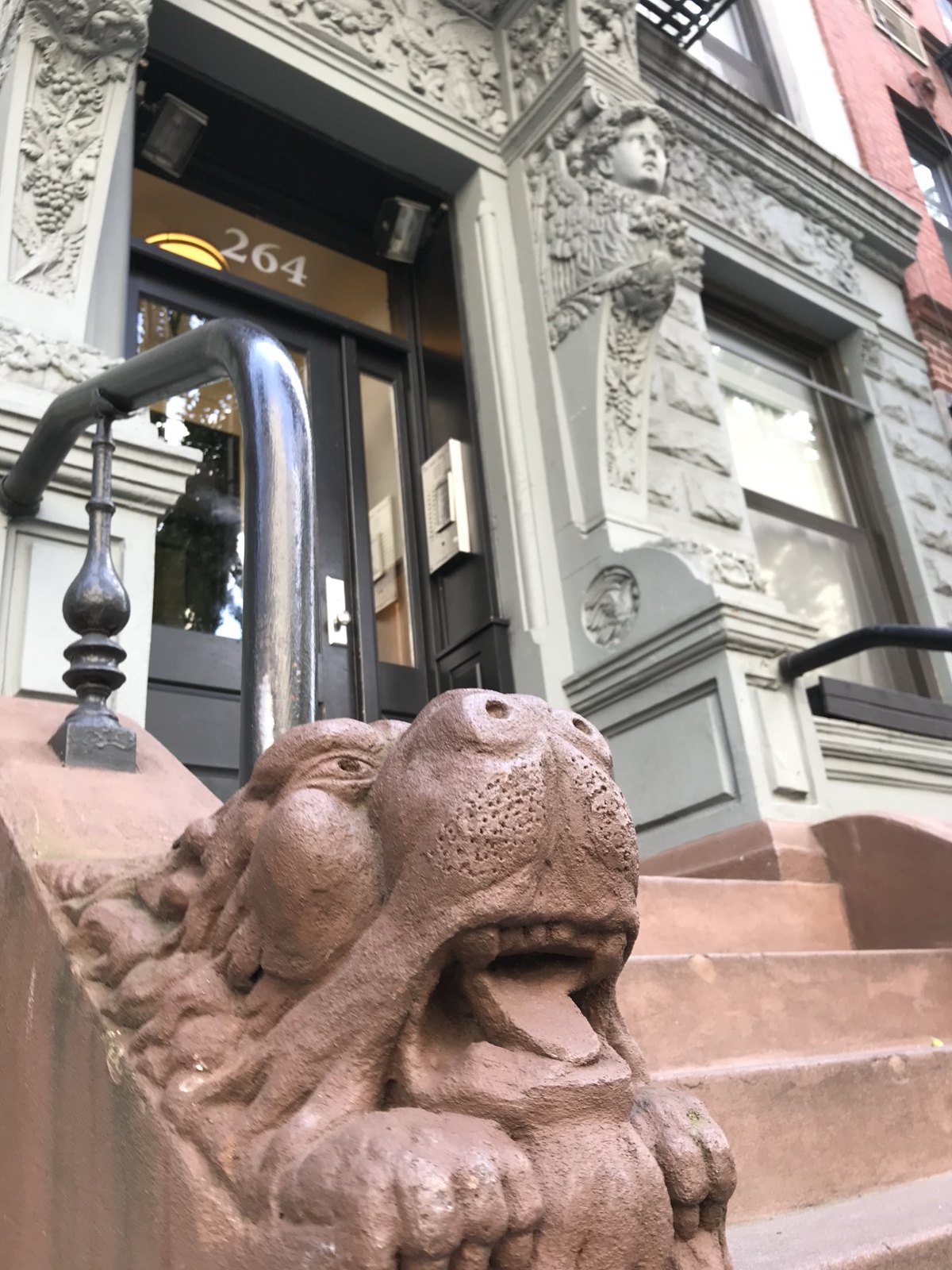
The guardians never really retired. Stone lions sit outside the New York Public Library, and smaller ones still crouch on brownstone stoops all over town. Chimeras look down from office buildings. And when DiLo climbed the towers of Notre-Dame, the chimeras were still there on the balustrade, back from the fire and the restoration, doing the same job they were carved for: making you think twice before you step inside.
The secret of a good guardian is that it's a little bit monster and a little bit on your side. You want it scary to everyone else.DiLo
More Beast Paths
- Guardians at the GateYou are here.
- The Harryhausen TouchHow one man with a camera and a box of models made the old myths walk.
- Kaiju CountryWhy Japan built the giant monster, and why it never stopped.
- From Monster to MascotHow the creatures people feared turned into the ones they cheer for.