Beast Paths · 3 of 4
Kaiju Country
Why Japan built the giant monster, and why it never stopped.
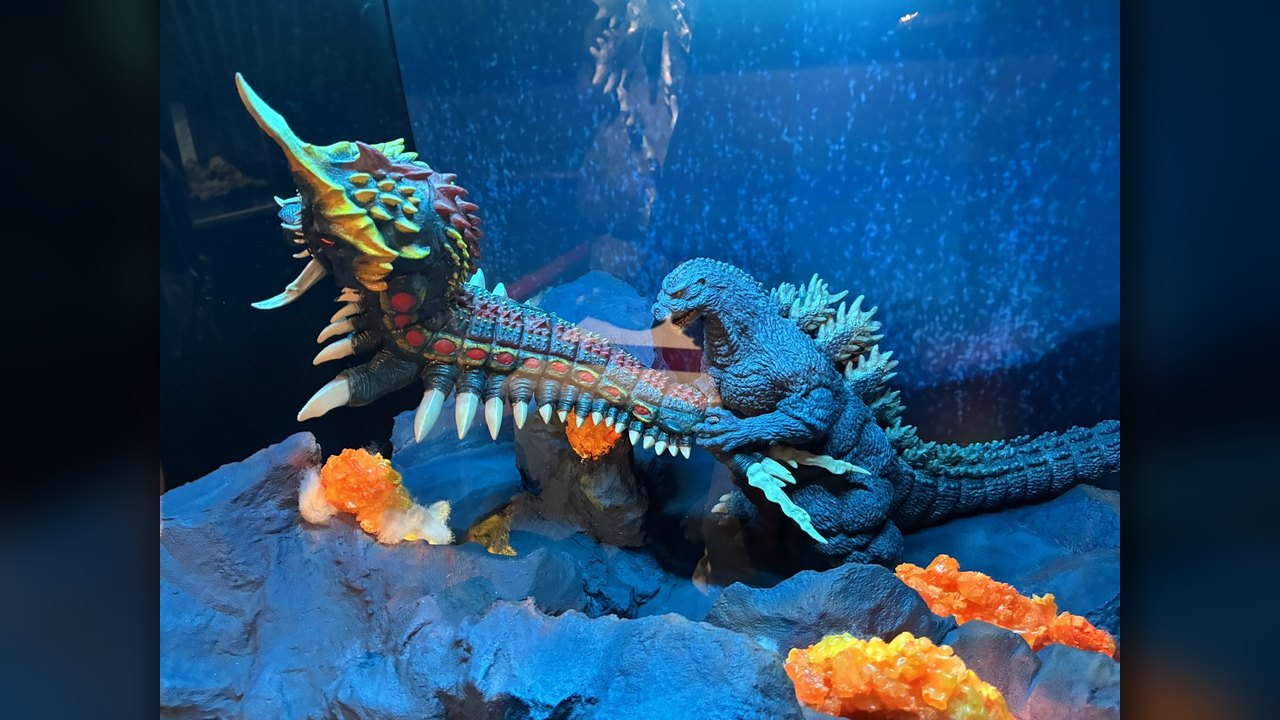
Kaiju means "strange beast." In Japan it has come to mean one thing above all: a monster the size of a building, walking through a city that people actually live in. The idea began with one film in one year, and it grew into toys, comics, theme parks and a whole shop-lined neighborhood in Osaka.
Born in 1954
In March 1954, a Japanese fishing boat, the Lucky Dragon No. 5, was caught in the fallout from an American H-bomb test in the Pacific. Its crew came home sick, and one of them died. Japan, nine years after Hiroshima and Nagasaki, was terrified all over again. That November, Toho studios released Gojira.
Director Ishirō Honda made it as a serious film about a monster woken and burned by nuclear testing. Effects director Eiji Tsuburaya had wanted to animate the creature the Harryhausen way (see The Harryhausen Touch), but stop motion would have taken years. So Godzilla was a man in a heavy rubber suit, stomping through detailed miniature cities. The Japanese call it suitmation, and it became the house style of the kaiju film.
The first Godzilla isn't a monster movie that happens to be sad. It's a sad movie that happens to have a monster. That's why it lasted.DiLo
Monster Versus Monster
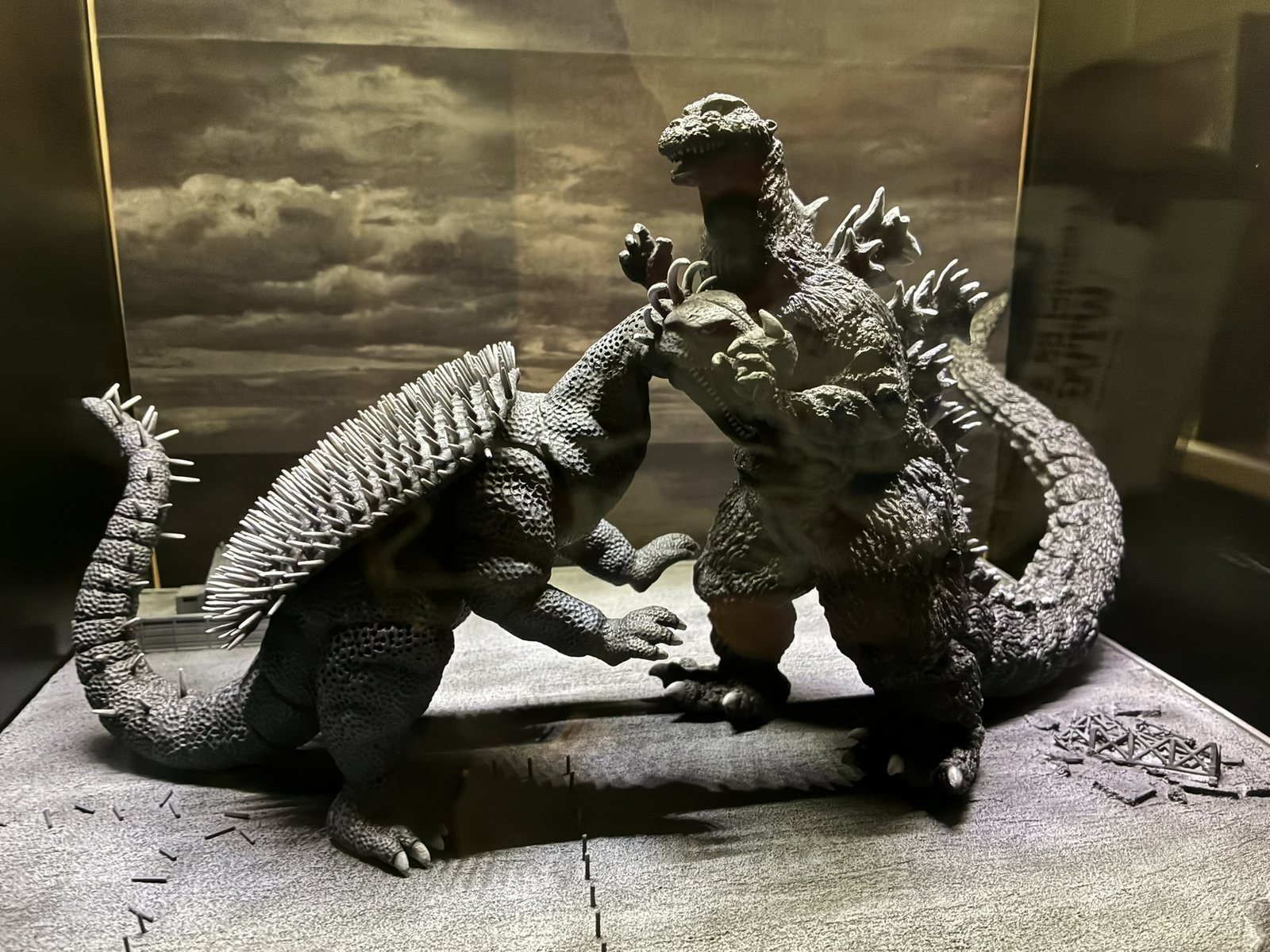
The sequel, Godzilla Raids Again (1955), added the idea that made the genre run for seventy years: give the monster an opponent. Anguirus, a spiky four-legged armored beast, became the first kaiju Godzilla ever fought. From then on the cities were the boxing ring.
The opponents got stranger. Mothra (1961) was a giant moth goddess summoned by two tiny singing priestesses, and she was a protector, not a destroyer. King Ghidorah (1964), a golden three-headed dragon from space, was so dangerous that Godzilla, Mothra and Rodan had to team up against him. Godzilla had gone from nightmare to defender of the Earth in ten years.
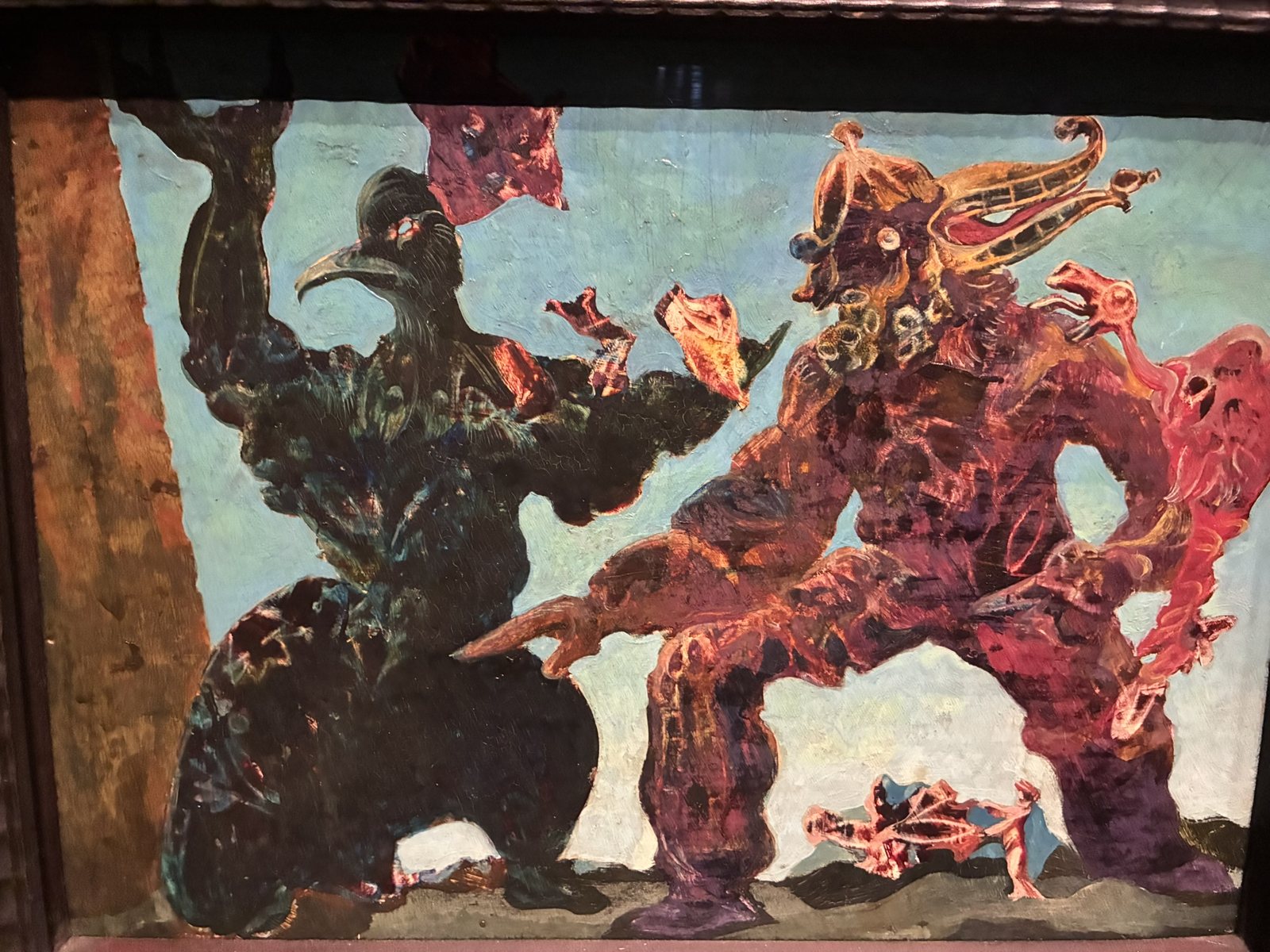
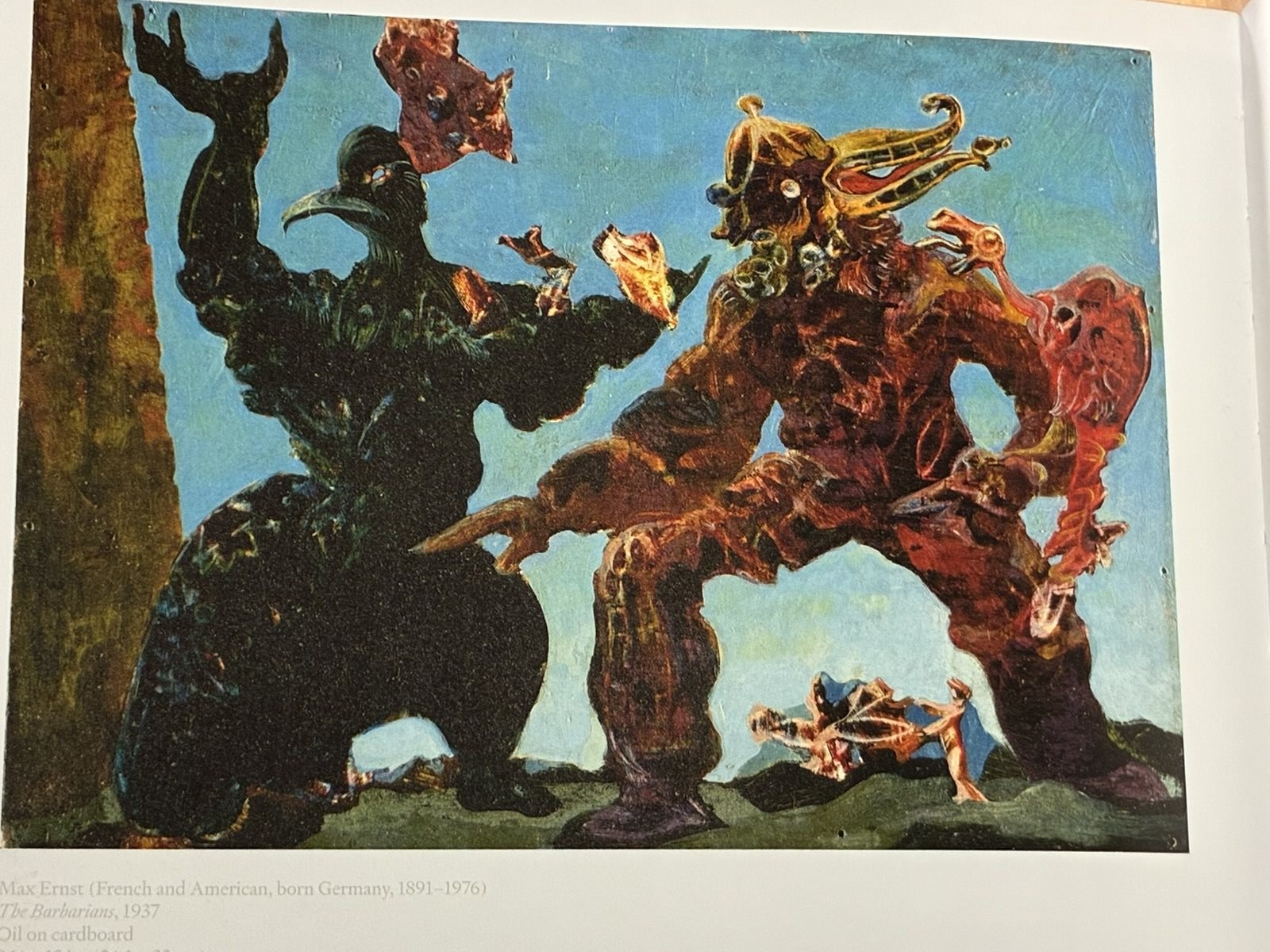
The monster brawl is older than Godzilla. At the Philadelphia Museum of Art’s Dream World: Surrealism at 100, one of the showpieces was Max Ernst’s The Barbarians: two giant creatures locked together, dancing or fighting, it is hard to tell, while a tiny figure scrambles at their feet. Swap the oil paint for rubber suits and it is a kaiju bout, painted in 1937, seventeen years before Gojira.
Kaiju Stats
Trading-card facts for the four on this site. Heights are for their first films, and every fan argues about them.
GodzillaDebut: 1954Height: about 50 mMove: atomic breathSide: depends on the decade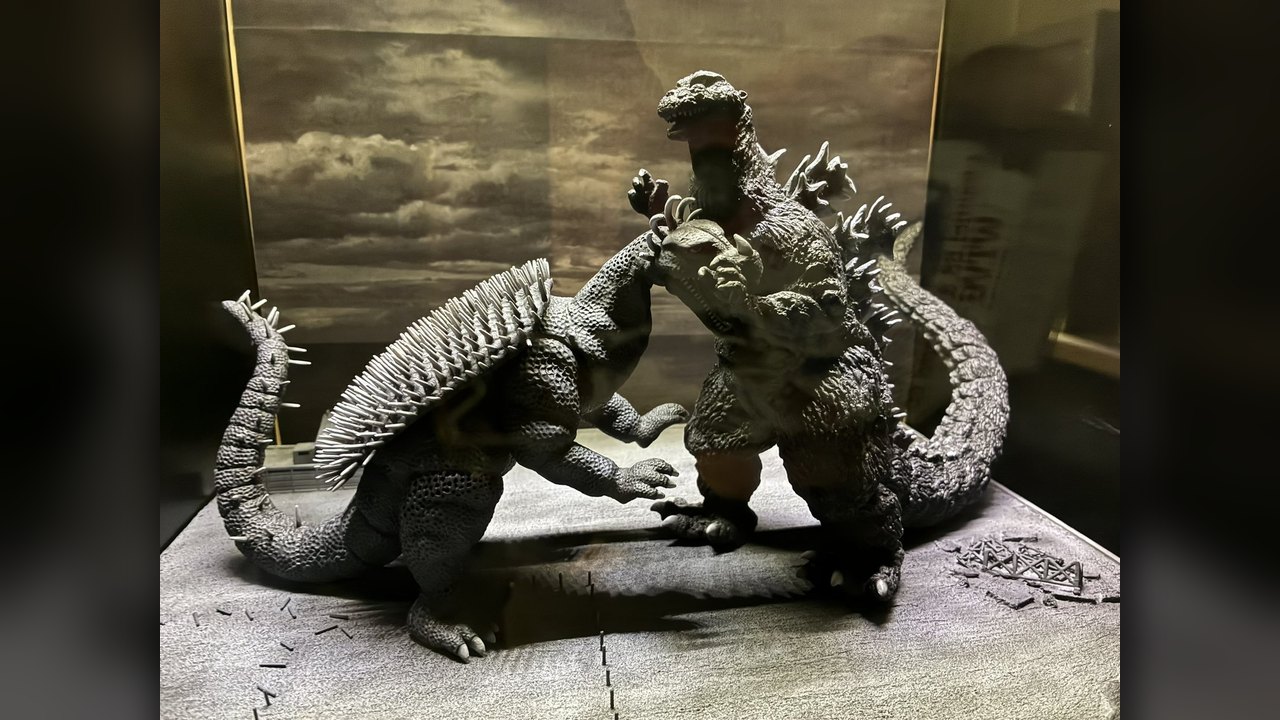 AnguirusDebut: 1955Size: big enough to wrestle GodzillaMove: spiked back, rolling chargeSide: Godzilla's best friend, eventually
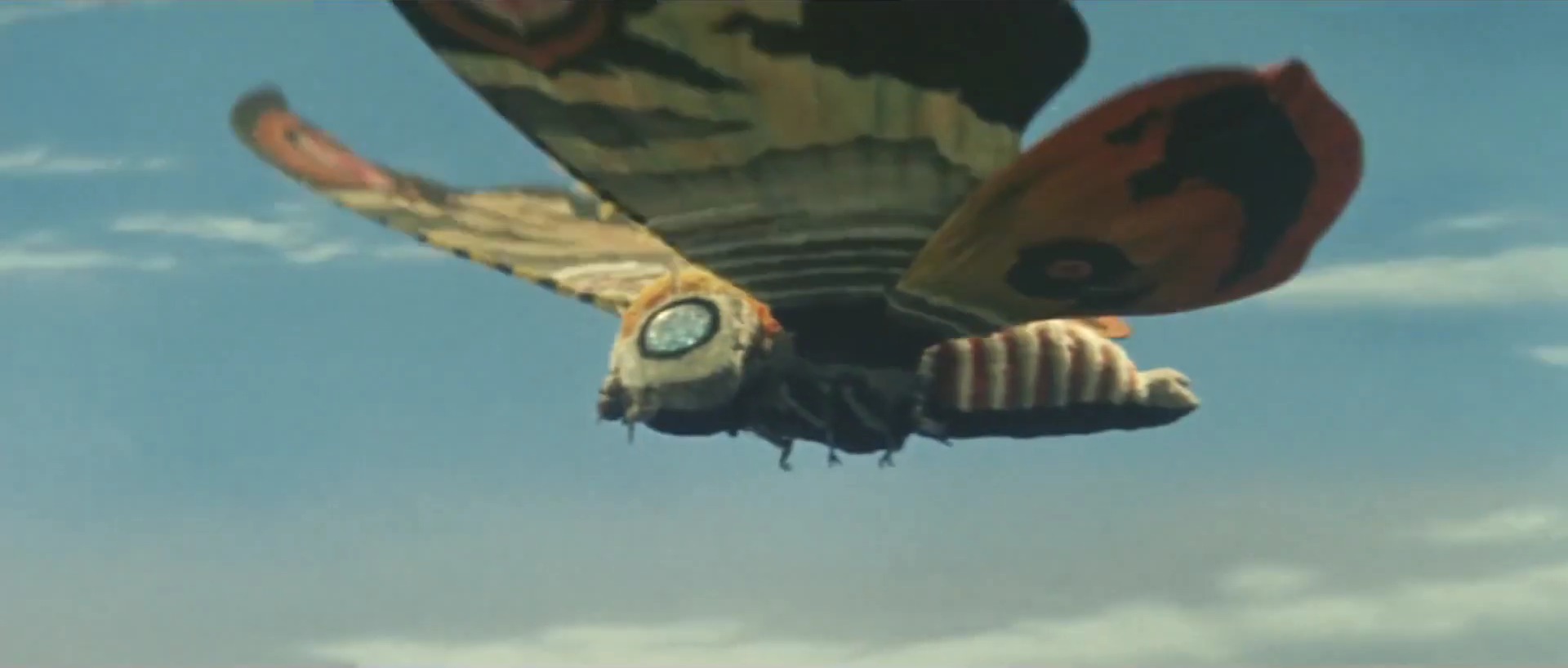 MothraDebut: 1961Wingspan: about 250 mMove: poison scales, silkSide: protector
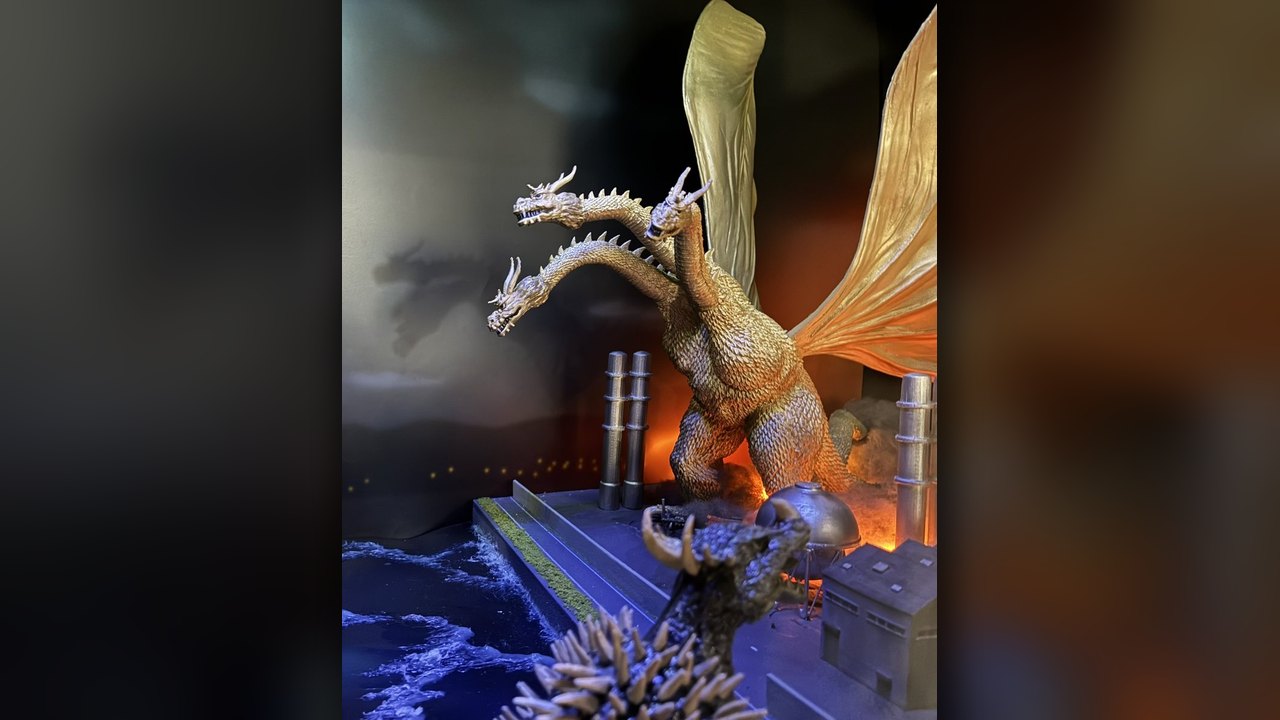 King GhidorahDebut: 1964Heads: threeMove: gravity beamsSide: never yours
Rubber, Paint and Miniatures
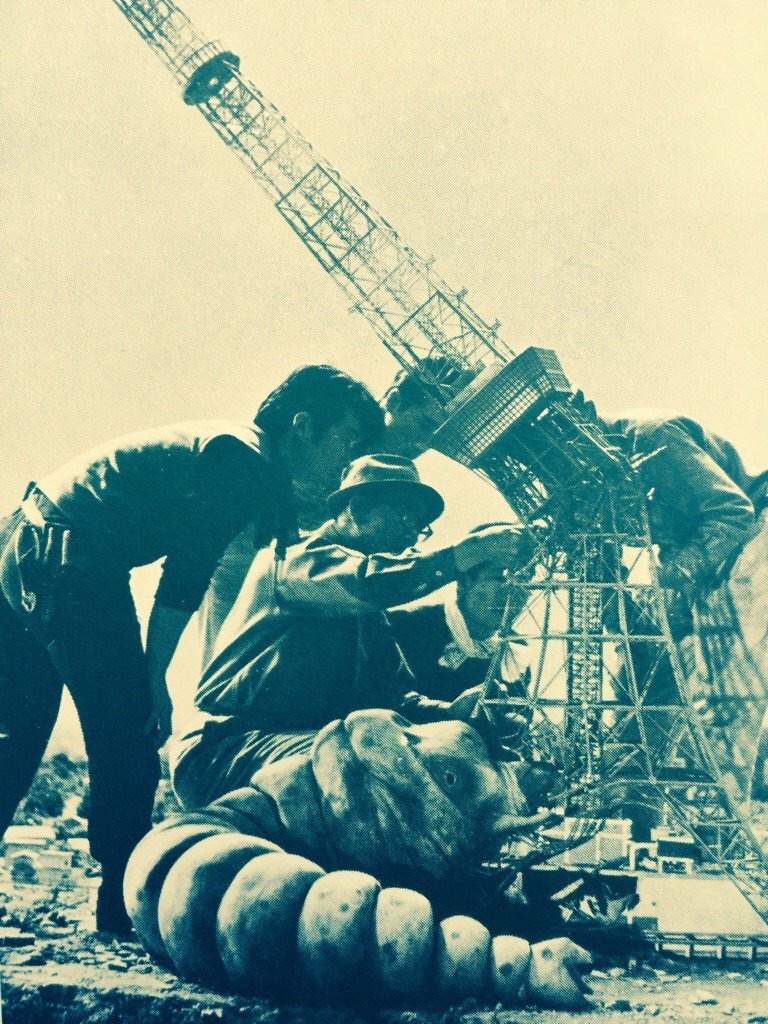
Part of the charm is that you can see how it was done. The suits were heavy and hot, and the actors inside could barely see. The cities were built in perfect miniature, then knocked down in a single take. Fans love the kaiju films for the same reason they love Harryhausen: somebody built every piece of that world by hand.
That handmade feeling carried straight into toys. Japanese soft-vinyl figures, sofubi, have been made since the 1960s in every color the films never used, and grown men still hunt for them.
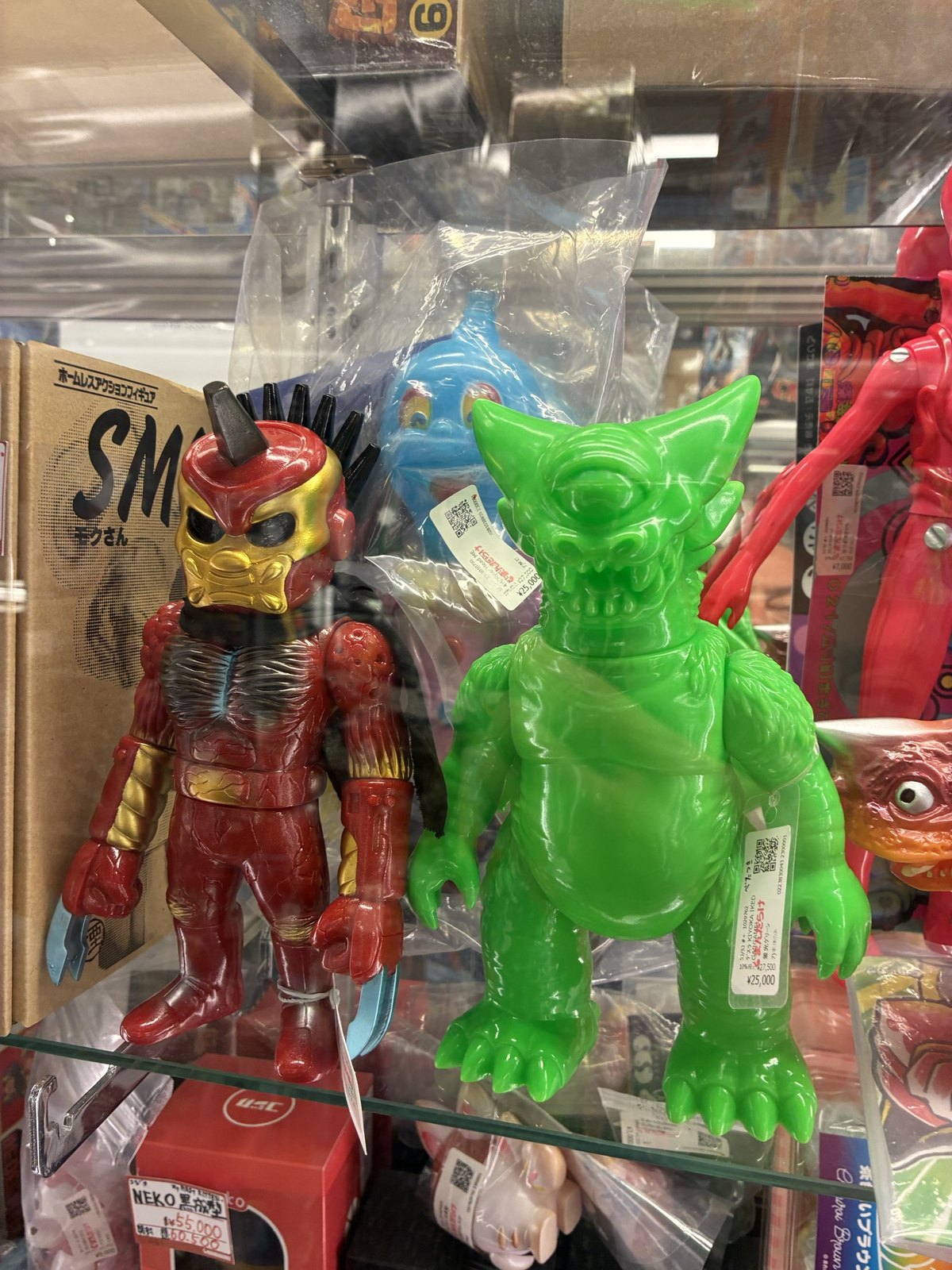
A Trip to Kaiju Country
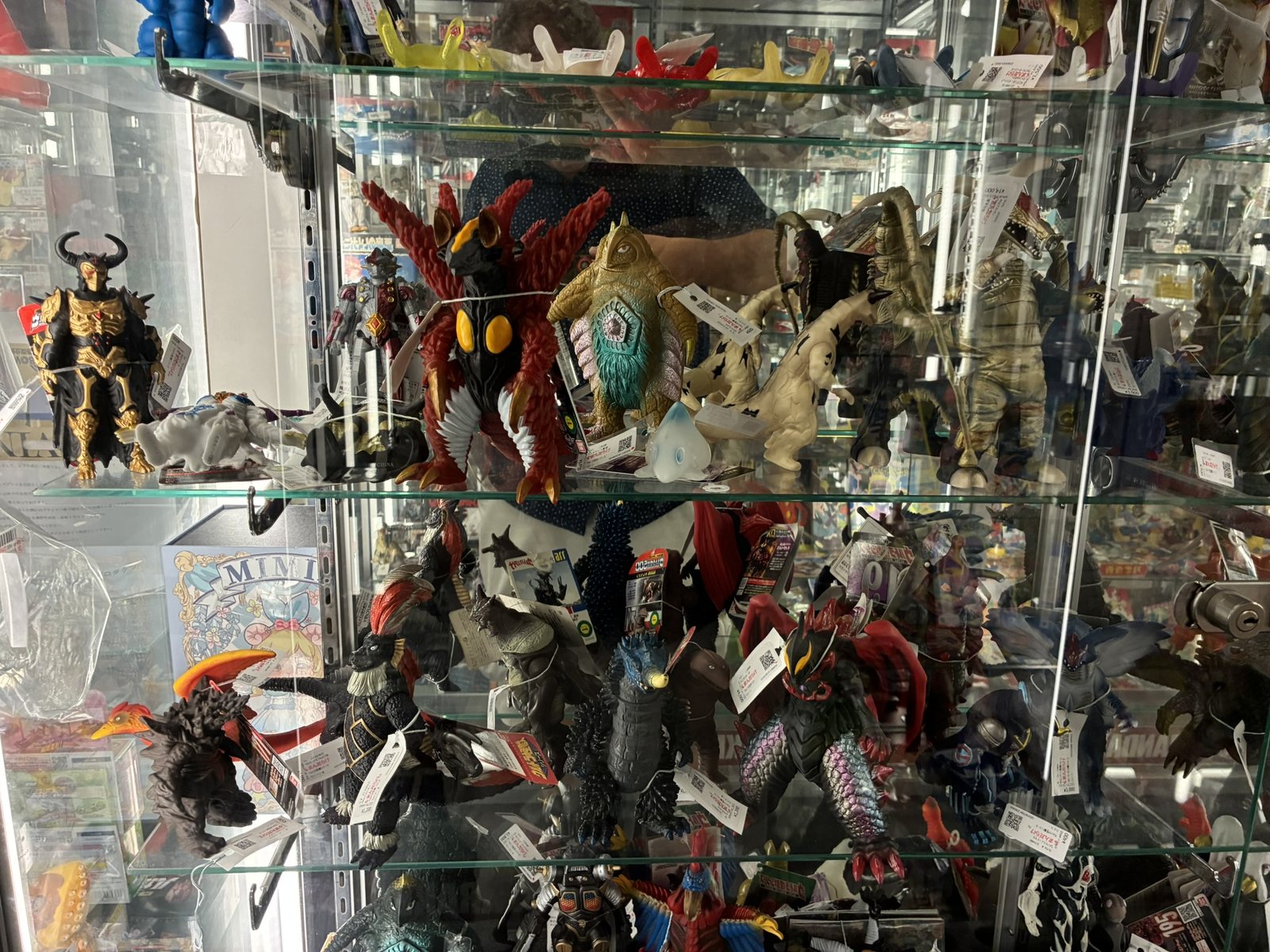
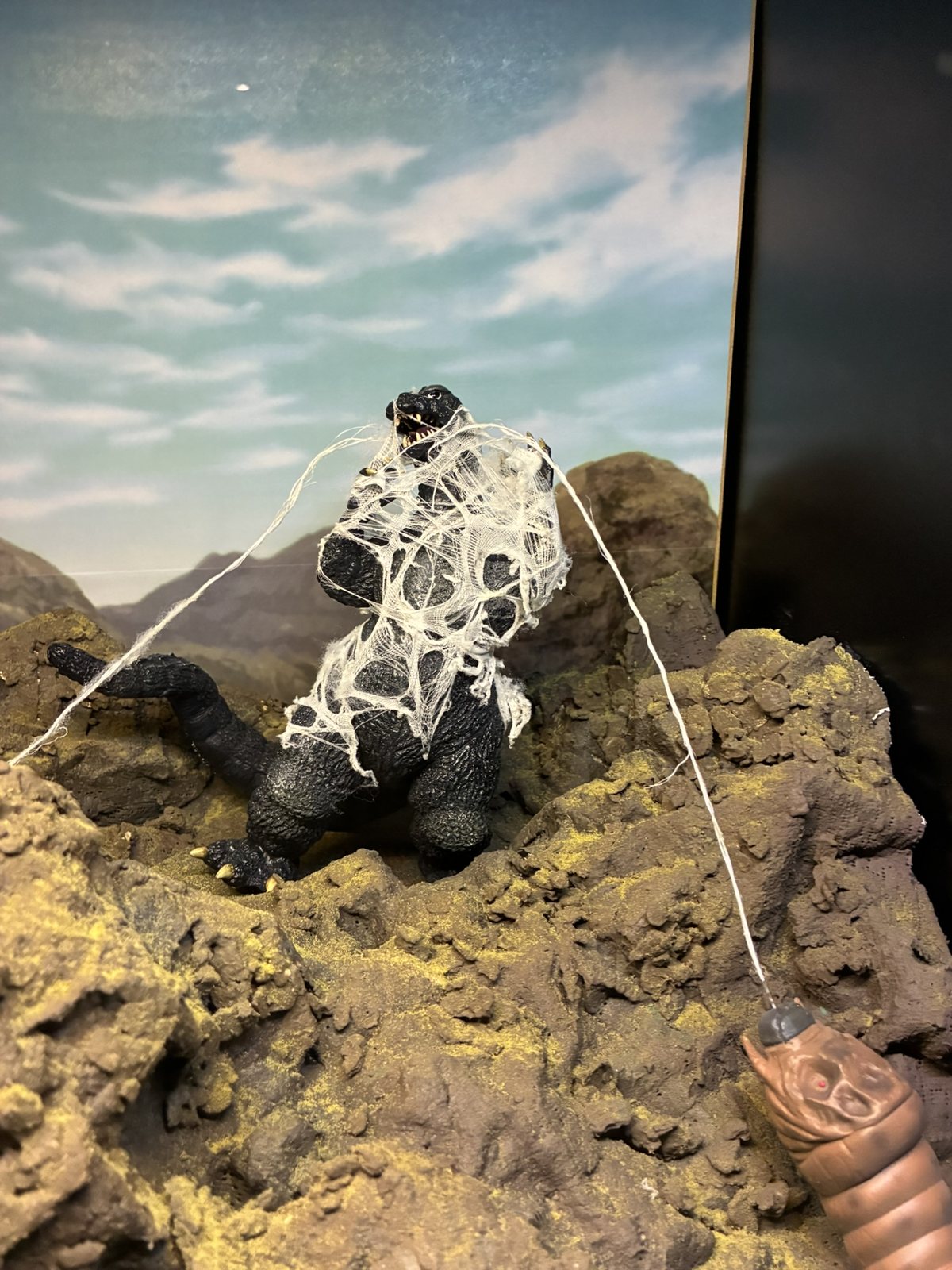

On the 2025 Japan trip, Osaka turned out to be kaiju country in the literal sense. The Kaiyodo figure museum has dioramas of nearly every famous fight. A few streets away in Den Den Town, shop after shop is stacked to the ceiling with sofubi monsters, model kits and vintage monster magazines. And in Tokyo, a child's drawing on a gallery wall shows the next generation already picking sides. The whole story is in the Field Journal's Kaiju Country page, 37 photographs in all.
Seventy years on, the giant monster is still Japanese at heart, and still a little sad underneath. Every time a city falls in a kaiju film, it is 1954 again for a moment.
More Beast Paths
- Guardians at the GateWhy people have always put monsters at the door.
- The Harryhausen TouchHow one man with a camera and a box of models made the old myths walk.
- Kaiju CountryYou are here.
- From Monster to MascotHow the creatures people feared turned into the ones they cheer for.