Stooge Paths · 2 of 4
Why Curly Changed Everything
The moment the act becomes fully cinematic, physical, musical, and strange.
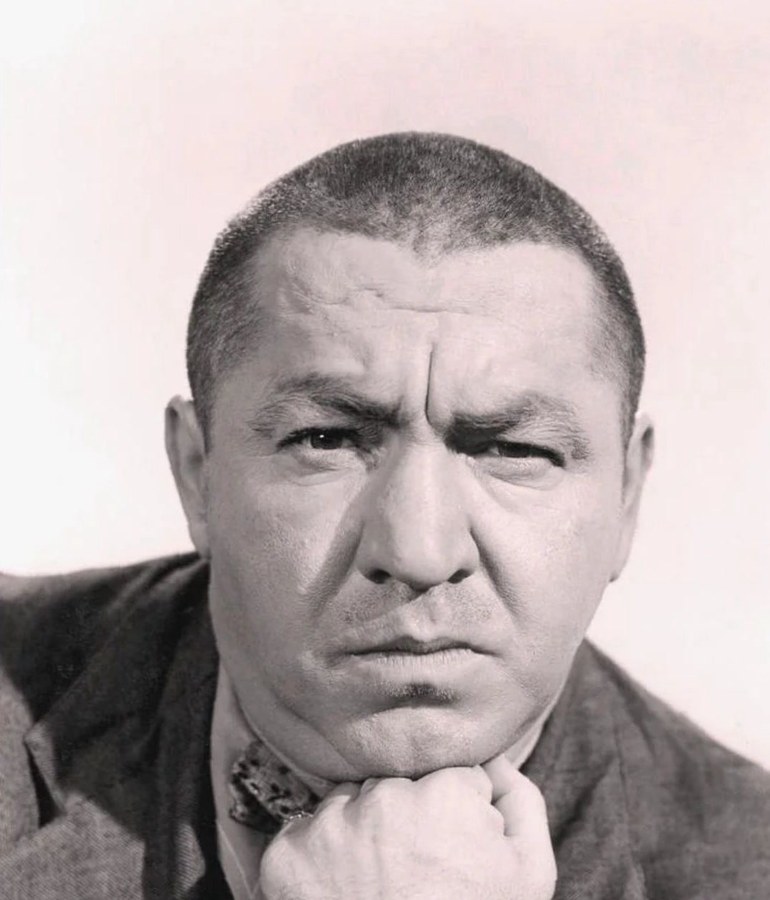
On stage, the Stooges were a heckling act. Ted Healy told the jokes, and his stooges took the slaps. Then the act moved to the movies, and the youngest Howard brother turned it into something that only a camera and a microphone could hold. Curly Howard did not tell jokes. He was one: a body that spun, a voice that barked, a grown man with the instincts of a cartoon.
From Jerome to Curly
He was born Jerome Lester Horwitz in Brooklyn on October 22, 1903, the youngest of five brothers. When Shemp walked out on Healy in 1932, Moe brought in the kid brother. Jerome had thick wavy hair and a waxed mustache, and Healy did not care for the look. So off it all came. The shaved head became the costume, and "Curly" became the joke that never needed explaining.
Curly had no formal training. Larry Fine called him "a natural comedian," and Moe said that when Curly forgot a line he simply kept going: a bark, a squeal, a drop to the floor. The gaps in the script became the act.
The Body as Instrument
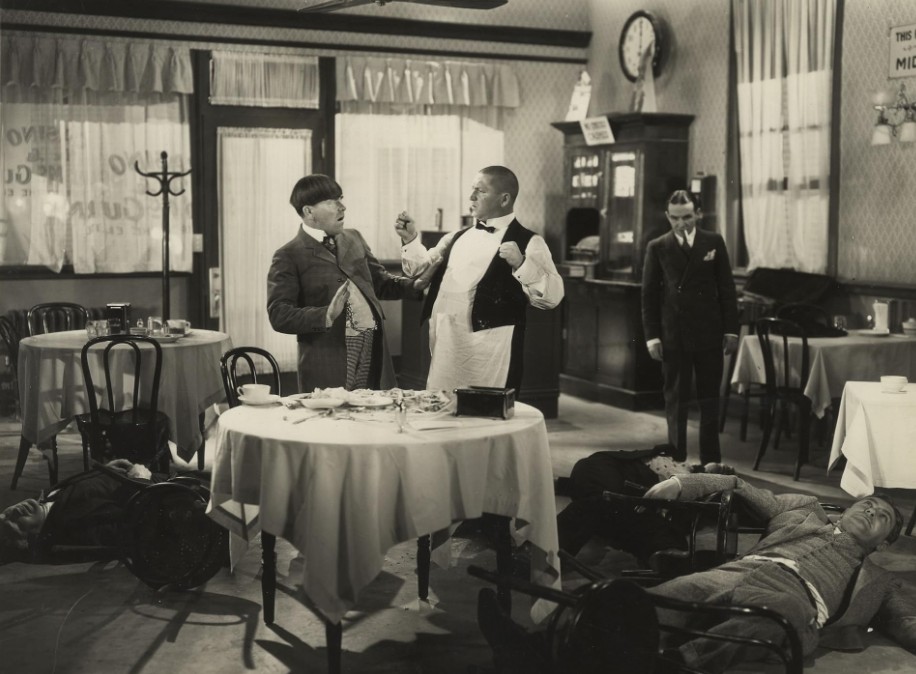
Watch any Curly short and count the ways he moves that no person should. He drops to the floor, pivots on one shoulder, and runs in a circle on his side like a wind-up toy. He hops in place. He walks with a little skip, his arms stiff at his sides. The floor spin started partly as a way to hide a limp from a childhood accident with a gun, and it turned into his signature.
The Columbia shorts built whole scenes around these eruptions. In Punch Drunks a tune sets him off. In Hoi Polloi two professors bet they can turn three garbage men into gentlemen, and the society party they crash never recovers. In Disorder in the Court the three star witnesses turn a murder trial into a vaudeville show.
Shemp was a man the scene happened to. Curly was the scene happening. You don't watch him so much as get hit by him.DiLo
Curly's Sound Book
Curly also changed what the Stooges sounded like. His noises were a second language, and kids on playgrounds learned it before they learned to read.
Curly's Sound Book
A pocket dictionary of the noises. Pronounce with feeling.
- Nyuk-nyuk-nyuk!
- interj. The laugh. Used when pleased with himself, usually just before Moe makes him less pleased.
- Woob-woob-woob!
- interj. Alarm, delight or confusion, often all three. Best delivered while backing away.
- Soitenly!
- adv. "Certainly," Brooklyn style. Agreement, enthusiasm, or a cover for having no idea.
- N'yaaah!
- interj. A threat, a dare, or a sneeze waiting to happen. Faces must be pulled.
- Ruff! Ruff!
- n. The bark. Proof that Curly could become any animal at any moment. (Some dogs answer.)
- "I'm a victim of soikemstance!"
- phr. The all-purpose excuse. Not a defense that ever worked on Moe.
The noises were musical in a literal way. Curly could sing, and the shorts used it: he croons, he whistles, he mimes to an opera record dressed as a lady singer in Micro-Phonies. The Stooges stopped being three men with a routine and became a little orchestra, with Moe on percussion and Curly on everything else.
The Oscar Short
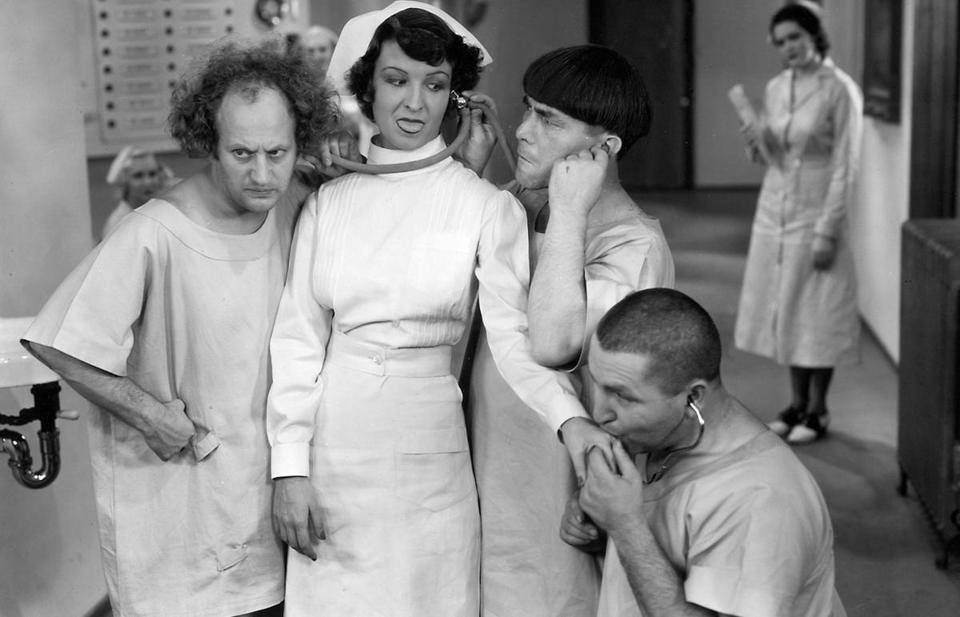
In their first year at Columbia, the Stooges made the only film of theirs ever nominated for an Academy Award. Men in Black (1934), a hospital spoof, was up for Best Short Subject (Comedy). Its running gag is a loudspeaker paging "Doctor Howard, Doctor Fine, Doctor Howard" until the three doctors finally shoot it. The loudspeaker gets the last line: "Oh! They got me!"
It did not win. It did not matter. From then on, Curly's face was the face of the act.
The Slowdown
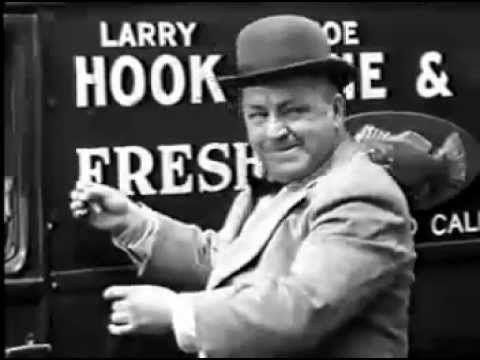
By the mid-1940s the energy was going. In shorts like Idle Roomers and Booby Dupes his voice is deeper and his timing a beat behind. In January 1945 he was in the hospital with high blood pressure. On May 6, 1946, while making Half-Wits Holiday, he had a stroke, and the act had to go on without him.
He came back for one unscripted visit to the set of Hold That Lion! in 1947. A second cameo, filmed in 1948, was cut because he was too ill (the lost scene). Another stroke followed that year. Curly died on January 18, 1952, at 48.
What He Left
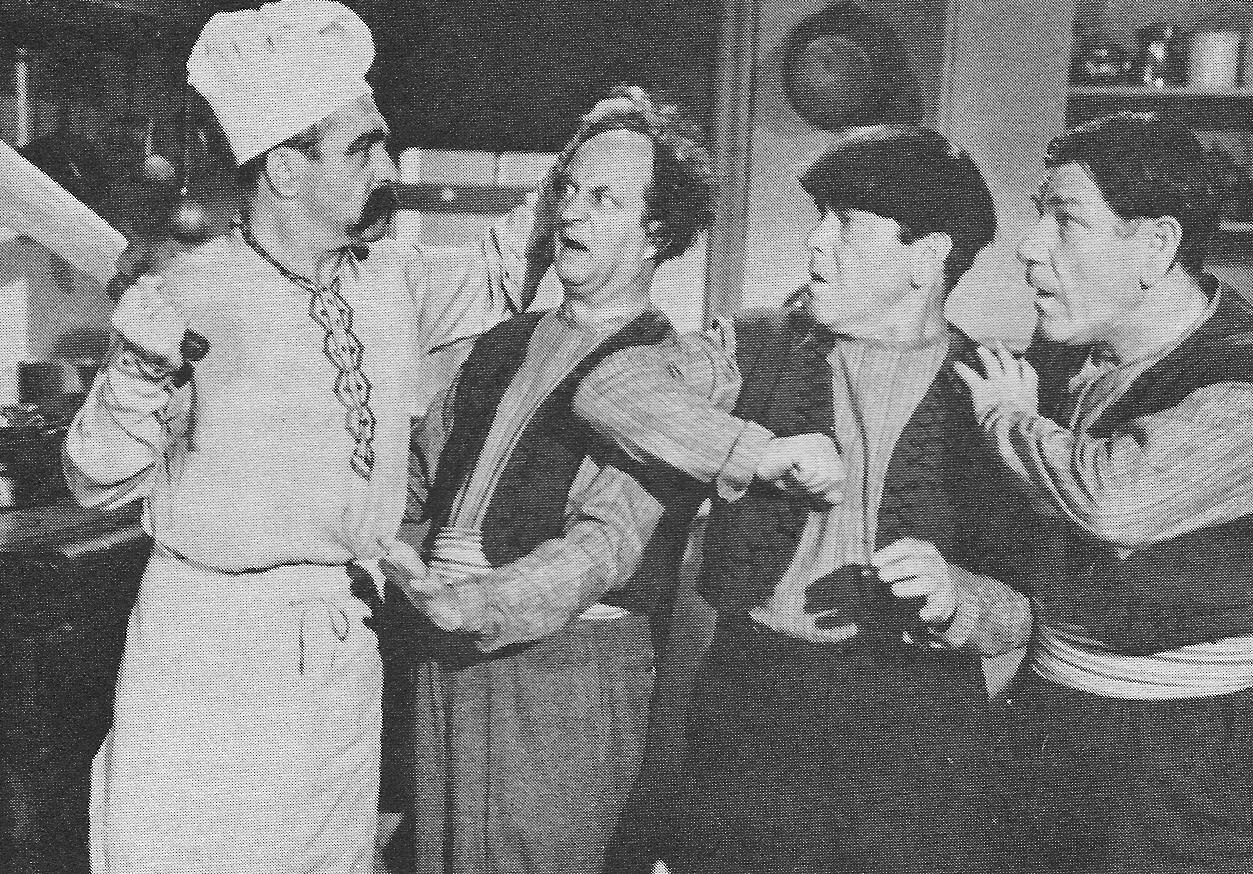
Curly made more than 90 shorts in twelve years, and almost every idea people have about the Stooges comes from them. The spins, the nyuks, the head that took a hammer like a gong: that is the Curly era. When television picked up the old shorts in 1958, the first package was mostly Curly. A whole new generation met him first, and for most of them he stayed the third Stooge forever.
That's the unfair part of the Curly-versus-Shemp argument. Curly had the movies all to himself first. He set the shape, and everyone after him had to fit it.DiLo
More Stooge Paths
- In Defense of ShempNot a replacement Curly, but the original third Stooge returning with an older, twitchier rhythm.
- Why Curly Changed EverythingYou are here.
- The Columbia Short FactoryHow cheap production and repeated setups became a comic grammar.
- Television Makes Them ImmortalThe shorts were made for theaters, but television made them permanent.