Stooge Paths · 3 of 4
The Columbia Short Factory
How cheap production and repeated setups became a comic grammar.
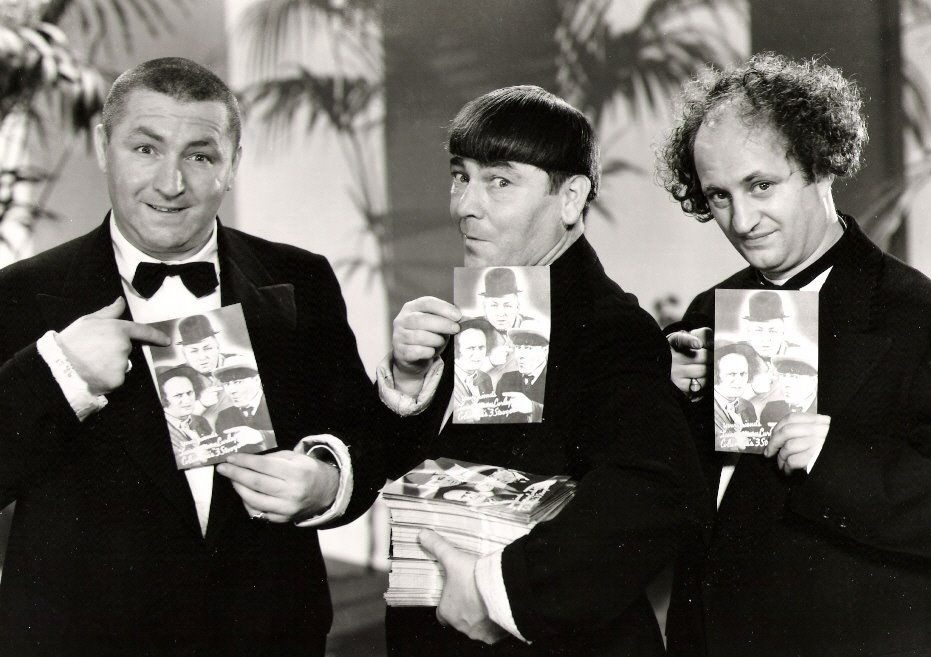
Nobody at Columbia Pictures set out to make art. They set out to fill the program. In the 1930s a night at the movies came with extras: a newsreel, a cartoon, and a two-reel comedy under 20 minutes long. Columbia's short-subject department turned those comedies out like sausages, and from 1934 the Stooges were its best-selling link. Out of the need to work fast and cheap came a style so exact that people still copy it.
The Contract
The Stooges signed with Columbia in 1934, after breaking away from Ted Healy. The first contract paid $7,500 per short, split three ways, and the deal was renewed one year at a time for the next 24 years. The schedule was set: eight shorts a year, all filmed within a 40-week season. Their first Columbia short, Woman Haters, was even written in rhyme. That experiment was not repeated. Speed was.
The department was run from 1933 by Jules White, a producer-director who staged sound comedies as if they were silents: big gestures, quick cuts, every reaction pushed to the edge. Almost 40 percent of everything his unit made starred the Stooges.
Four Days a Short
A Stooge short was usually shot in about four days. After 1952 that shrank to two or three. There was no time to rethink a gag, so the gags had to be reliable: a setup the audience could read at once, a payoff that landed every time. The same few sets were dressed over and over. A hotel room became a hospital became a mansion became a jail.
The Factory Line
One Stooge short, from idea to the screen, the Columbia way.
- The jobGive the boys a trade they can't do: plumbers, doctors, waiters, detectives, soldiers.
- The setPull a room off the back lot. Repaint if there is time. There is rarely time.
- The toolsHand out hammers, saws, pies, pipes, glue. Every prop is a weapon waiting for a cue.
- The shootFour days, give or take. Big gestures, one or two takes, keep the camera running.
- The soundAdd the bonks, slaps, crashes and violin plinks after. The sound effects are half the joke.
- The releaseShip it to play before the feature. Eight a year, every year.
- The reuseYears later, cut it up and build a new short around it. (See below.)
Making a movie on a shoestring is its own education, as any kid with a Super 8 camera finds out.
The Grammar of Slapstick
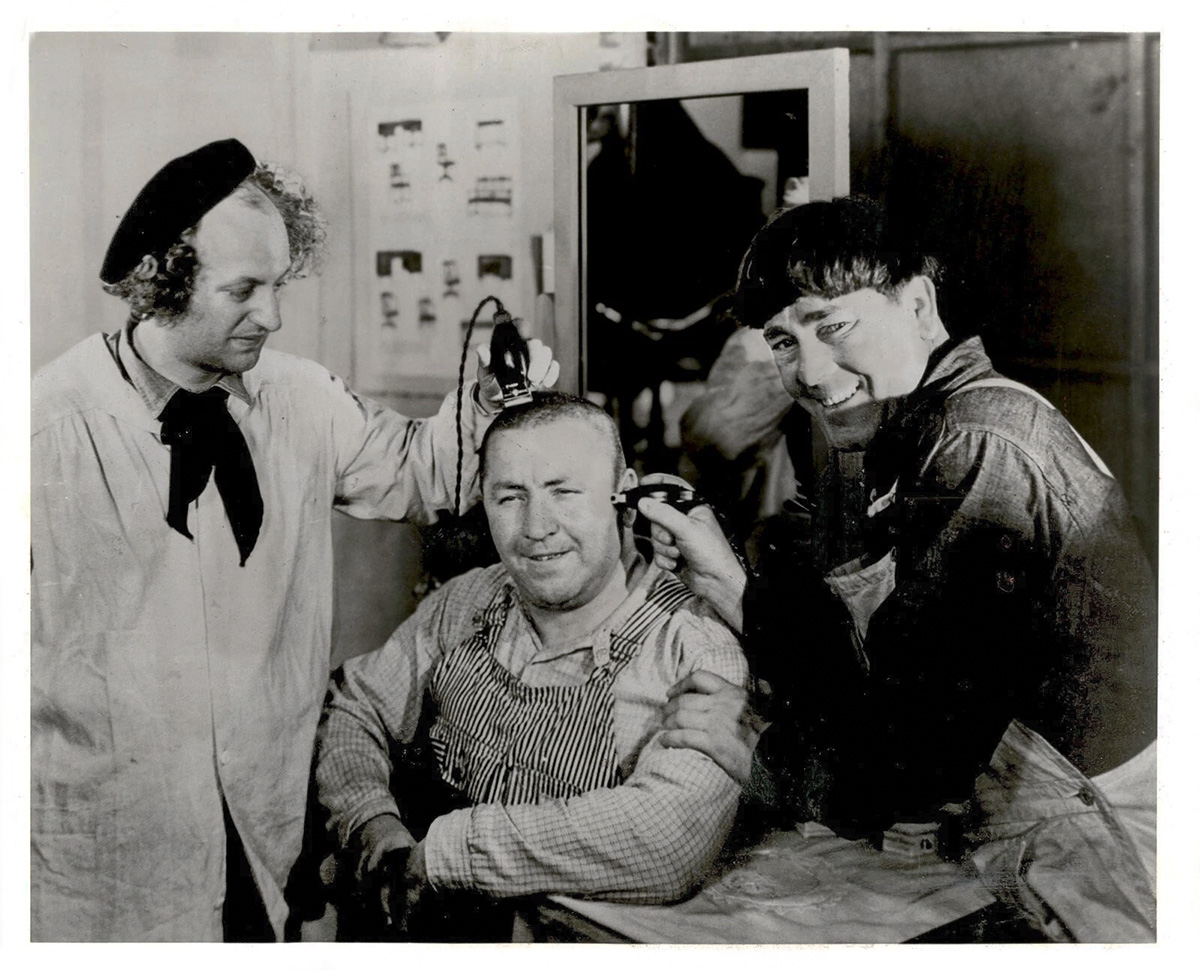
Repeat anything enough and it turns into a language. The Stooges' violence works like punctuation, and every viewer learns the rules in one sitting:
- The eye poke is a period. It ends the argument.
- The hand held up edgewise blocks the poke, until Moe goes up and over it.
- The slap is a comma. Moe hits Larry, Larry flinches, the sentence goes on.
- The head bonk is a cymbal crash, and the sound effect is louder than the hit.
- The pie is a declaration of war. It never stops at one.
- "Spread out!" is the plan. It never works.
None of this needed new money. It needed timing, which the Stooges had from years on stage, and a crew that could get the shot by Friday. The cheapness is the style.
The Stooges are the original low-budget special effect. A hammer, a sound man, and Curly's head. That's the whole effects department.DiLo
Fast Enough to Beat Chaplin

Speed had one surprising payoff. Because a short could go from idea to screen in weeks, the Stooges got to Hitler first. You Nazty Spy! came out in January 1940, with Moe as the dictator Moe Hailstone, months before Chaplin's The Great Dictator. The sequel, I'll Never Heil Again, followed in 1941.
Recycling the Reels
As the budgets fell, the factory started eating its own stock. The first short to borrow old footage was Dizzy Detectives in 1943. By the Shemp years it was a habit: shoot a few new scenes with the same actors, sets and costumes, then cut in the best minutes from an older short. A "new" comedy could hold pieces of up to three old ones. About three dozen Stooge shorts were built this way, starting in earnest with the reuse of Hold That Lion! in 1953.
Spot the Remake
The new short on the left was built from the old one on the right.
| The "new" short | Built from |
|---|---|
| Dizzy Detectives (1943) | Pardon My Scotch (1935) |
| Booty and the Beast (1953) | Hold That Lion! (1947) |
| Stone Age Romeos (1955) | I'm a Monkey's Uncle (1948) |
| Husbands Beware (1956) | Brideless Groom (1947) |
What the Prints Show
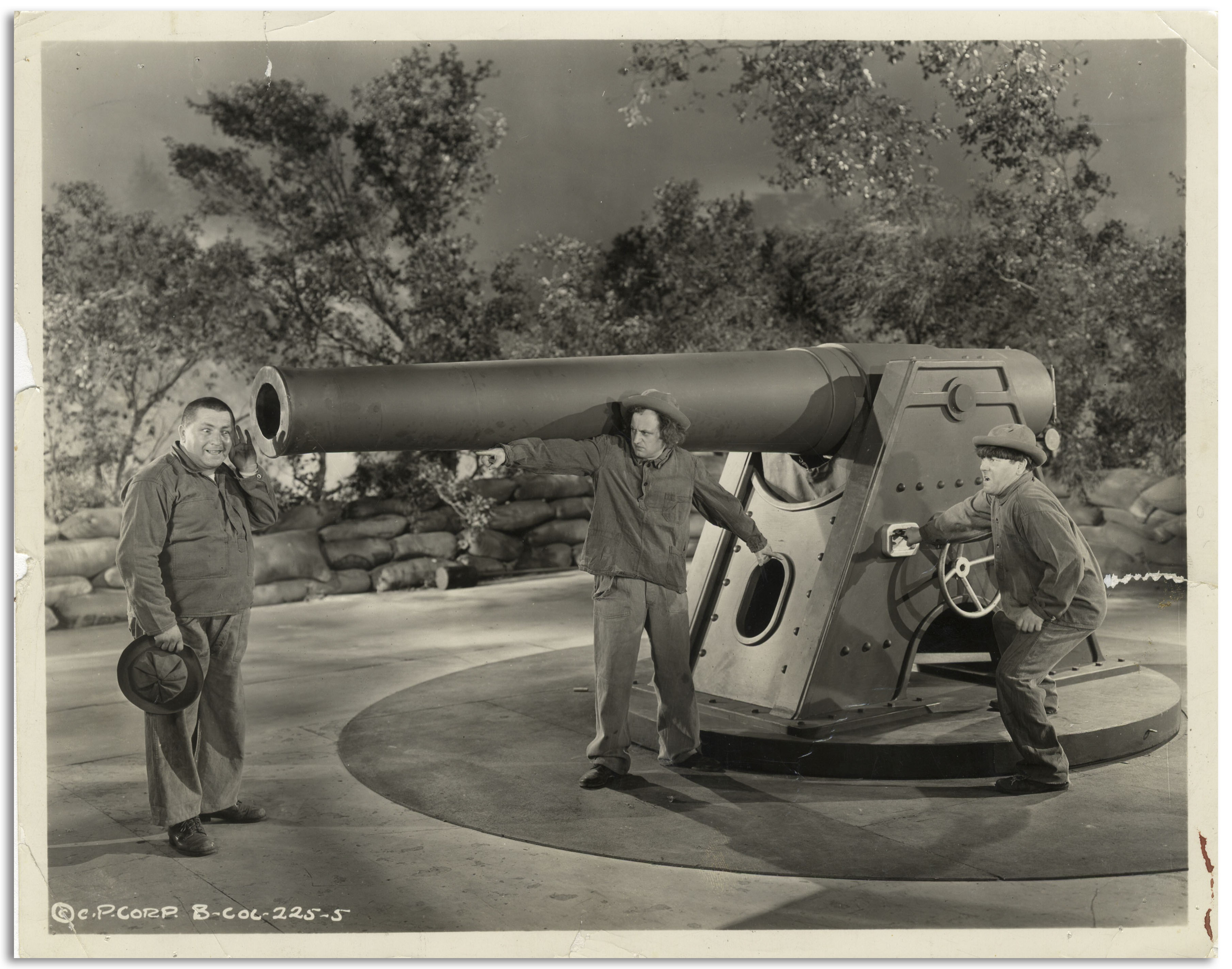
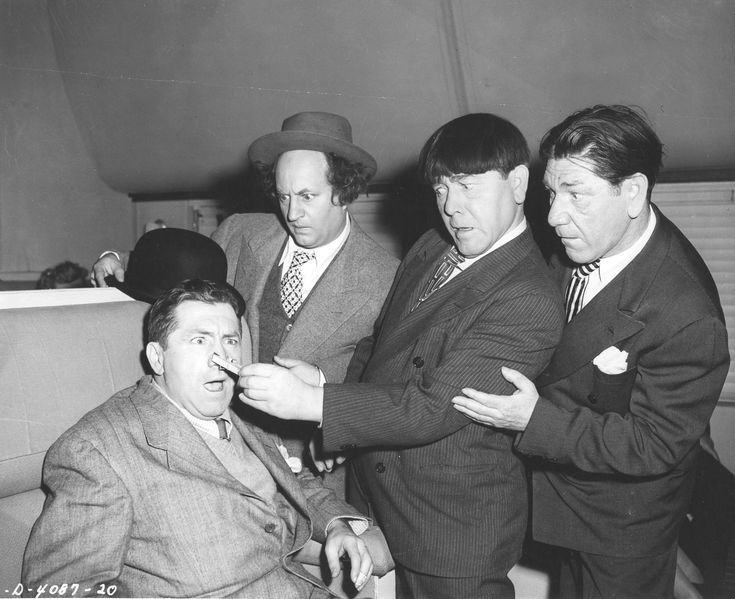
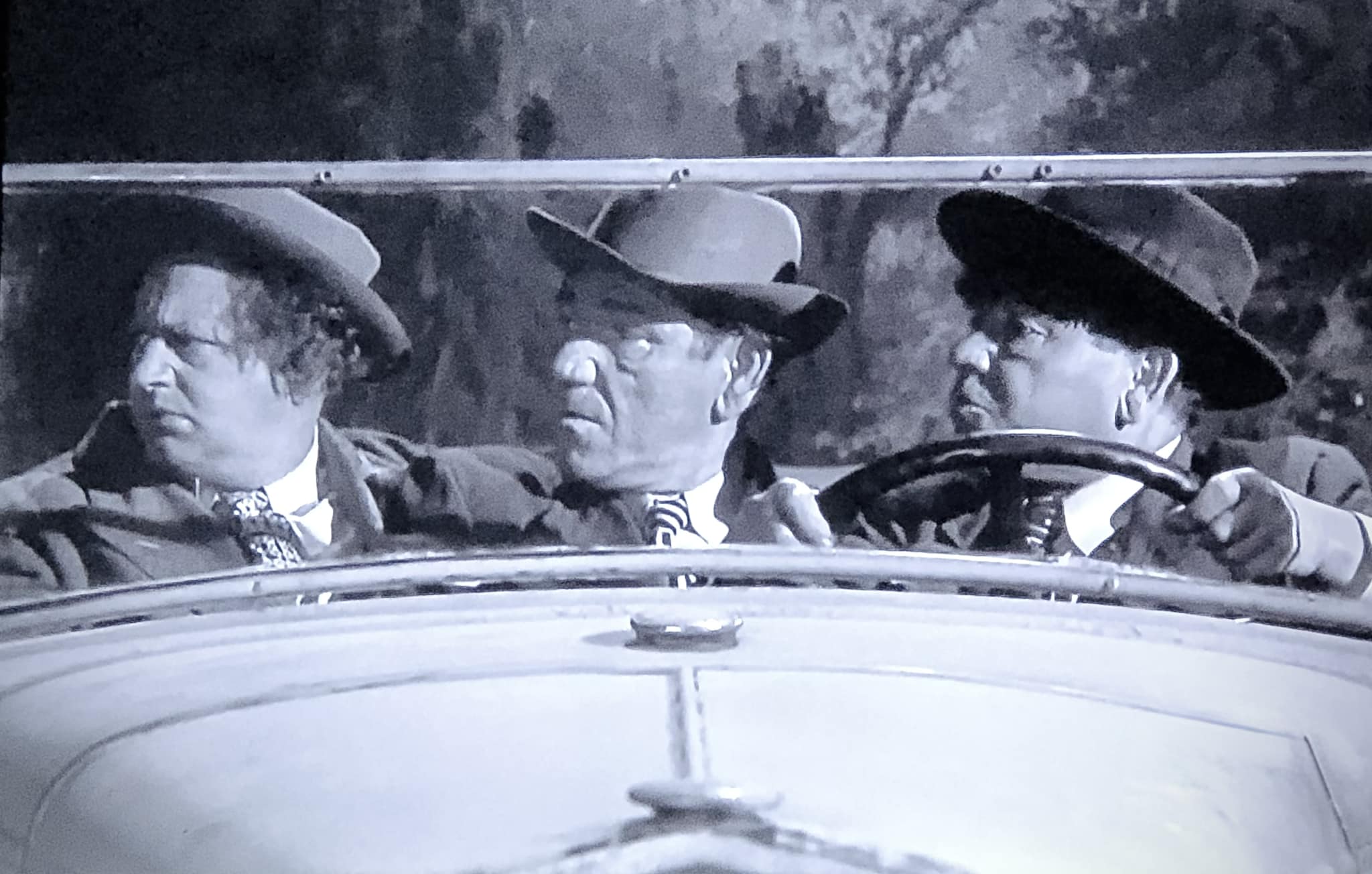
The old stills and frames carry the factory's history too. Dust, soft focus and uneven tone are not only damage. They show how often a reel was printed, shipped, run, and printed again: theaters, then television, then fan copies, then digital collections. A perfect clean-up is not always the goal. Sometimes the scratches are the record.
The factory closed on December 20, 1957, the same day the Stooges finished filming their last short, Flying Saucer Daffy. In 24 years they made 190 of them. Columbia kept releasing the backlog until June 1959. By then, television had already found them.
More Stooge Paths
- In Defense of ShempNot a replacement Curly, but the original third Stooge returning with an older, twitchier rhythm.
- Why Curly Changed EverythingThe moment the act becomes fully cinematic, physical, musical, and strange.
- The Columbia Short FactoryYou are here.
- Television Makes Them ImmortalThe shorts were made for theaters, but television made them permanent.