Stooge Paths · 4 of 4
Television Makes Them Immortal
The shorts were made for theaters, but television made them permanent.

Television syndication begins (1958): the old title cards, now in every living room.
The Three Stooges were supposed to be disposable. Their shorts were program filler, made to run once before the feature and make way for next week's. When Columbia shut its short-subject unit at the end of 1957, Moe and Larry were out of a job, and the act looked finished. Then television bought the past, and the Stooges got bigger than they had ever been.
The Package
In September 1958, Columbia's TV arm, Screen Gems, offered local stations a package of 78 Stooge shorts, most of them from the Curly years. Forty more followed in April 1959. By that September, all 190 were on the air somewhere. They have not left American television since.
The shorts fit the new medium perfectly. They were short, they needed no explaining, and they could be dropped into any half hour. A local station could build an afternoon around them for almost nothing.
This Afternoon on Channel 13
An imagined local TV lineup, autumn 1959. The station is made up. The schedule is the kind every city had.
| 3:30 | Cartoon CarnivalOld theatrical cartoons, introduced by a man in a captain's hat. |
| 4:00 | The Three StoogesMoe, Larry and Curly in "Disorder in the Court." Followed by a second short if time allows. |
| 4:30 | Uncle Sandy's ClubhouseBirthdays, a puppet, a pie gag the kids at home try on their brothers. |
| 5:00 | The Three StoogesEncore. Mothers everywhere sigh. |
| 5:30 | Western TheaterA cowboy serial chapter. Will the hero survive? |
For a lot of kids the Stooges were simply part of the furniture, TV as a best friend.
Kid Show Kings
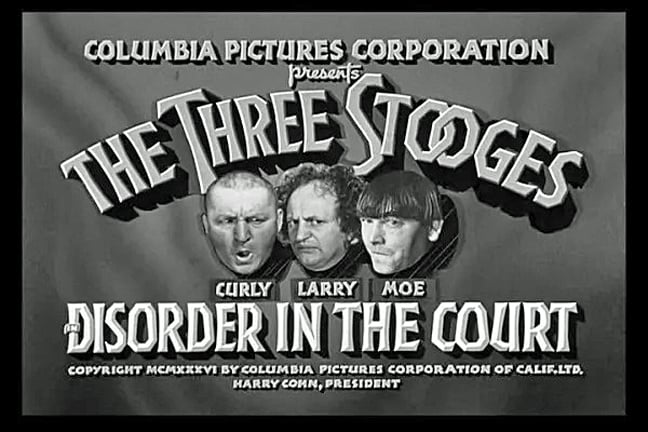
Local hosts introduced the shorts between commercials, often dressed as sea captains, sheriffs or firemen, and kids watched them the way they ate cereal: every day, without asking why. A generation that had never seen a two-reeler in a theater learned the eye poke, the nyuk and the "spread out!" from a set in the living room.
It worked the other way too. Moe and Larry, now with a new third man, were suddenly in demand in person. In the early 1960s the Stooges were among the most popular and best-paid live acts in America, playing to the children of the people who had first seen them.
Nobody sold us the Stooges as "classic comedy." They were just on, every afternoon, like the weather. That's how you know something became permanent.DiLo
Back on the Big Screen
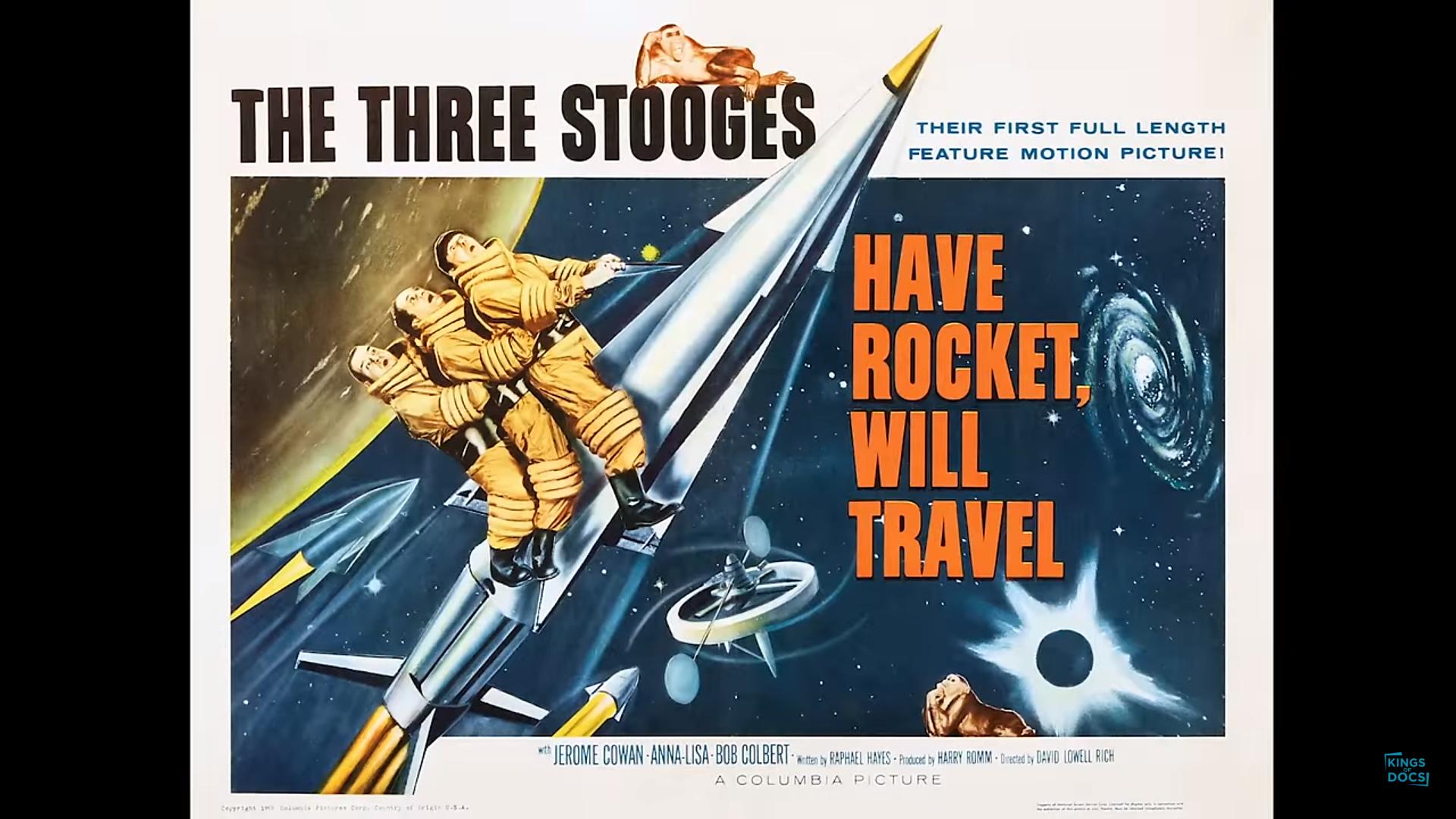
The new third Stooge was Joe DeRita, a burlesque comic who shaved his head and became Curly Joe. He joined in 1958, after Joe Besser left, and made his national debut with the team on The Steve Allen Show in January 1959.
Columbia, which had just let them go, now wanted them back for features. Have Rocket, Will Travel opened on August 1, 1959. It cost about $380,000 and earned more than $2.5 million. More followed: Stop! Look! and Laugh! (1960), Snow White and the Three Stooges (1961), The Three Stooges Meet Hercules (1962), The Three Stooges in Orbit (1962) and The Outlaws Is Coming! (1965). They even turned up as firemen in It's a Mad, Mad, Mad, Mad World.
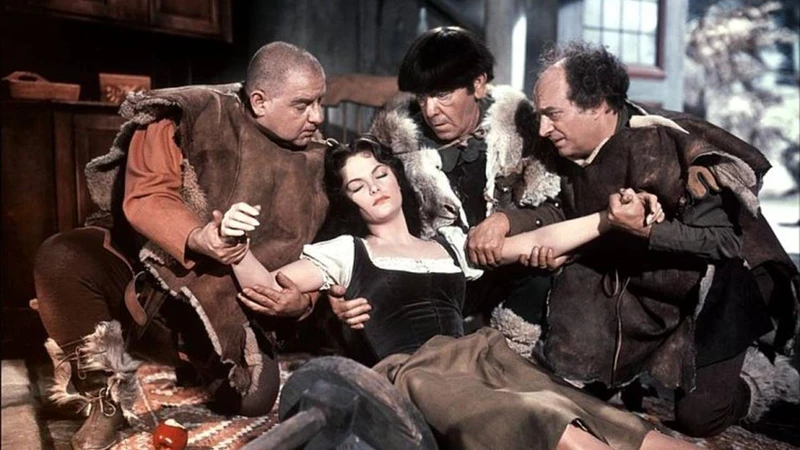
Snow White and the Three Stooges (1961)
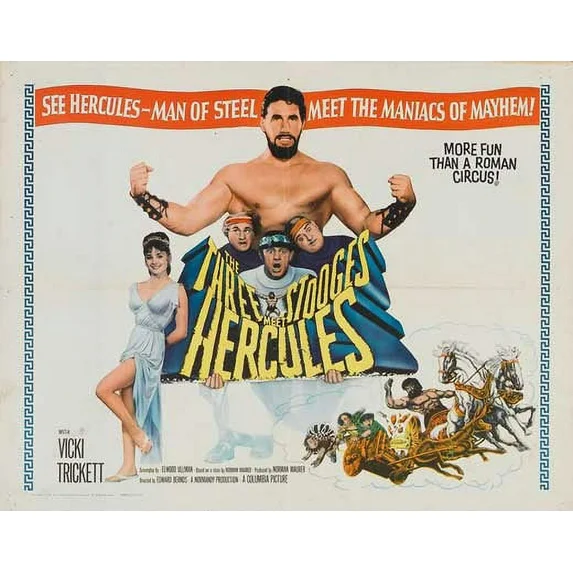
The Three Stooges Meet Hercules (1962)
The Cartoon Years
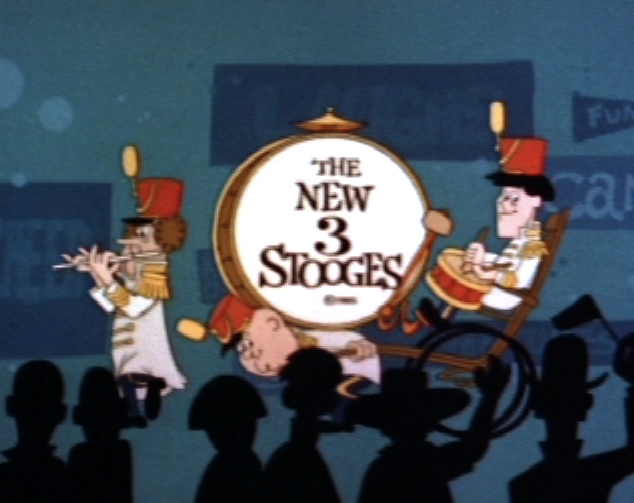
In 1965 the Stooges went all the way to animation. The New 3 Stooges paired 156 short cartoons with 41 live-action segments of Moe, Larry and Curly Joe, which stations used to wrap the cartoons. It was the logical end of the road. The Columbia shorts had always played like cartoons trapped in human bodies. Now the bodies were drawn.
Why They Never Left
The last chapter is a sad one. Larry had a stroke in 1970 while making Kook's Tour, the team's final film. Larry and Moe both died in 1975. But the shorts kept running, and they still do: on local stations, then cable, then home video, then streaming, and in a 2012 feature film that recast the trio for a new century.
The shorts survived because they need nothing from the viewer. You can walk in halfway through. A door opens, Moe barks, Larry hesitates, the third Stooge detonates, and the room starts coming apart. The shorts shared the living-room glow with The Ed Sullivan Show and the first color sets, and a generation later the slapstick reached the arcade in The Three Stooges in Brides Is Brides. Theaters gave the Stooges a career. Television gave them forever.
More Stooge Paths
- In Defense of ShempNot a replacement Curly, but the original third Stooge returning with an older, twitchier rhythm.
- Why Curly Changed EverythingThe moment the act becomes fully cinematic, physical, musical, and strange.
- The Columbia Short FactoryHow cheap production and repeated setups became a comic grammar.
- Television Makes Them ImmortalYou are here.